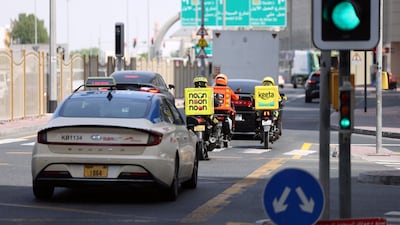
The UAE will introduce key changes to its traffic laws from January 1 aimed at cutting accident rates, tackling congestion, offering greater protection to child passengers and limiting the time drivers spend behind the wheel.
The road legislation shake-up is central to the government's long-term safety drive as it seeks to keep pace with the demands placed on its growing transport network by a sustained population boom.
The raft of updated regulations in the federal traffic law are poised to impact the lives of millions who take to the nation's roads each day.

Here, The National sets out the measures all road users need to aware of as authorities ring in the changes for the start of the New Year.
Nine-hour driving limit
The amended federal law establishes a maximum driving period of nine hours within any 24-hour period, in an effort to guard against driver fatigue.
It is not clear if the ruling applies to both private and professional drivers, but it is set to have significant implications for taxi, bus and delivery service operators and their employees.
The National has sought clarification from the authorities on how the limit will operate in practice.
Minimum age set for e-scooters

Under the new rules, the minimum age to obtain an e-scooter permit - which will be valid for three years - will be set at 15.
The new decision does not state whether Dubai’s existing age restriction of 16 will be amended or how the two requirements will be reconciled.
The traffic regulations will allow for three types of permits issued by licencing authorities, covering e-bikes, e-scooters and small-wheeled cycles (mopeds and scooters).
The modes of transport may only be used on routes and roads designated by the licensing authority or the relevant traffic control authority in each emirate.
A classification system for personal mobility devices - often used for 'last-mile' transport journeys - will be introduced, encompassing bicycles, e-bikes, e-scooters, small-wheeled cycles, skateboards, and mobility aids designed for elderly individuals and people with disabilities.
Technical requirements for e-scooters and e-bikes
Article 4 of the updated law states that personal mobility transport - such as e-scooters and e-bikes - must feature a front light for night-time visibility, a a rear light with a red brake light, and an audible warning device fitted to the handlebars.
Each device must also have at least one brake on the rear wheel, properly maintained tyres that are securely fitted, and intact wheel spokes under appropriate tension. All components must be in safe working condition.
Delivery rider checks

A series of regulations are set out to ensure safe travels for the UAE's large contingent of delivery riders.
They are barred from carrying passengers on their motorcycles while carrying out deliveries or using backpacks to transport orders.
They must instead use designated and approved equipment for carrying deliveries.
The move comes after Dubai's Roads and Transport Authority set out plans to use cameras and smart sensors to track the speed, location and driving behaviour of delivery motorcycle riders under a new monitoring system.
The initiative will help identify dangerous riding practices, improve compliance with traffic rules and make the emirate's roads safer, the RTA said.
Child seat mandate

The upcoming law requires drivers to provide appropriate safety seats for children aged four and under.
The seats must correspond to the child's weight and height, be installed in the rear seats, and comply with national standards and specifications.
Exceptions are permitted in cases where a child has a medical condition which prevents the use of a protective seat, provided an official medical certificate is submitted and someone accompanies the child in the rear seat.
In vehicles without rear seats, a child safety seat may be installed in the front, provided it faces backward and the airbag is deactivated.
Vehicle ownership cap

The maximum number of vehicles one person can register is five, under the legislation. Those who wish to register or renew a third, fourth, or fifth vehicle must pay an additional fee.
The regulation does not specify the amount of the additional fee or explain how the limit will apply to people who already have more than five vehicles registered in their names.
The fee for registering a new vehicle is Dh400, and the renewal fee is Dh350 plus an extra Dh150 for inspection.
The move comes amid a surge in the number of vehicles on the UAE's roads over recent years, leading authorities to step up efforts to ease congestion and improve traffic flow.
Two-year vehicle registration
Owners of light vehicles can apply to extend the existing one-year registration validity period to two years, subject to approval.
This option is available for vehicles that are brand new when initially registered and are no more than six years old from their date of manufacture.
Delivering first aid
The federal law allows for individuals to administer first aid to people in traffic accidents - but only if they hold an accredited certificate confirming they have completed a first aid training course.
Where the certificate carries an expiry date, it must remain valid. Individuals providing assistance must also have the physical capacity required to respond appropriately to the injured person's condition.
Driving licence rules
The regulation also introduces driving licence validity periods based on age and nationality.
Once temporary licence holders reach 21, or when those who received their first licence at 21 or older renew it, those issued to UAE and GCC nationals will be valid for 10 years, while those issued to expatriate residents will be valid for five years.
Eyes on the road
The new law sets out eyesight standards for different categories of drivers. Stricter requirements apply to drivers of light and heavy buses and operators of light and heavy machinery. Licensing authorities may also accept eyesight examination reports issued outside the UAE to allow drivers with expired licences to renew them.

