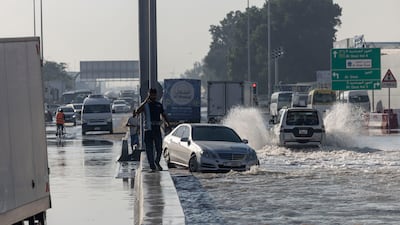

Dubai’s rainwater drainage capacity is set to increase sevenfold under a Dh30 billion infrastructure project designed to protect the emirate from extreme weather and serve its growing population for the next century.
The new system will be capable of handling more than 20 million cubic metres of water a day and will include more than 6,500km of drainage networks, alongside more than 5,000km of sewage networks, according to plans outlined by Dubai Municipality.
Marwan bin Ghalita, director general of Dubai Municipality, said the Tasreef scheme was launched in 2024 after the country experienced widespread flooding caused by unprecedented rainfall in April of that year. Rather than simply repairing the damage, authorities opted for a long-term solution to strengthen Dubai’s resilience against future storms.

“Dubai did not simply stop to assess the damage or look for solutions. It took a swift and bold decision to begin a drainage programme designed to serve the city for the next 100 years,” Mr bin Ghalita said.
In June 2025, the municipality completed a Dh277m sewerage and rainwater drainage network in Nad Al Sheba, while in April this year, the drainage network in Al Quoz Creative Zone was completed.
The Tasreef project, which is due to be completed in 2033, is a continuation of drainage projects launched by Dubai in 2019, covering the Expo Dubai area, Al Maktoum International Airport City and Jebel Ali. The new projects will serve vital areas including Nad Al Hamar, and around Dubai International Airport, Garhoud, Rashidiya, Al Quoz, Zabeel, Al Wasl, Jumeirah and Al Bada’a.

Utilising technology
Speaking at the Mohammed bin Rashid Leadership Forum, Mr bin Ghalita outlined how Dubai was investing in infrastructure, AI and modern construction methods to improve residents’ quality of life and prepare for further urban expansion.
The presentation also featured Saeed, Dubai Municipality’s virtual spokesman, who outlined a vision for the emirate’s infrastructure and public services in 2033 by adopting technologies such as 3D printing, robotic construction systems, modular building methods and AI.
Its Integrated Waste Management Strategy 2040 includes converting waste into energy, while the municipality is moving towards smart operational systems that use robots for cleaning operations and autonomous cleaning vehicles in collaboration with the Roads and Transport Authority.
Dubai is also developing a comprehensive digital twin of the city and a control centre that uses real-time data to monitor operations and support decision-making.
Mr bin Ghalita said the city’s achievements are driven by the vision of Sheikh Mohammed bin Rashid, Vice President and Ruler of Dubai. “Dubai is a city of action” is the philosophy that has enabled the emirate to continue delivering results, he said.
Greening and food safety initiatives
Dubai’s greening programme aims to plant 3.5 million trees and increase green and cultivated areas to 187 square kilometres by 2040. The municipality expects annual visits to parks to reach 95 million as it expands public spaces for walking, exercise and recreation.
Food safety is another priority. The presentation said municipal teams inspected more than 577,000 food consignments annually, representing approximately 2,706 million food products.
Co-operation with government entities, including Dubai Customs, is helping make inspections faster and more precise, it said. Initiatives including DM Check and 'Montaji' use digital tools and artificial intelligence to support food safety monitoring.
Mr bin Ghalita said the progress outlined in the presentation reflected the combined efforts of municipal teams and the emirate’s leadership.
“Everything you have seen today is the result of the combined efforts of our teams,” he said, adding that a clear vision and collective commitment are essential to delivering Dubai’s long-term ambitions. “What we are building and developing today is what Dubai will be in the future. Our aim is to make Dubai a city with advanced infrastructure, smart and ready to face challenges.”

