

A missile attack on an administrative building of Saudi Arabia's state energy company Aramco hit the historic centre of the kingdom's oil industry, sparking a fire that authorities said caused no casualties.
The strike by the Yemeni Houthi rebels hit a complex that serves as the nerve centre of the world's largest oil exporter, housing key research and development site, energy operations and thousands of employees and their families.
People living near the building described moments of terror as a powerful explosion shook the area.

"This was the loudest explosion I have ever heard in my life," one woman told The National. Another resident said relatives living closer to the site had reported seeing smoke and flames rising from the area following the attack.
While no further details have been released about the incident, the site is a key one for Aramco, serving as its central hub for oil, gas, and energy operations.
More than an HQ
Aramco, at the time known as the Arabian American Oil Company, moved its headquarters from New York City to Dhahran in 1952. Dhahran was where the kingdom’s first commercial oil was found in 1938, at Dammam No 7, the “Prosperity Well". The Saudi government gradually acquired the company, completing a full buyout in 1980, before it was renamed the Saudi Arabian Oil Company (Aramco) in 1988.

Aramco’s headquarters is situated within a vast complex spread across 58 square kilometres, with a large residential area housing a reported 11,000 people, including employees and their families.
The Dhahran district also has a research and development centre and the Expec Advanced Research Centre, which was inaugurated in 2008. Expec has been upgraded with a building to focus on upstream research and development.
The Dhahran complex also houses a large-scale cooling plant, operated by Saudi Tabreed, with a 32,000 refrigeration-tonne capacity that includes thermal storage tanks for energy saving. The chilled water piping network stretches 16 kilometres to reach sites, meeting Saudi Aramco's requirements for cooling.

The area also includes Ithra, the King Abdulaziz Centre for World Culture, which was built by Aramco as a cultural and creative destination for the public. The centre has attracted more than four million since its opening in 2018.
Previous attacks
The Dhahran area was attacked on February 25, 1991, during the Gulf War, when an Iraqi Scud missile struck a US Army barracks, killing 28 American soldiers and wounding 110.
Aramco’s other sites in the Eastern province have also faced attacks in the past. Several drones and missiles hit Saudi Aramco’s Abqaiq and Khurais oil processing centres on September 14, 2019, knocking out about 50 per cent of the country’s crude oil production.
-
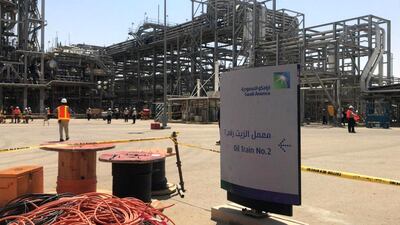
Workers are seen at the damaged site of Saudi Aramco oil facility in Khurais. Reuters -
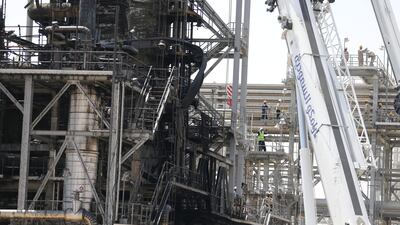
Workers are seen at the damaged site of Saudi Aramco oil facility in Khurais. Reuters -
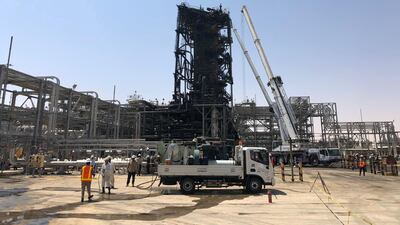
Workers are seen at the damaged site of Saudi Aramco oil facility in Khurais. Reuters -
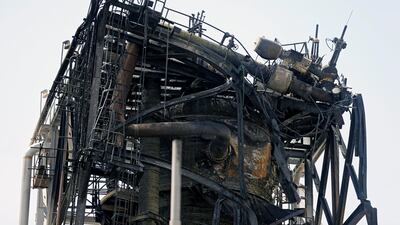
A view of the damaged site of Saudi Aramco oil facility in Khurais. Reuters -
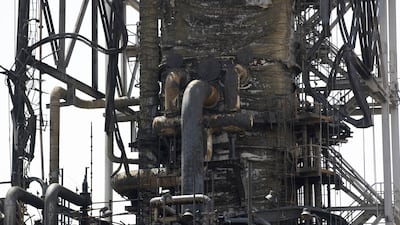
Charred pipework sits on a processing unit at Saudi Aramco's Khurais oil field plant. Bloomberg -
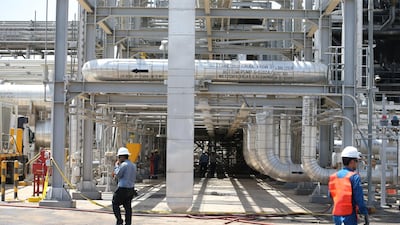
Workers are seen at the damaged site of Saudi Aramco oil facility in Khurais. Reuters -
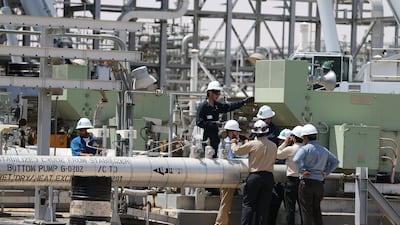
Workers are seen at the damaged site of Saudi Aramco oil facility in Khurais. Reuters -
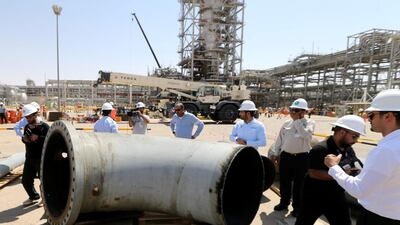
A damaged pipeline is seen at Saudi Aramco oil facility in Khurais. Reuters -
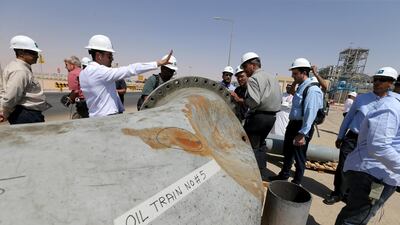
A damaged pipeline is seen at Saudi Aramco oil facility in Khurais. Reuters -
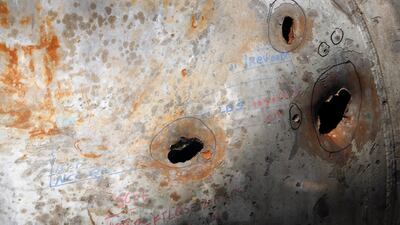
Holes caused by fragments of a missile are seen in a damaged pipe in the Aramco's Khurais oil field. AP Photo -
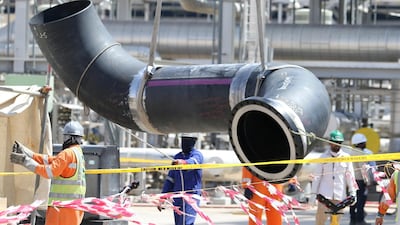
Workers fix a new section pipeline in Khurais. Reuters -
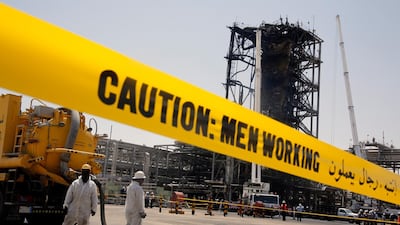
Workers at Aramco's oil processing facility in Khurais, near Dammam. AP Photo -
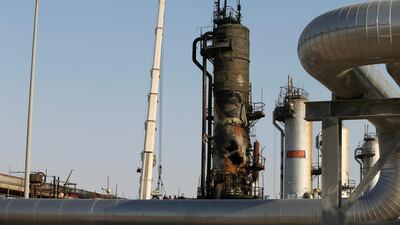
View of the damaged site of Saudi Aramco oil facility in Abqaiq. Reuters -

View of the damaged site of Saudi Aramco oil facility in Abqaiq. Reuters -
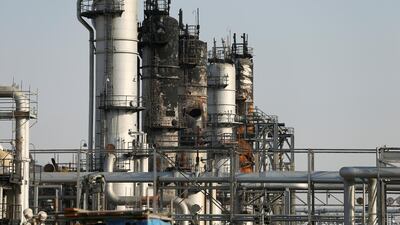
View of the damaged site of Saudi Aramco oil facility in Abqaiq. Reuters -
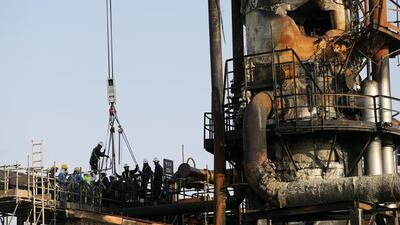
Workers are seen at the damaged site of Saudi Aramco oil facility in Abqaiq. Reuters -
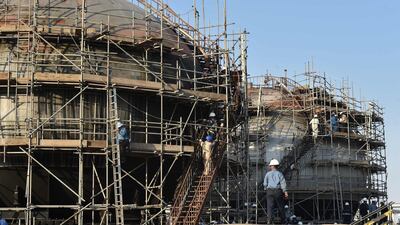
Employees work in Abqaiq oil processing plant. AFP -
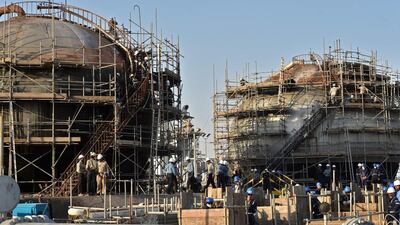
Employees work in Abqaiq oil processing plant. AFP -
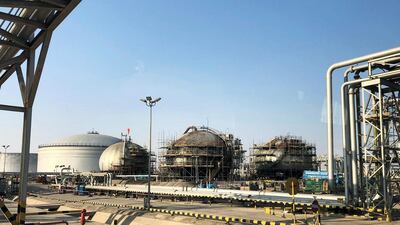
A general view of the damaged site of Saudi Aramco oil facility in Abqaiq. Reuters


The 17-minute strike by 18 drones and three low-flying missiles, claimed by the Houthis, caused a surge in oil prices and shut down more than 5 per cent of global oil supply. Saudi Arabia said about two weeks later that it had fully restored oil output.
In March 2022, an Aramco plant in Jizan was also attacked by the Houthis with a drone laden with explosives, with a gas station in Khamis Mushait and a power station in Dhahran also hit.
In early March this year, after the start of the Iran war, a fire broke out at Aramco’s Ras Tanura refinery, the kingdom’s largest, with 550,000 barrels per day of capacity, due to drone attacks.
Operations were halted for 16 days. Ras Tanura, on Saudi Arabia's Gulf coast, hosts one of the world’s largest oil export terminals and a major refining facility. The port handles a significant share of Saudi crude exports.
Other sites hit this year include Satorp in Jubail, a joint venture between Saudi Aramco and TotalEnergies processing 465,000 bpd and one of the world's largest export refining platforms, as well as Samref in Yanbu, a 400,000 bpd Aramco-ExxonMobil joint venture.
Earlier this month, Aramco’s chief executive Amin Nasser said the company had the strategic reserves and flexibility to isolate or shift output as required. Aramco can make its maximum sustainable production capacity of 12 million bpd available within days, he told the Energy Intelligence Forum in London. “Our system is intact,” he added.
Aramco, which is listed on the Tadawul exchange, is majority owned by the Saudi government. It is due to release its third quarter financial results on November 3.

