

Community-spirited Emiratis are opening up their homes to UAE residents from across the world to break fast and build cultural connections in celebration of Ramadan.
The Emirati Values Iftar Initiative – organised by the Federal Youth Council – has been bringing citizens and residents together in all seven emirates during the holy month.
The gatherings have highlighted the sense of unity and harmony which binds the nation, particularly in times of great adversity such as these.

The National attended the Emirati Values Iftar held in Umm Al Quwain to see how the initiative is strengthening ties between Emirati youth and UAE residents and tourists.
Recipe for success
The Emirati Values Iftar Initiative takes place in homes and heritage spots all over the UAE. The Umm Al Quwain iftar was held under the towering palm trees of the Umm Al Quwain Museum, which was the ruling family's home hundreds of years ago.
The iftar began with the rich history of the museum being told by Mohammad Al Kashf, who represents the interests of Umm Al Quwain as a member of the Federal National Council.
Traditional weaving techniques for fishing baskets were on display, and after the call to prayer sounded, marking the breaking of the fast, the iftar meal was served.
-
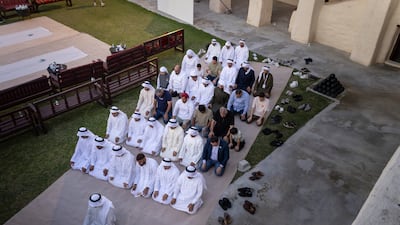
Emirati families, members of the Umm Al Quwain Youth Council and non-Muslim residents gather for a traditional iftar at Umm Al Quwain Museum. All photos: Antonie Robertson / The National -
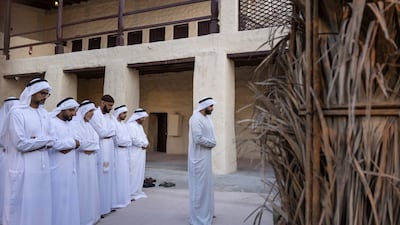
Prayers are held as part of the Ramadan event -
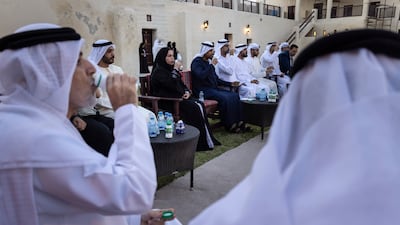
Emirati families and non-Muslim residents break their fasts together with dates, laban and water -
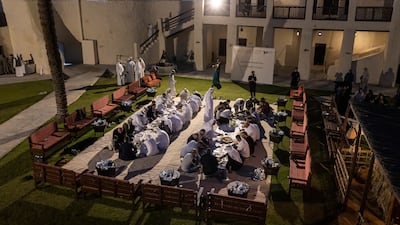
The Emirati iftar takes place at Umm Al Quwain Museum -
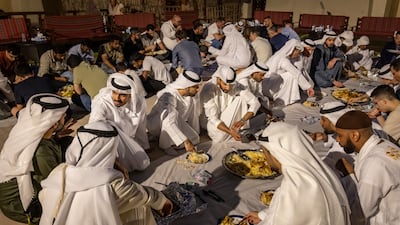
Those who attended the event share a meal together -
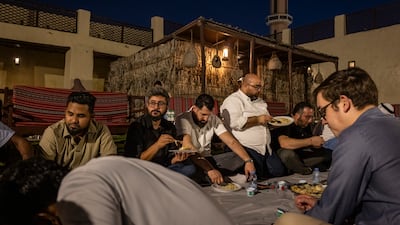
Non-Muslim residents were among those who attended -
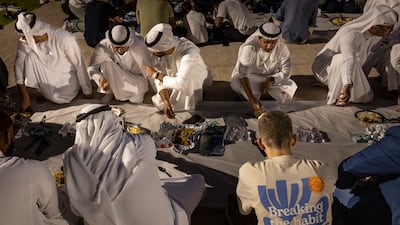
The event was hosted by Emirati families and the Umm Al Quwain Youth Council -
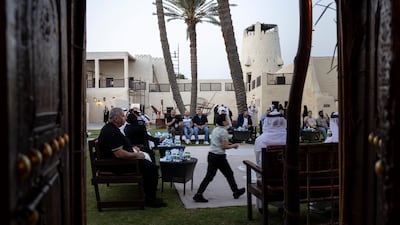
The event took place as the holy month draws to an end -
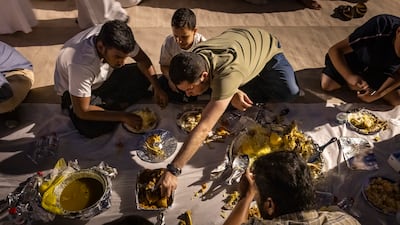
Hosts and guests break their fast as the sun sets -
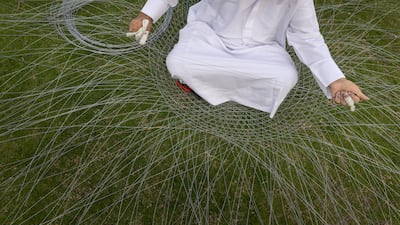
A local fisherman shows how nets are mended, as part of the event -
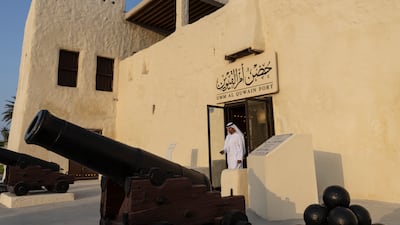
The traditional iftar was held at Umm Al Quwain Museum -
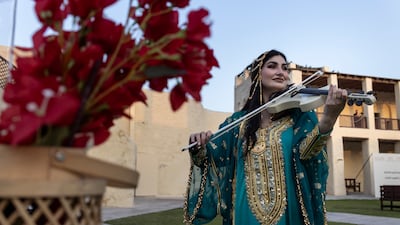
Music was among the entertainment at the iftar event


The Umm Al Quwain Youth Council was the local organiser for the event, and members like Umm Al Quwain native Ahmed Alraeesi were proud to share their traditions and emphasise the values of generosity, respect, coexistence and unity with guests.
“We focused on sharing our values with the world. Today we have multiple nationalities here gathered with us from different regions, and the point is to connect with them through our values”, Mr Alraeesi told The National.
Global gathering
About 50 people shared the iftar meal sitting happily on the floor and enjoying warm conversation, with guests from India, Lebanon, Taiwan and beyond in attendance.
“Sitting down on the floor while eating shows simplicity and shows the closeness when we sit next to each other. This is something that made the bonds among each other stronger”, Mr Alraeesi said.
Eric Chen, consul general of the Commercial Office of Taipei in Dubai, was thrilled to experience his first Emirati iftar and try new local flavours. “I heard many stories about these iftars, but this is my first time experiencing it. I feel much more connected to the UAE since I attended”, he said.
Traditional dishes like harees, chicken biryani and lamb ouzi were served up by the Emirati hosts. “This is the first time I've tasted harees, and I tasted many spoons of it. I don't know how to describe the flavour, but it is very special”, Mr Chen said.
Hany Bakr Ganah, vice chancellor for academic affairs at Umm Al Quwain University, told The National that one of the main driving forces behind the nation's success is the passing down of cultural values.
“The Emirates are in the first place in so many aspects”, he said. “The United Arab Emirates are there now because they're taking from Emirati values and building for the future.”
Passing down tradition
The initiative serves a dual purpose – showcasing Emirati Ramadan traditions to guests, and educating young Emiratis so they can continue these traditions.
“It's important for the youth. We need to have bridges between the past and the present so that future generations are aware of their ancestors' culture, history and heritage”, said Maysoon Fareed Alyounees, leader of the Emirati Values Iftar initiative from the Ambassadors of Happiness team in Umm Al Quwain.
“[It is important] that the culture isn't lost, Emirati identity isn't lost, they remain aware of their ancestors' history and are always proud of it, so that they continue their ancestors' legacy by teaching their children and grandchildren about the inherited culture.”
"All Emirati traditions are inherited from previous generations, and they will continue to be preserved in the future through these Ramadan iftars", said Ajman native and iftar guest Mohamed Betaik.
The Emirati Values Iftar initiative is open to interested residents and tourists every year, with registration on the federal Youth Authority website.

