

The morning sun spills through wide windows into the modern and comfortable carriages.
Outside, the desert stretches endlessly into the distance as the train heads out through Abu Dhabi.
This week, The National was given access to one of the Etihad Rail passenger trains that will soon be up and running across the UAE.
For a country built around cars, motorways and air travel, the introduction of a passenger service represents a shift in how people may move between cities.
On board, that change is clear early in the journey. As the train accelerates to around 200kph, the increase in speed is barely perceptible inside the carriage. Conversation remains easy, and the congested roads are a distant memory.
The trip covered a stretch of line from Al Faya depot to Mohamed bin Zayed City Station – one of the anchor stations on the network that is nearing completion – and lasted about 30 minutes.
As the train picked up speed, villages, farms, industrial areas and stretches of open sand passed by in succession.
-
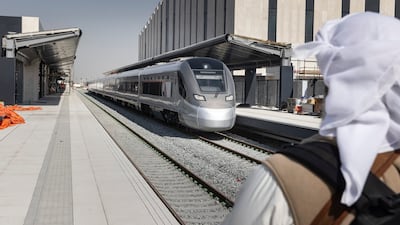
An Etihad Rail passenger train at the Mohamed bin Zayed City station in Abu Dhabi. All photos: Antonie Robertson / The National -
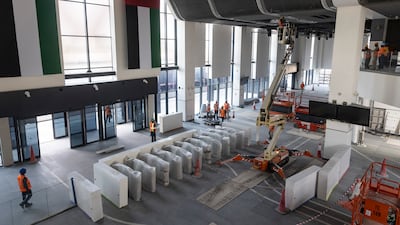
Inside the central concourse of the Mohamed bin Zayed City Etihad Rail station -
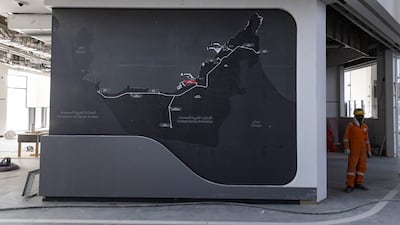
A map of the network at the Mohamed bin Zayed City station -
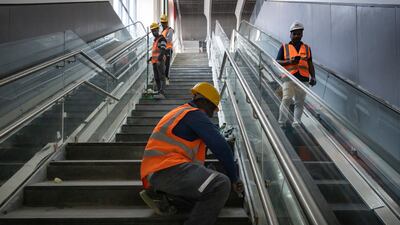
Work is advancing at Mohamed bin Zayed City station to get it ready for the opening -
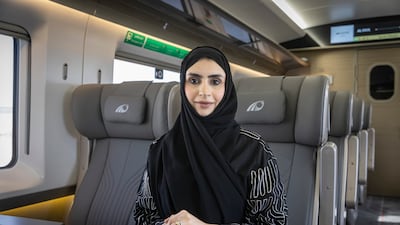
Azza Al Suwaidi, deputy chief executive of Etihad Rail Mobility, said the Mohamed bin Zayed City station is designed to feel open and intuitive, with spacious concourses, clear signage and comfortable waiting areas -
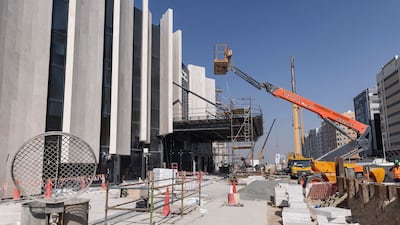
The distinctive exterior of the Mohamed bin Zayed City station -
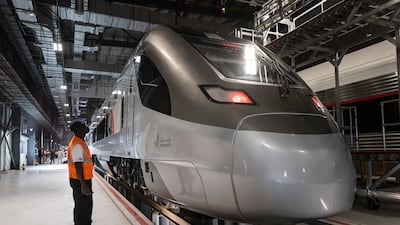
The passenger service is to launch this year -
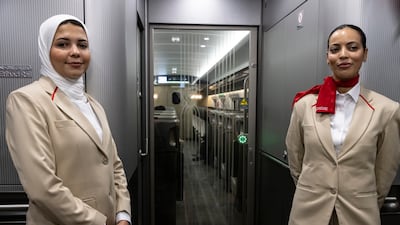
Onboard several seating classes are available such as business class -
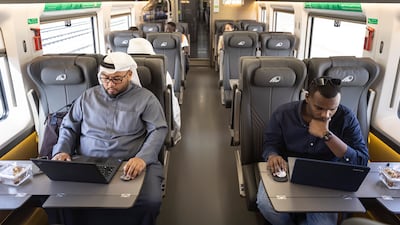
A look at the business class seating onboard -
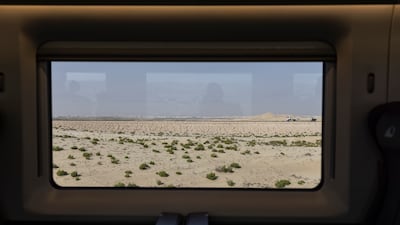
A view from an Etihad Rail passenger train as it travels through Abu Dhabi


“I love seeing the desert,” Azza Al Suwaidi, deputy chief executive of Etihad Rail Mobility, told The National, as she looked out of the train window.
“I love coming out of the city and then going to the desert, looking at the lovely sand dunes that we have and then arriving at Fujairah where we have amazing and magnificent mountains. It's such a lovely experience.”
Etihad Rail confirmed this week that passenger services will initially connect Abu Dhabi, Dubai and Fujairah upon their launch this year, before expanding in subsequent phases.
Eleven stations have been announced so far. The passenger service will run primarily on the existing freight line that crosses the country, with spur lines built to provide access to stations in Abu Dhabi, Dubai and Sharjah.
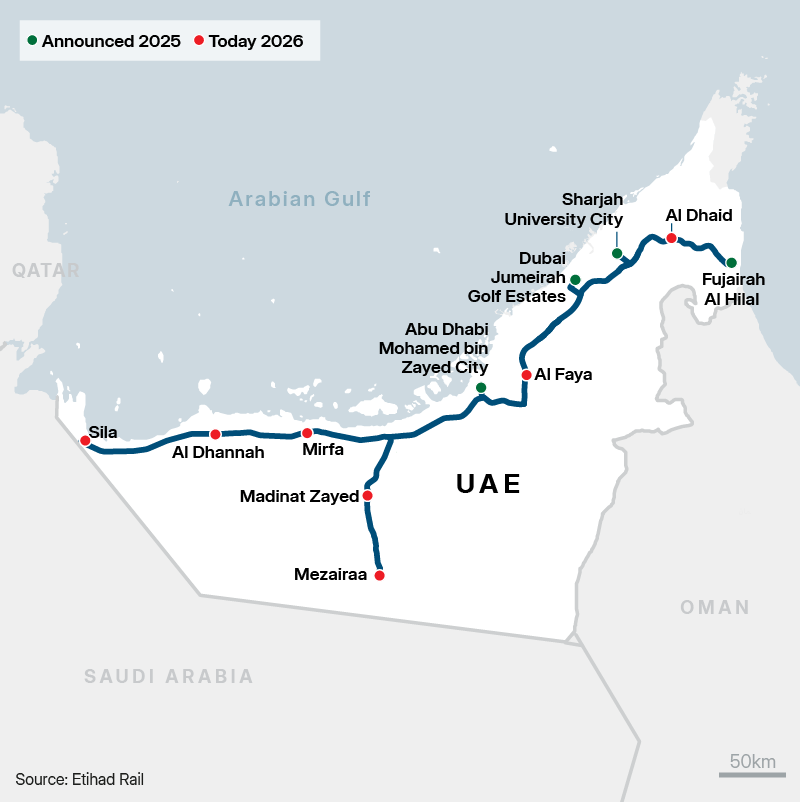
Leaving Al Faya – a site earmarked for a future passenger station – in the morning, the train follows the main line before joining the spur that connects to Abu Dhabi city.
From the train, it was clear to see how Abu Dhabi has become a city of suburbs. As we approach the station, on the right, the expanding new suburb of Mohamed bin Zayed City spreads before us, with its tens of thousands of residents, residential complexes, schools and hospitals.
On the left is Mussaffah’s industrial landscape. Even Mussaffah is changing. Once associated only with car repair shops, it is now has churches, restaurants and new homes cropping up. Dalma Mall, one of the largest in the area, is across the road from the train station. This is a new Abu Dhabi.
The station is long and linear, with a striking panelled exterior incorporating traditional design elements. Work on the outside of the station is ongoing. When open, passengers will enter through a central concourse where cafes, shops, ticket machines and digital information boards are being installed. Platforms can be accessed directly or via an underpass.
The plans are not without challenges, particularly encouraging passengers to stop using their cars in favour of taking the train. Etihad Rail said it is working to connect stations with existing and future public transport networks, including buses and the Dubai Metro, while also providing space for bicycles and other modes. Dubai’s station at Jumeirah Golf Estates, for example, is connected to the Metro.
Details on ticket prices, booking systems and timetables have yet to be announced, but passengers will be able to choose between business and standard-class. Journeys are expected to take about an hour to Dubai and about 90 minutes to Fujairah.
“It's a megaproject and every megaproject has its challenges,” said Ms Al Suwaidi. “But we are in the UAE and we have this opportunity. We're very fortunate to have leadership support and our local authorities are working closely together in making this happen.”
Railways have historically played a significant role in shaping travel and trade across the Middle East, from Egypt’s early networks to the Hejaz Railway.
In recent years, investment in rail has accelerated. Etihad Rail’s freight services have been operating for several years, Saudi Arabia’s Haramain Express links Makkah and Madinah at speeds of up to 300kph, and metro systems run in Riyadh and Doha.
Hafeet Rail will connect the UAE and Oman, while all six GCC countries have plans for a regional rail network. Etihad Rail has also announced plans for a separate high-speed service between Abu Dhabi and Dubai.
Luxury rail projects are also under development in the Middle East, including Saudi Arabia’s Dream of the Desert and a proposed high-end service with Etihad Rail planned for later in the decade.
Back on the train for the return journey, the landscape alternates between farms, clusters of houses and open sands. Seen from the rail track, it is a reminder of how much of the country lies beyond the roads.

