


The glitz and glamour of top-level golf will be on full display as the world's best players tee off for a $9 million prize fund at a major tournament in Dubai this month.
But while success in the sport can lead to a jet-setting lifestyle, global adulation and wealth, the mental toll of life on the tour can weigh heavily on many seasoned players struggling to make the cut. Depression, anxiety and obsessive thoughts are familiar foes for professionals as they tackle life away from family, friends and the comforts of home.
Those challenges have been addressed by organisers of the Middle East’s most famous tournament, the Hero Dubai Desert Classic, which is to get under way at Emirates Golf Club on January 22.
In May 2024, the strains of a life on the road were cruelly exposed when American PGA Tour pro Grayson Murray took his own life, after facing mental health challenges and addiction.
Harsh realities
The tragedy brought into focus issues some players face at the lower end of the world rankings, where prize money can be considerably harder to come by, yet daily financial worries and isolation remain.
Two years ago, Simon Corkill, director of the Dubai tournament, established a mental fitness and recovery zone to assist players and caddies, as well as their friends and family members.
The move has been such a success that he hopes Royal and Ancient, which runs the Open Championship and develops the sport globally, can expand mental health services to other tournaments around the world.

“Mental health and fitness is something that affects everyone in different ways,” Mr Corkill told The National. "I looked at it from our tournament's point of view. A lot of people on the golfing circuit are on the road a lot. Even though it's glamorous and there is considerable prize money, it's still a job. Unfortunately, mental fitness can edge towards the darker side.
“Some caddies are on retainers, but others get a percentage of winnings so if their player doesn't get anything, they might get a minimal amount to cover their costs.

“A lot of issues come out during the off-season period. People have a lot of time to think and things happen. Coaches or managers change, caddies change and relationships break down, so there's all sorts of different mental health aspects to consider.
"Yes, the top players earn a lot of money, but most players sit at the back of the plane when they travel – they’re the ones that probably need this service more. When a player misses the cut, it’s a tough weekend for everyone involved.”
Mental health support

The tournament's mental fitness and recovery centre was the first of its kind in professional golf. It has since been adopted by other events, including the British Open Championship.
The site, at the Sensasia Urban Spa at Emirates Golf Club, has four recovery zones. A mentally fit activity area offers space for reflective writing exercises, cognitive puzzles and mental games designed to the shift focus away from competitive pressure.
A mindfulness area – or Zen Den – offers guided breathing techniques, meditation spaces and calming essential oils support physical and mental relaxation. Meanwhile, a virtual reality experience enables visualisation training, controlled breathing exercises and evidence-based anxiety management. The site also offers players a place to gather their thoughts and improve focus before taking to the tee.
Hero Dubai Desert Classic - in pictures
-
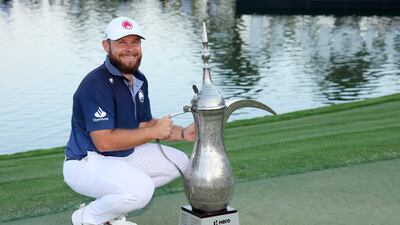
Tyrrell Hatton of England poses with the Dallah Trophy after winning the Hero Dubai Desert Classic at Emirates Golf Club on Sunday, January 19, 2025. Getty Images -
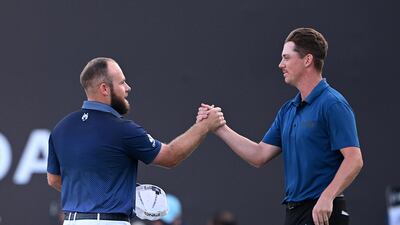
Tyrrell Hatton of England shakes hands with Daniel Hillier of New Zealand after their round on day four of the Hero Dubai Desert Classic. Getty Images -
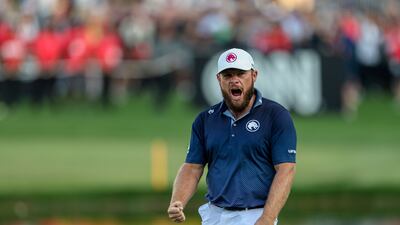
England's Tyrrell Hatton celebrates after putting on the 18th hole to win the Dubai Desert Classic. AFP -

Tyrrell Hatton hits his second shot on the 18th hole at the Emirates Golf Club. Getty Images -
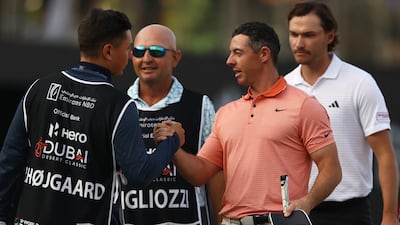
Northern Ireland's Rory McIlroy shakes hands with the caddie of Denmark's Rasmus Hojgaard after the final round. Reuters -
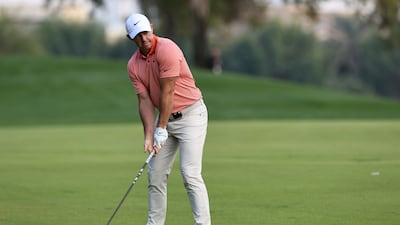
Rory McIlroy lines up a shot on day four of the Dubai Desert Classic. AFP


The centre's sleep chamber is probably the most utilised services, said Mr Corkill. About 50 people used it last year.
The process involves a Nasa nap protocol of a 26-minute scientifically validated rest cycle. Players can make use of seven rest chambers to enhance alertness and cognitive performance.
“The idea was to create this mental health check-in at the beginning of the year, as the reality is this event is like the first day at school,” Mr Corkill said. “We wanted to create different zones because, as an elite sporting event, we should be providing elite services to the golfers and their entourage.
“It was very important we did this and we’ve drawn a line in the sand saying this should be happening at every event. The facility helps enormously and addresses different challenges. It's not that easy to do, but we felt if we can influence people going forward, that would be great.”
Tour research
In 2020, researchers at the University of Edinburgh assessed the mental health understanding of players on the Challenge Tour, a series of tournaments played below the DP World Tour of the Desert Classic. Of those surveyed, 67 per cent who experienced mental health issues on tour had not asked for professional help.
The research found 14 per cent of players experienced obsessive thoughts every two weeks, while 10 per cent said they were depressed and 9 per cent had anxiety.
Dr Andrew Murray, chief medical and scientific officer on the DP World Tour, said mental fitness could be considered more important than the physical side of golf.
"The Hero Dubai Desert Classic and DP World Tour have led the way in enhancing health and performance in professional golf,” he said. "Once people start talking about this and see it as being as important as physical fitness, conditioning, nutrition and hydration, they realise mental fitness is just as important, if not more important, in a sport like golf.”

One of the player’s competing for the tournament’s Dallah Trophy and a slice of the prize money is Englishman Tommy Fleetwood, who has moved with his family to Dubai and is ranked third in the world.
Fleetwood, who has played in the Dubai Desert Classic on 14 occasions, said mental health support in the sport has some way to go to catch up with the physical training players receive.
"The tour is amazing at the physical facilities we always get from the physios and the trainers, the gyms – I think both tours actually do an amazing job of that,” he said. “We have unbelievable facilities. But that mental aspect of it is something that's probably a little bit behind.
"Mental wellness is an important part of sport and life. I think it's cool to see this tournament being proactive about things like that, it's definitely something that we would welcome more in tour events throughout the year. We probably all need a bit of advice on how to switch off at times."

