In a quiet corner of Abu Dhabi, a 24-hour centre is working to ensure that no child at risk “slips through the cracks”.
Known simply as the Child Centre, the unit operates under the Family Care Authority and brings together experts from across the child protection spectrum, from social workers, case managers, psychologists, police, prosecutors and doctors to intervene when a child is in danger.
“The Child Centre is a specialised entity that focuses on ensuring the well-being and protection of children of all ages, nationalities, and ethnicities in Abu Dhabi,” Naema Al Shehhi, case manager at the centre, told The National.
“There is a multidisciplinary approach. It brings together several entities: social workers, case managers, psychologists, law enforcement – both police and prosecution – and medical professionals. We also work with schools, hospitals, and any entity that interacts directly with children.”
How are incidents reported?
Based in Khalifa City, all of these services are housed under one roof, allowing staff to respond quickly and efficiently.
“We often receive reports from schools or hospitals and co-ordinate with them when creating intervention plans,” Ms Al Shehhi said.
The range of cases the centre sees is wide, from physical, emotional and sexual abuse, to neglect and exploitation such as forced labour or trafficking.
“We receive various types of cases: psychological, sexual, or physical abuse; exploitation, including child labour or trafficking; and cases of neglect where children lack proper care,” she said.
While some reports come from hospitals or schools, others are submitted directly by the public.
“We receive reports through various channels: the hotline (800 444), our online portal, hospitals, police, prosecution, and sometimes directly from the public,” Ms Al Shehhi said, adding that while it is natural for parents or schools to report to police, they are always welcome to come directly to the centre.
“We encourage families and schools to report directly to us, unless there’s immediate danger, in which case they should go to the police, who will refer the case to us.”
How are cases assessed?
Once a report is filed, the team begins with a risk assessment to identify where the danger is coming from.
“Each case is assessed individually. The first step is a risk assessment. We identify the source of risk – whether it’s a parent, another child, a stranger – and tailor the next steps accordingly,” Ms Al Shehhi said.
“If a parent is the source of risk, we may interview the child at school to avoid influence or pressure. Only after understanding the risk do we involve the parents.”
In cases of serious and immediate danger, action is swift. “We assess whether the child can safely return to their environment. If not, alternative care is arranged – ideally within the extended family. If that’s not possible, we place the child in a shelter. Our services run 24/7. When a child is at immediate risk, action is taken within hours.”
That kind of fast response is not common in the UAE, and that is exactly the point.
“Compared to police or prosecution processes, our intervention is more immediate, especially in child abuse cases. We act quickly and prioritise high-risk cases,” she said.
She said most of the abuse cases she sees are not malicious but happen because of a lack of education. “While child abuse is common, many cases stem from a lack of education or awareness. In such cases, we focus on educating and empowering parents.”
Still, the more serious cases leave a mark. “Most of the abuse we see is unintentional, due to lack of awareness. But intentional abuse cases do occur and those are the ones that stay with you the most. Children don’t always have the awareness or means to report what’s happening to them.”
Who is supported?
In terms of age, the centre can help everyone from newborns to teenagers. “We receive cases from children as young as a few months old up to 18 years,” Ms Al Shehhi said.
While their work touches many aspects of child welfare, adoption cases are handled elsewhere.
Often, a case may begin with a school, a hospital, or a family member reaching out but it can also come from a parent walking into the centre in distress.
Once the team determines how serious the risk is, they build a response plan. “We conduct a comprehensive evaluation, implement an intervention plan, and follow up before closing any case,” Ms Al Shehhi said.
Even then, follow-ups continue. “Our case management process continues after the initial intervention,” she added. “We conduct a comprehensive evaluation, implement an intervention plan, and follow up before closing any case.”
Children with special needs are considered high-risk, and their cases are treated with even greater caution.
In the end, she said, if a child is unsafe and nobody acts, the consequences can be devastating.
“Children cannot protect themselves, and the adult they’re living with determines the quality of their life,” Ms Al Shehhi said. “If there’s danger and our entity doesn’t intervene, there may be no way the child can be removed from that environment.”
The Child Centre in Khalifa City – in pictures
-

The Child Centre in Khalifa City, Abu Dhabi. All photos: Victor Besa / The National -
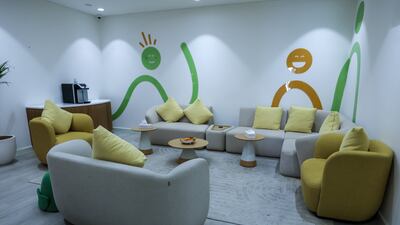
The waiting area -

Naema Al Shehhi, case manager at the Child Centre -

The centre focuses on ensuring the well-being and protection of children of all ages -
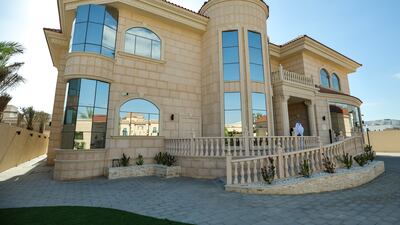
The centre's exterior -
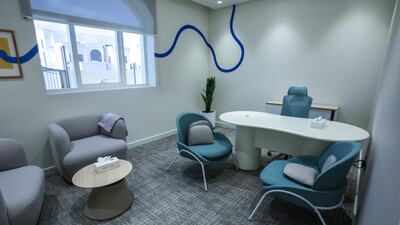
The centre's assessment rooms -
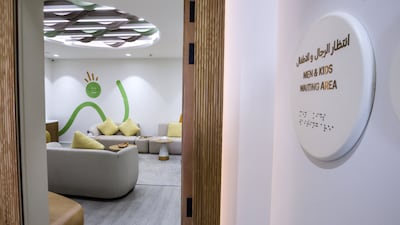
A waiting area at the centre



