


World Governments Summit: live updates
The UAE’s diplomatic strategy is not based on any one president in the White House, Minister of State and UAE ambassador to the US Yousef Al Otaiba said.
Mr Al Otaiba said he had been in Washington for years and the approach was much broader than election cycles. Speaking at the World Governments Summit in Dubai on Wednesday, the envoy said how the UAE got its message out was more important.
“How do we tell people who we are, what our priorities are, what our values are,” said Mr Al Otaiba, responding to a question about the impact on diplomacy of Donald Trump as president. “That is what we focus on – not really who's in the White House.”
Mr Al Otaiba said he believed the US did listen to the UAE on certain messages such as business, investments and they “sometimes listen” to advice on regional issues. But the UAE was not “shy” and made our “voices heard and we are very outspoken and unapologetic about it”.
“Sometimes our friends listen to us and sometimes they don't. Sometimes we agree on certain positions; sometimes we disagree,” he said. “We've always strived to find common ground.”
When asked about finding common ground with the current administration on Gaza, he said the UAE was “going to try”.
“I think the current approach is going to be difficult but at the end of the day we're all in the solution-seeking business. We just don't know where it's going to land yet,” said Mr Al Otaiba.
-

Elon Musk speaks through video link with Omar Al Olama, UAE Minister of State for AI, Digital Economy and Remote Work Applications. Antonie Robertson / The National -
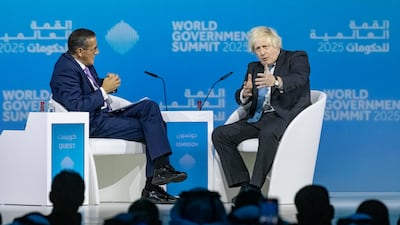
Former British prime minister Boris Johnson speaks to Richard Quest of CNN on the second day of the World Governments Summit in Dubai. Antonie Robertson / The National -
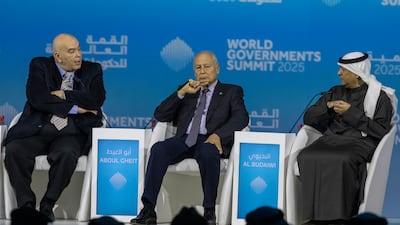
Emad El Din Adeeb, of Sky News Arabia, left, with Ahmed Aboul Gheit, Secretary General of the Arab League, and Jasem Al Budaiwi, Secretary General of the Gulf Co-operation Council, right, at the summit. Antonie Robertson / The National -
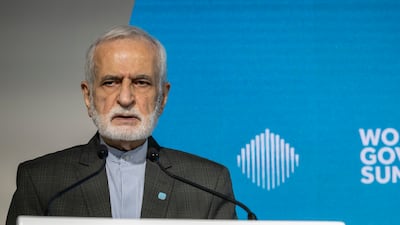
Dr Kamal Kharazi, head of Iran's Strategic Council on Foreign Relations. Antonie Robertson/The National -
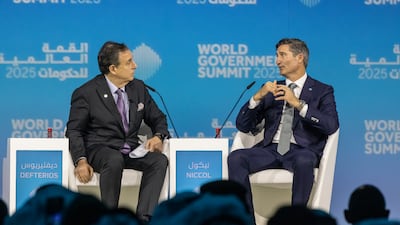
Brian Niccol, right, chief executive of Starbucks, speaks to John Defterios. Antonie Robertson / The National -
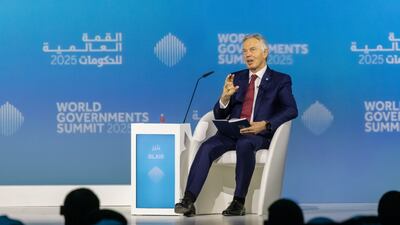
Former UK prime minister Tony Blair. Antonie Robertson / The National -
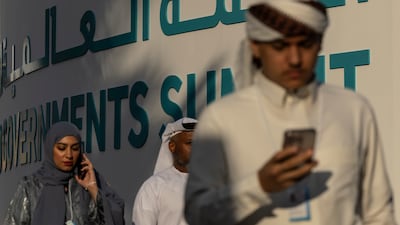
Visitors attending day two of the summit in Dubai. Antonie Robertson / The National -
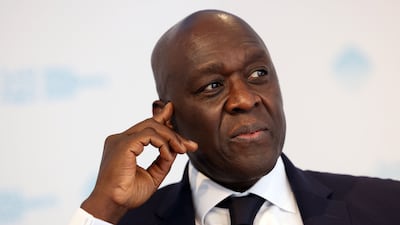
Makhtar Diop, managing director of the International Finance Corporation. Chris Whiteoak / The National -

Sheikh Khaled bin Mohamed, Crown Prince of Abu Dhabi and Chairman of Abu Dhabi Executive Council, right, and Sheikh Hamdan bin Mohammed, Crown Prince of Dubai, Deputy Prime Minister, Minister of Defence and Chairman of the Dubai Executive Council, attend the World Governments Summit. Wam -
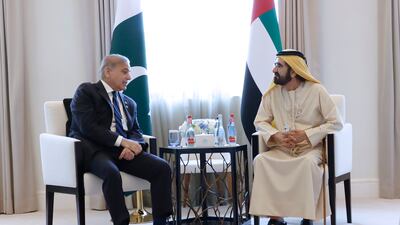
Sheikh Mohammed bin Rashid, Vice President and Ruler of Dubai, meets Shehbaz Sharif, Prime Minister of Pakistan, on the first day of the summit. Wam -
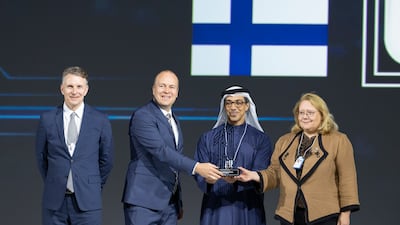
Sheikh Mansour bin Zayed, Vice President, Deputy Prime Minister and Chairman of the Presidential Court, presents the GovTech Prize to a winner at the summit. Abdulla Al Neyadi / UAE Presidential Court -
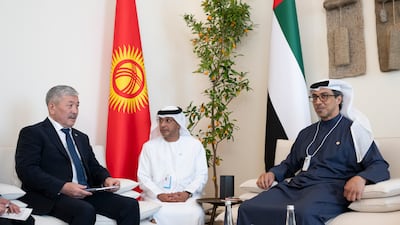
Sheikh Mansour meets Adylbek Kasymaliev, chairman of the Cabinet of Ministers of Kyrgyzstan. Hassan Bargash Al Menhali / UAE Presidential Court -
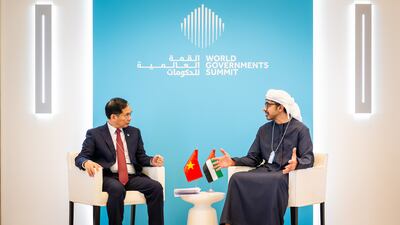
Sheikh Abdullah bin Zayed, Deputy Prime Minister and Minister of Foreign Affairs, with Bui Thanh Son, Vietnam's Deputy Prime Minister and Foreign Minister. Wam -
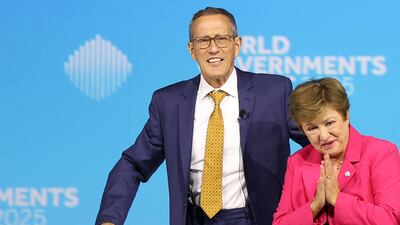
Kristalina Georgieva, managing director of the International Monetary Fund, alongside Richard Quest of CNN. Chris Whiteoak / The National -
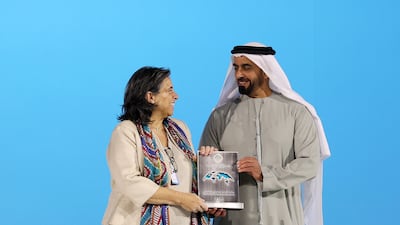
Sheikh Saif bin Zayed, Deputy Prime Minister and Minister of Interior, hands over a Global Government Excellence Award at the event at Madinat Jumeirah. Chris Whiteoak / The National -
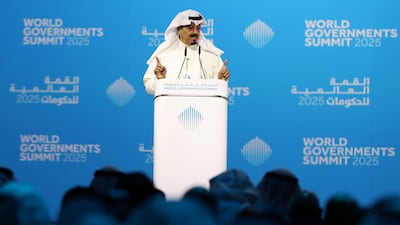
Sheikh Ahmad Abdullah Al Ahmad Al Sabah, Prime Minister of Kuwait, addresses the summit. Chris Whiteoak / The National -
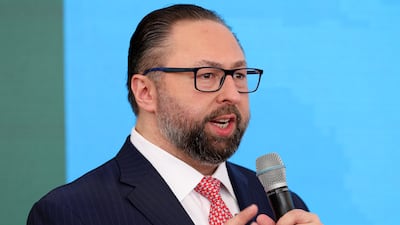
Jason Miller, senior adviser to US President Donald Trump. Chris Whiteoak / The National -
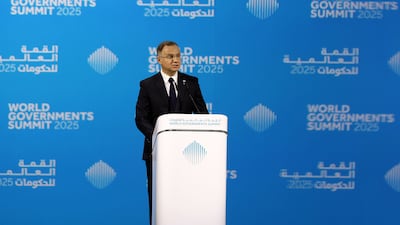
Andrzej Duda, President of Poland. Chris Whiteoak / The National -
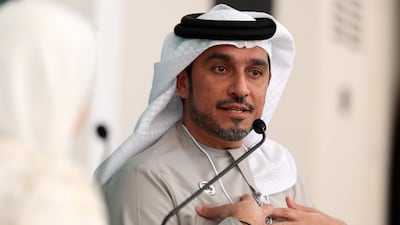
Mohammed Al Shehhi, Secretary General of the UAE Media Council. Chris Whiteoak / The National -
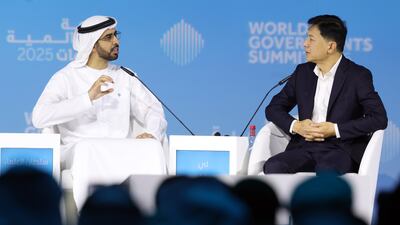
Omar Al Olama, Minister of State for AI, Digital Economy and Remote Work Application, and Robin Li, co-founder and chief executive of Baidu, discussing emerging technologies. Mr Al Olama is also vice chairman of the World Governments Summit. Chris Whiteoak / The National -
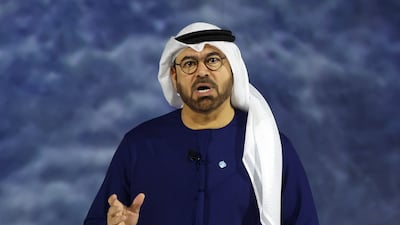
Mohammad Al Gergawi, Minister of Cabinet Affairs and chairman of the World Governments Summit, speaks at the Madinat Jumeirah complex. Chris Whiteoak / The National -

A Dubai Railbus vehicle on display. Testing of the sustainable transport project is expected to be complete in two years. Chris Whiteoak / The National


The comments came in a talk on “public diplomacy in action” with the questions posed by journalist Hadley Gamble. The envoy said the UAE had “honest conversations with every US administration”.
“We've had challenges with previous administrations where we had very, very tough conversations in the past,” he said. “It's always about trying to find a solution and trying to find common ground and, right now, this particular set of issues is challenging. But we'll find a way through.”
Mr Al Otaiba has been envoy since 2008. In that time there has been a flourishing of relations between the two countries. Bilateral trade has surged, partnerships boosted and major US institutions such as the Cleveland Clinic and New York University have established outposts in the UAE.
In a wide-ranging conversation, Mr Al Otaiba said he had worked really hard during his tenure to make sure there was a good relationship with both sides, Democrat and Republican, despite it being “increasingly difficult”. “Otherwise we will be at a disadvantage,” he said.
When asked about Mr Trump’s moves to cut the USAID programme, he said an unambiguous approach is “tough” and, separately, if the American dream had “died”, Mr Al Otaiba said there was a lot of people who still wanted to go to the US.
“I still see it around the world,” he said. “I think people want to go. Maybe it's not what it used to be.”
The ambassador also reflected on artificial intelligence. AI has been a major part of the summit, dominating the rooms at the Madinat Jumeirah location but it could also be heard in hushed tones in the corridors. Mr Al Otaiba said the advent of the Chinese AI model, DeepSeek, apparently developed at a cheaper cost, was not going to change the UAE’s approach.
“People should watch this space both in the UAE and in our investments very carefully,” he said. “Because what I think is going to happen here if our dreams come true … this is going to be, hands down, the most important AI hub in the world.”

