

Dubai Police have announced seven locations around the emirate where Eid Al Fitr cannons will be fired.
The firing of the cannons will mark the end of the holy month and signify that Muslims may stop obligatory fasting until next Ramadan.
It will also mark the sighting of the new crescent moon of the month of Shawwal, which will usher in Eid Al Fitr.
The Eid cannons are at several locations across Dubai – Zabeel Grand Mosque, and at prayer sites in Al Barsha, Nad Al Sheba, Nad Al Hamar, Al Baraha, Umm Suqeim and Hatta, Dubai Media Office reported on Sunday.
The cannons, which can be heard up to a distance of 10km, have been a tradition in the UAE since the 1960s.
They are a reminder of the importance of community and how traditions can still exist in the modern world.
In Dubai, the Eid cannons are managed by the police.
According to protocol, four officers from Dubai Police must be present at each firing. Two officers man the cannon, one passes the blank cartridge and the other loads it.
Two officers at the back are guardians of the cannon and give orders. When it is time for iftar, an officer gives the order for the cannon to be fired.
On the last day of Ramadan, the cannon is fired twice to mark the end of fasting and the beginning of Eid Al Fitr. The cannon will also be fired twice again on Eid morning.
Muslims will pray at mosques across the emirate and special prayers will be held to mark the start of Eid.
Private and government workers will begin their Eid break on Monday, April 8, which will continue until Friday, April 12, if Ramadan lasts 29 days, or Monday, April 15, if it lasts 30 days as predicted.
Eid's starting date and the end of Ramadan will be confirmed by the UAE's moon-sighting committee.
On Saturday, the committee urged Muslims to try and sight the Moon on the evening of Monday, the 29th day of Ramadan.
Eid preparations around the world – in pictures
-
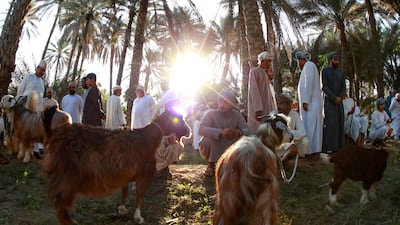
Omani livestock merchants wait for customers at a traditional pre-Eid market in the Sarur area of Al Dakhiliyah Region. AFP -
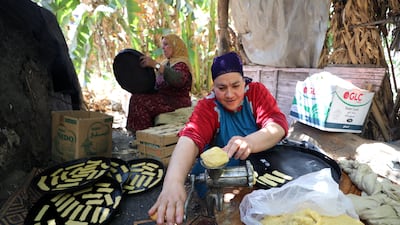
An Egyptian woman prepares bread on the outskirts of Cairo in the run-up to Eid Al Fitr EPA -
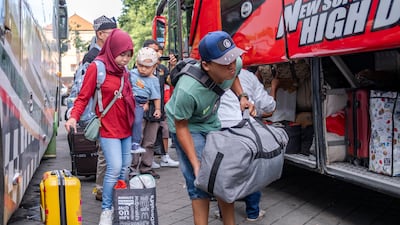
An Indonesian family prepare for their journey home for Eid Al Fitr in Denpasar, the provincial capital of Bali EPA -
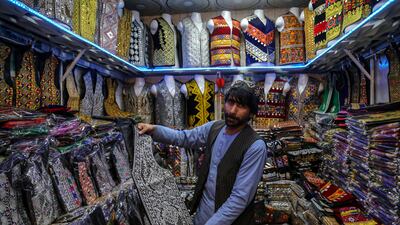
An Afghan shopkeeper arranges his traditional clothing wares in the capital Kabul. EPA -
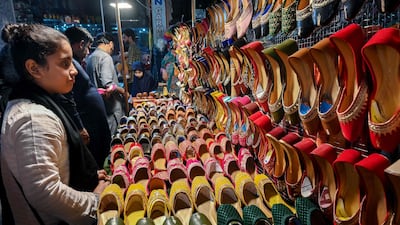
People check out footwear at a market in Islamabad. AFP -
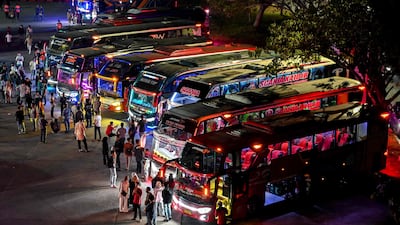
Passengers travelling home for Eid wait to board their buses at a bus station in Banda Aceh. AFP -
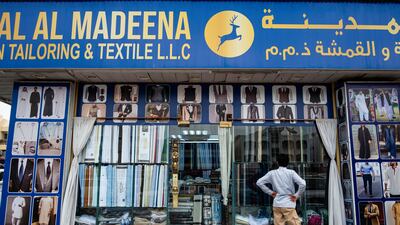
Tailoring shops in Dubai's Satwa neighbourhood come to life ahead of Eid. Antonie Robertson / The National -
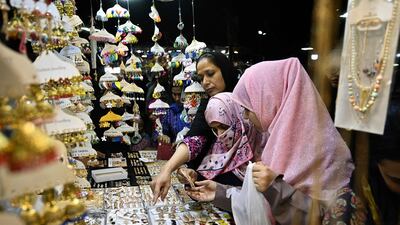
Customers select ornaments at a jewellery shop in Karachi. AFP -
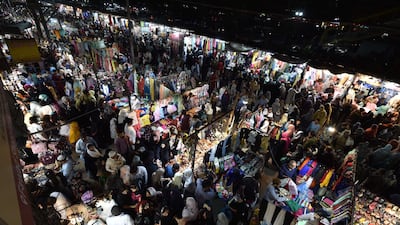
A market in Karachi teeming with Eid customers. EPA -
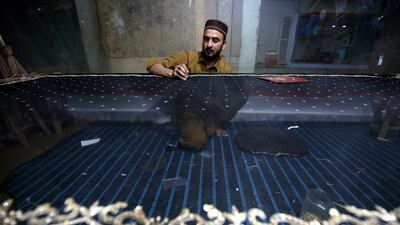
An embroiderer in Pakistan's northern city of Peshawar. EPA -
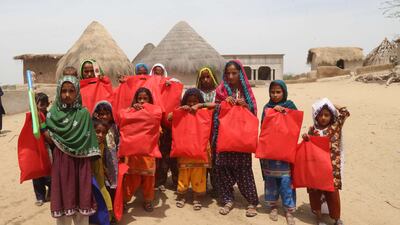
Children show Eid handouts they received from the Dua Foundation charity in Pakistan's Tharpark district. EPA -

A train filled with people returning home for the Eid holiday in Jakarta. Reuters -
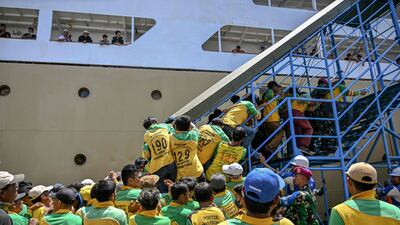
Indonesian porters jostle with each other to board a passenger ship in Surabaya. AFP -
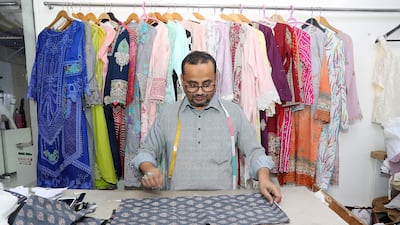
A tailor specialising in women's wear at his shop in Bur Dubai. Pawan Singh / The National



