
Three years since the October 7 attacks, Israel has still not formed a state commission of inquiry into the deadliest day in its history.
Prime Minister Benjamin Netanyahu blames everyone in the security apparatus at the time, except himself. His opponents lay the blame fundamentally at his feet. Until there is a state commission of inquiry, the highest and most powerful level of investigation that Israel can conduct, the bitter debate will continue to pull at the loosening threads of an already divided society.
The absence of an investigative body is astonishing for a country that obsesses over security. After the disaster of the 1973 Yom Kippur War, in which Israeli forces were taken by surprise and suffered heavy initial losses, it took only three weeks to establish one.
An inquiry into October 7 would look into the security failures that led up to the killings, as well as the chaotic and ineffective response.
There have been small military investigations into pockets of fighting that day but nothing near the scale of a state commission of inquiry into the collective failure and the divisive period that led up to it, critics say. They believe Israel needs the broad scope and power of such a body, which is independent from political leadership and can summon anyone to give evidence.
Rather than being appointed by politicians, members are chosen by the president of the Supreme Court. Their investigations have in the past led to recommendations for further action against certain people, opening the possibility that Mr Netanyahu himself could be held directly responsible.

Setting up a state commission is a key campaign promise of many of Mr Netanyahu’s opponents in the October 27 general election. In an interview with The Times of Israel on Wednesday to mark the third anniversary of the attacks, Mr Netanyahu’s main rival, Gadi Eisenkot, said he would establish one “immediately” if elected.
With so much time having passed since the attacks, there are fears that evidence might have been compromised or lost.
Attorney General Gali Baharav-Miara warned in August the delay could “undermine the effectiveness of a future investigation and result in the loss of evidence”. However, she supported postponing the issue until after the election, fearing the process could undermine the vote.
The Israeli news outlet Haaretz, whose editorial board has long called for a state commission of inquiry, last week published testimony from experts that the effectiveness of one could diminish over time.
Eyal Eshel, a leading campaigner for such an investigation, told the outlet a delay “gives those under investigation time to co-ordinate their testimony [and] memories fade, evidence can be concealed and other damage can be done”.
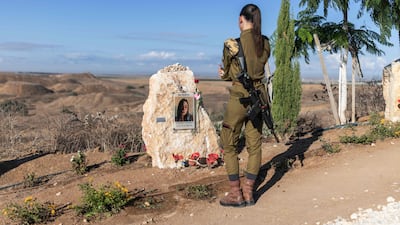
Her daughter, a soldier, was killed at the Nahal Oz base as Hamas-led militants poured across the border and attacked communities, military outposts and a music festival early on October 7, 2023, leaving about 1,200 people dead and taking about 250 hostage.
As memorials are held across the country, less than three weeks before people head to the polls, trauma is mixed with anger. A Gaza ceasefire has been struck, even though Israel continues deadly attacks on the strip, all of the hostages taken during the attacks have been returned, and almost all of the security officials in senior positions during the October 7 attacks have resigned, apart from the Prime Minister. There are still no answers.

