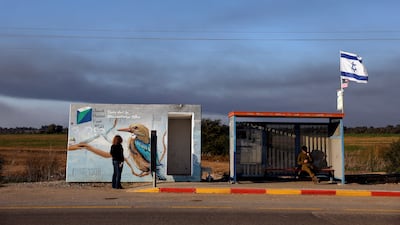

Today is the third anniversary of the Hamas-led October 7 attacks on Israel. For the families of the Israelis killed or kidnapped by the militants, this will be an especially heartbreaking date to mark. Meanwhile, the families of the many thousands of Palestinians killed and many more injured and displaced in the subsequent Israeli offensive on Gaza continue to endure great suffering.
October 7 was a significant moment for the wider Middle East, but it is also important to remember that the Palestinian-Israeli conflict did not begin that day. Certainly, the sight of Palestinian gunmen roaming through Israeli bases and communities signalled a profound rupture, but it was also a catalyst for dynamics that had been building across the region for years.
The attacks that originated from a besieged and impoverished Gaza Strip shattered Israel’s sense of security. They also exposed the flawed assumption that had come to underpin Israeli policy, namely that the Palestinian occupation could be managed rather than ended. The hurt inflicted on ordinary Israelis, the leaving of Gaza’s Palestinians defenceless to Israeli retaliation and the political boost given to Israel’s nationalist extremes are additional outcomes of that fateful day.
The response to October 7 now extends well beyond Gaza. Israel has launched or supported military action against targets linked to Iran and its allies in Lebanon, Syria and Iran itself. It also attacked Hamas figures based in Qatar in September last year. What began as a response to one attack has become part of a much wider regional confrontation.
That should not obscure Hamas’s crimes against civilians. Nevertheless, “security” cannot become a permanent justification for open-ended war. If military action alone could produce lasting security, three years of conflict would have brought the region closer to it. Instead, the geography of the violence has expanded.
The main lesson of October 7 should be that the old assumptions were wrong. The Palestinian question cannot be indefinitely postponed, and the occupation must end. Gaza cannot simply be managed. Regional stability cannot be built on an expectation that adversaries and their grievances can be contained forever.
In the end, real security requires not permanent displays of military strength but political arrangements that make another October 7 attack less likely. That means a process that eventually fulfils Palestinians’ right to a credible future of their own, free from occupation.
Israel’s coming election offers that country’s society an opportunity to debate this question. The central issue should not be how to prevent the next attack, but what a genuinely secure Israel looks like in 10, 20 or 30 years. A realistic pathway to such a future leads to political negotiations, not war without end. Meanwhile, the need for Palestinian elections becomes ever greater.
Remembering October 7 means remembering its victims. But honouring those lives should also mean refusing to accept that the suffering that followed is inevitable. The Middle East needs a different answer to the failures exposed by that day; that means a political future in which security and Palestinian self-determination are no longer treated as contradictory goals.