

More than 1,700 people were killed and nearly 200,000 displaced during a week of violence in Syria's Sweida province in July last year, a UN investigation has found, with multiple actors including government forces, tribal fighters and Druze armed groups committing acts that may amount to war crimes.
The 85-page report by the Independent International Commission of Inquiry on Syria said at least 1,707 people were killed in the southern province, most of them civilians from the Druze minority sect, alongside members of the Bedouin community and at least 225 government personnel.
Up to 155,000 people remain displaced, the report said, describing a humanitarian situation still unresolved months after a fragile ceasefire.
A government-appointed inquiry committee into the violence said on March 17 that it had documented 1,760 deaths and 2,188 injuries “from all sides”. It also concluded there were “many human rights violations” by multiple parties, including local armed groups and individuals linked to ISIS, in addition to members of government and security forces, many of whom had been arrested. The committee, set up soon after the clashes, said its work relied on evidence collected and witness accounts, and that its findings were submitted to the Justice Ministry.
The UN commission said violations were committed by all main parties to the conflict. Many of those violations may constitute war crimes, and in some cases could amount to crimes against humanity, it said.
The report said tribal fighters who accompanied government forces during the initial clashes operated under their effective control, making their actions attributable to the state, while other fighters were treated as direct participants in hostilities.
The violence unfolded in three waves between July 14 and July 19, about seven months after rebels toppled the regime of Bashar Al Assad, with each phase marked by attacks on civilians and widespread abuses. In the first phase, government forces and allied fighters carried out killings, arbitrary arrests, torture, sexual violence and looting, primarily targeting the Druze population, the report said.
In the second wave, Druze armed groups retaliated against Bedouin communities, committing killings, torture, forced displacement and attacks on civilian and religious sites, forcing the displacement of nearly all Bedouin from areas under their control.
The third wave saw thousands of tribal fighters mobilise and advance into Sweida, where they carried out widespread looting, killings and the burning of homes in dozens of villages, with nearly every house in 35 villages reported damaged or destroyed.
-
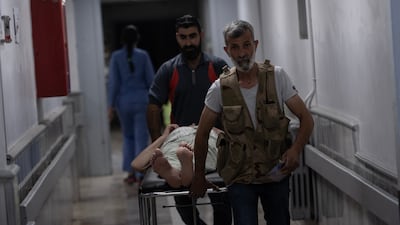
More than 1,000 people were killed and many others injured in the widespread violence between Bedouin tribes and Druze factions in the southern Syrian city of Sweida. All photos: Hasan Belal for The National -
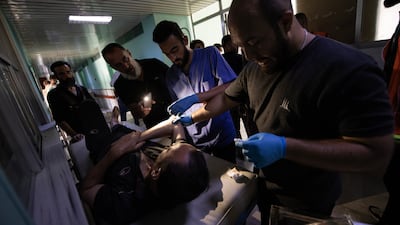
This injury victim had to be treated at Sweida's National Hospital under the flashlight of a mobile phone due to a power outage in the city. -
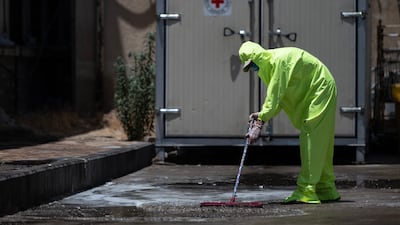
A hospital volunteer cleans up the remains of bodies that had been kept under the sun for three days due to the violence. -
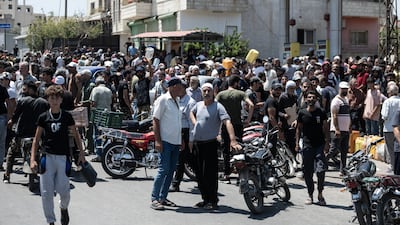
Large crowds of people from Sweida gather in front of a gas station to obtain their allocations of diesel and gasoline after the siege imposed on by the Syrian government. -

A doctor at the National Hospital is archiving photos of corpses to document the lives that were lost. -
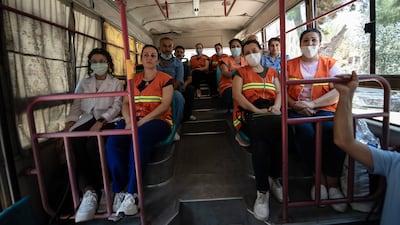
A group of doctors and nurses take the bus home after a long day at work. -
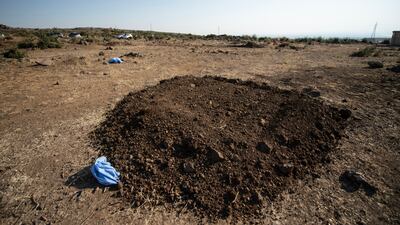
One of the mass graves in Al Raha area of Sweida, where the Druze hijab is placed as a symbol of the people. -

Burnt buildings in Al Omran roundabout area. -
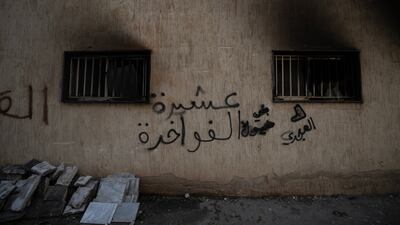
The name of one of the Bedouin tribes is written on a wall of a building in Al Omran roundabout area as evidence of their presence.


The commission said extrajudicial killings were widespread, with civilians – including women, children, the elderly and disabled – targeted during home raids and in public spaces, often accompanied by sectarian insults.
It also documented patterns of torture, abductions, sexual and gender-based violence, attacks on religious sites and systematic destruction of civilian property, which were often recorded and disseminated by perpetrators on social media.
While large-scale fighting subsided after a ceasefire on July 19, sporadic clashes and violations have continued, and the report warned that without accountability and political resolution, the situation remains volatile.
The commission said addressing violations, ensuring justice for victims and rebuilding trust between communities would be essential to prevent renewed violence.

