


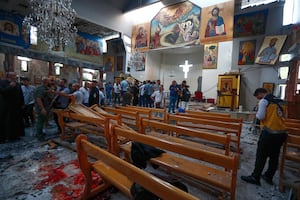
Doctors at a hospital treating the wounded have told of chaos and heartbreak after a bomb and gun attack on Mar Elias Church in Damascus killed at least 20 and injured 54.
Sunday's assault, the first major terrorist attack since the fall of former president Bashar Al Assad last year, has deeply shaken Syria’s small Christian community.
All staff at Mujtahid Hospital, the capital's most prominent medical centre, were mobilised to deal with the flood of injured churchgoers. The National saw severely wounded patients lying on stretchers with their limbs wrapped in blood-soaked gauze during a visit.
Dr Muhannad Fakhri, a physician at the hospital, said four patients died after being admitted. The emergency ward was gripped by chaos – patients screaming in pain, staff rushing back and forth, and desperate families searching for their loved ones.
“Have you seen him, have you seen Tonios,” one woman asked Dr Fakhri, showing a picture of a young man on her phone.
The doctor shook his head. The man was not being treated in the ward. “You should check the morgue,” he told her.
The young woman's face instantly shut down at Dr Fakhri's words, her hope fading.
Several killed in attack on church in Damascus
Syrian state media reported that a suicide bomber affiliated with ISIS entered the church in the Dweila neighbourhood of the capital, where he opened fire before detonating himself with an explosive vest.
ISIS sleeper cells have reportedly been taking advantage of Mr Assad's removal from power by seizing weapons left unsupervised in the wake of the fall of the regime.
Seven bodies lay in Mujtahid Hospital’s morgue on Sunday, hastily covered in plastic bags. Some had names recorded on pieces of paper: Julia, Mariam; others were unidentified.
Dr Fakhri said ambulances brought in two bags of unidentified remains, which, based on their weight, were estimated to belong to about four people.
He said 11 patients were still being treated at Mujtahid. The rest were sent to other hospitals.
Syrian hospitals are already struggling with the country’s deep economic crisis, which has pushed nine out of 10 people below the poverty line.
-
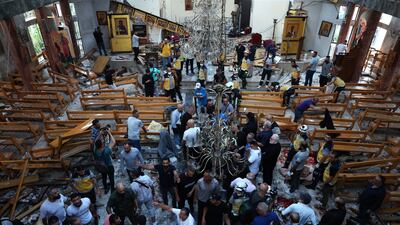
The scene after a deadly blast at the Mat Elias church in Damascus. Getty Images -
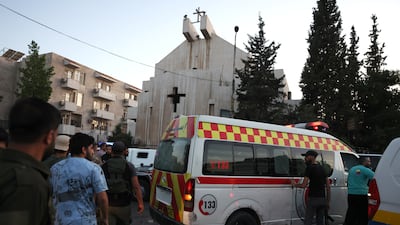
An ambulance outside the church. Getty Images -
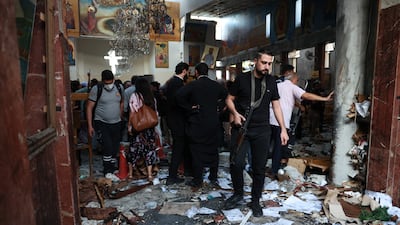
A suicide bomber detonated an explosive vest during Sunday Mass, after opening fire on worshippers gathered outside. Getty Images) -
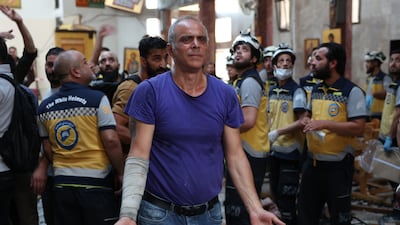
It was the first major terrorist attack since the removal of Bashar Al Assad in December. Getty Images -
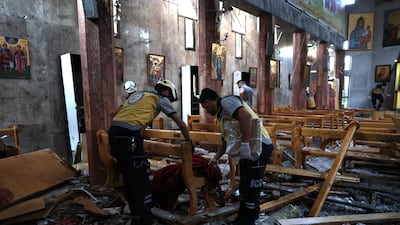
Emergency responders work inside the church. Getty Images -

A man lies on a hospital bed after being injured in the Mar Elias Church blast. AP -
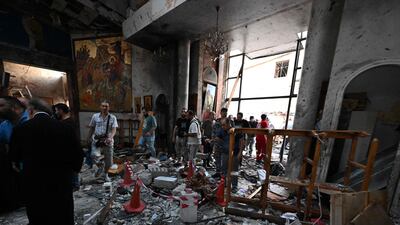
Chaos and panic gripped the area for hours after the attack. AFP -
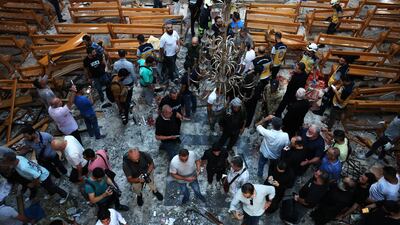
People survey the damage after a deadly blast. Getty Images -
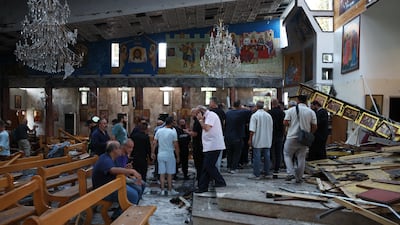
The UAE's Ministry of Foreign Affairs offered condolences and expressed 'strong condemnation of these criminal acts'. Getty Images -
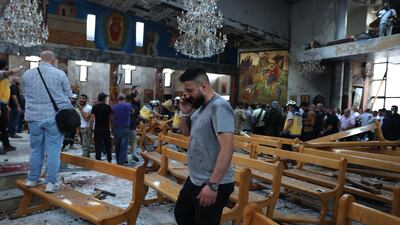
The attack was the first of its kind in Syria in years and comes as Damascus is trying to win the support of minorities. Getty Images -
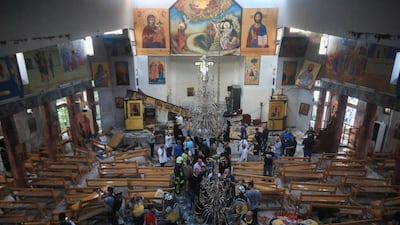
People and rescuers inspect the damage after the attack. AFP -
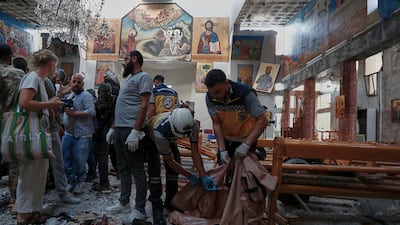
Syrian civil defence workers remove debris inside the church. AP -
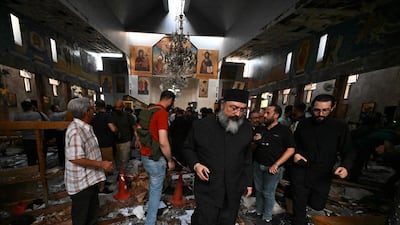
It was the first suicide bombing in Syria in years. AFP -
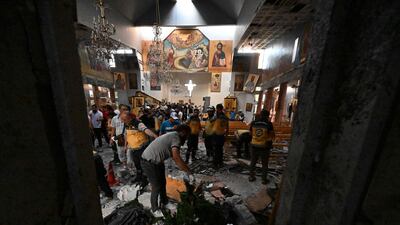
At least one suicide bomber opened fire outside the church before detonating an explosive vest inside. AFP -
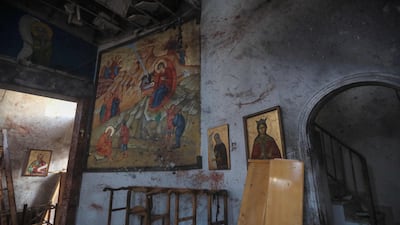
The Ministry of Health has said more than 50 people were wounded in the attack. AFP -
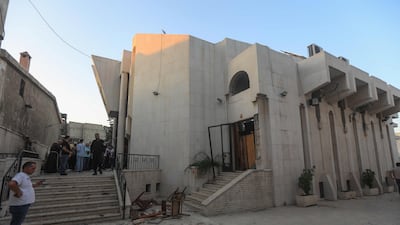
People gather near the church after the attack. AFP -
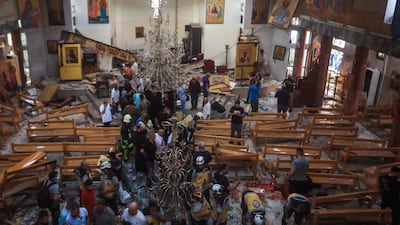
People and rescuers inspect the damage at the church. AFP -
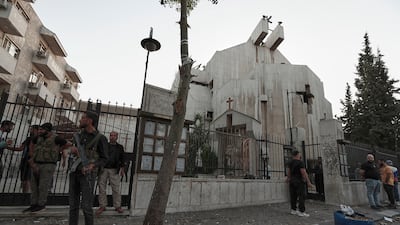
Syrian security forces stand guard outside the church. State media says the suicide bomber was affiliated with ISIS. AP -
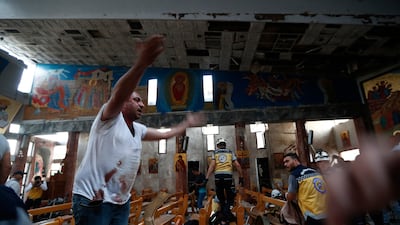
There were about 400 people inside the church at the time of the attack. AP -

The attack comes as Damascus is trying to win the support of minorities. AP


“We only have one X-ray machine for the entire ward. Of course, we could save more lives if we had better equipment,” Dr Fakhri said.
In a society all too familiar with violence and destruction since Mr Al Assad began a brutal crackdown in 2011 on peaceful protests, which spiralled into a devastating civil war, Sunday's harrowing scenes were not a first for Mr Fakhri.
“Sadly, we’re used to it,” he said. “But that wasn’t the case any more. It’s been eight months since the fall of the regime. We thought things had stabilised. But this takes us back to darker days.”
Witnesses told The National at the scene of the blast that at least one suicide bomber started shouting outside the church before setting off an explosive vest inside, and that a second gunman was also present, but did not blow himself up.
“It’s heartbreaking for the country. It feels unreal. Every time we take a step forward, we’re pulled back,” Mr Fakhri said. “I think it’s an attempt to destabilise the government.”
Syria accuses ISIS of suicide attack in Damascus church
The attack comes at a pivotal moment for Syria's new authorities as they seek to win the support of minorities. Many of them have expressed distrust towards the government – led by former members of the Islamist rebel group Hayat Tahrir Al Sham – due to the group’s extremist past.
President Ahmad Al Shara, a former HTS commander turned statesman, has been working to assert control over the country, with his administration conducting widespread anti‑ISIS raids since taking office.
But for Syria’s Christian community, those efforts have fallen short.
“I can never feel safe again,” said Hanna Naqoula, father of a 15‑year‑old boy wounded in the attack. The boy also had a friend at the church, who was killed.

