Syria's long road to recovery: Lessons from a devastated Damascus suburb


Khaled Yacoub Oweis
  • English
  • Arabic

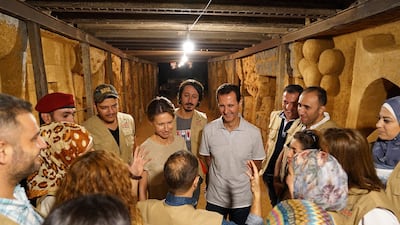
Years before the fall of his regime in December, Syria's dictator Bashar Al Assad and his wife Asma embarked on victory tours of former rebel areas that had been captured by his forces.

None was as brazen as the visit in 2018 to the ruins of Jobar, a town on the edge of Damascus that was the scene of some of the worst destruction. During four years of siege by Assad's forces, almost every building in the now-abandoned town was struck by artillery, barrel bombs from helicopters, and Russian warplanes.

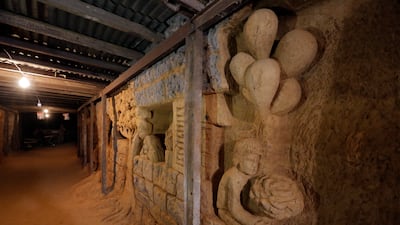
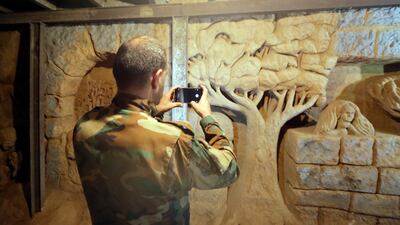
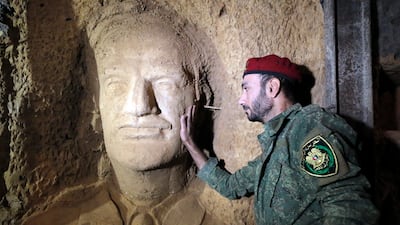
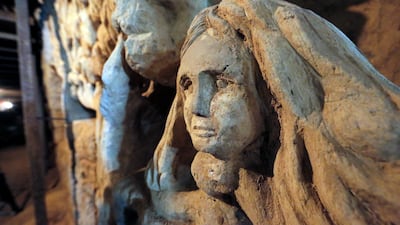
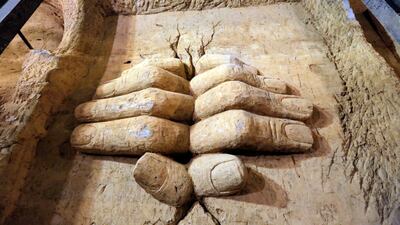
Weeks after Jobar surrendered, the regime brought in art students to carve sculptures into the walls of a tunnel that was dug by rebel defenders. The art was aimed at glorifying the same troops who levelled a city once home to 300,000 people.

In footage broadcast on state television, the couple beamed with smiles inside the tunnel. They praised the students for their creations, which they said symbolised “martyrdom and peace”.

“Assad not only erased Jobar, he celebrated it,” says Haitham Al Bakheet, a former construction worker who was made to wash the bodies of the dead during the siege. He was later taken, along with the last rebel fighters and civilians, to the northern governorate of Idlib under a surrender agreement.

The devastation in Jobar is emblematic of the magnitude of reconstruction needed in Syria and the obstacles to rebuilding, which go beyond the sheer scale of the task, including the need for international consensus on major investments.

Syria’s new Hayat Tahrir Al Sham (HTS) rulers lack funds, and the country is short of raw materials and energy. The exchange rate is volatile, and there is a shortage of Syrian pound liquidity, which hinders business activity.

Many of the country’s engineers and other skilled workers have left. The education system, long riddled with corruption and patronage, is in tatters, in kind with other public services. One in three houses was destroyed or damaged during the civil war, a UN report said.

For five decades under Assad family rule, arbitrariness was a hallmark of the legal system, contributing to an opaque real estate market with ill-defined property rights. This makes deciding who owned what difficult, especially in areas where dwellings and shops no longer exist, either because they were bombed or bulldozed to make way for new projects linked to the former ruling elite.

Last month, Mr Al Bakheet returned from Idlib, and is now living with relatives near Damascus. Like other people originally from Jobar, who are known as Al Jawabras, he visits the town regularly to look at the ruins. Shepherds tend to their sheep in the area, with the animals grazing on the undergrowth between abandoned buildings. Jobar is administratively separate from Damascus but for all practical purposes part of the capital, sitting on its eastern edge.

Mr Al Bakheet used to wash the bodies in a hospital, but the building was destroyed and the process was moved into an ancient synagogue, abandoned since Hafez Al Assad, father of Bashar and his predecessor as the country's dictator, allowed Syria’s Jews to leave the country in the 1990s. “The synagogue took a direct hit so we stopped the washing altogether,” he said.

In the Jobar tunnel, one sculpture depicts a soldier wearing a helmet and feeding a child, while another carries balloons, and a third splits stone. In reality, the security apparatus under the Assad family was often used to repress Syrians, and underpinned a system of cronyism and corruption. It was dissolved after HTS led the overthrow of Mr Al Assad on December 8.

New president Ahmad Al Shara has promised to build a new state and put Syria on the road to recovery. He was formerly a member of Al Qaeda, before breaking with the extremists and forming HTS. His group remains under UN, US and European sanctions.

Some sanctions imposed in the Assad era have been eased since Mr Al Shara took power. New aid pledges have been made, but nowhere close to the hundreds of billions of dollars needed to finance reconstruction and rebuild power generation, telecoms, health care and education.

A senior Western diplomat said Europe, in contrast to the US, appears more willing to extend funding to post-Assad Syria. But Mr Al Shara would still need to prove he can stay away from any confrontation with Israel and sideline the more extreme elements among his supporters to qualify for aid.

"If he does these things, the US might not be averse to arrangements that would also benefit it commercially," the diplomat said. Many Syrians are hoping the country will not relive its errors, and that Mr Al Shara will expand his current government, which is staffed by his proteges, and bring in more technically qualified personnel who would be more acceptable to donor countries.

A former rebel fighter stands in front of the remains of the ancient Jobar synagogue. Khaled Yacoub Oweis / The National

His existing subordinates helped Mr Al Shara run Idlib while HTS was based there before it led an 11-day offensive that toppled the Assad regime. Now he is running a country in which the "economic wheels have stopped", and needs to move fast, said Samer Hamwi, a prominent Syrian financial technology executive who works in the Gulf.

“The government does not have money to even pay for the modest salaries," said Mr Hamwi, pointing to shortages of liquidity and deficiencies in the electronic payment system, which are also dragging on the private sector. "There are difficult structural issues that are affecting the psychological state of the people."

Mr Hamwi took part in a conference in Damascus last month that brought Syrians working in Silicon Valley together with IT specialists who remained in the country through the war.

"If things do not get moving soon there will be a popular backlash," he said. In Jobar and other parts of Damascus, signs of improvements are scant.

One day last month, a car with Lebanese licence plates stopped at a damaged flyover in Jobar. Its two occupants, who are brothers, surveyed the damaged houses. One of them identified himself as belonging to Mr Al Shara's HTS. His brother said he was a businessman who lived in Beirut interested in buying property.

He asked Mr Al Bakheet if he knew of any properties for sale and enquired about the owners of certain buildings. Mr Al Bakheet replied with a blank stare and they drove off. “If the profiteers take over, it means that we will never go back to Jobar,” Mr Al Bakheet said. The ownership of most properties was clear, unlike the rest of the capital, he added.

In 2010, the year before a revolt against Mr Al Assad that sparked Syria's civil war, an estimated 50 per cent of urban dwellings in the country were "ashwaiyat", the Syrian term for illegal built. Cases of property expropriation without compensation have scared off investors.

Sheep graze in Jobar, a town on the edge of Damascus that was destroyed and abandoned in 2018 during Syria's civil war. Khaled Yacoub Oweis / The National

Over the last several weeks, The National twice saw HTS fighters evict occupants in Damascus after people who said they were the rightful owners complained that former regime operatives had unjustly taken their homes.

One incident was in the central Muhafaza area and the other in the nearby Shaalan. In both cases there was no legal procedure or recourse. HTS personnel told the evicted people that an emir would call if there was an error.

An Arab banker who was recently in Damascus said a parallel HTS control system that appears to have been installed in every major government department was bad for business. He described a meeting with Syrian central bank officials about resuming his bank's operations in Damascus that was attended by a mysterious HTS operative called Abu Abdul Rahman.

“He didn't give his real name, but it was clear that he was running the show,” the banker said in Amman. He added that he later met another shadowy man at the bank who appeared to oversee financial settlements. "From his accent, he didn't even sound Syrian,” the banker said.

A senior manager at an energy and water multinational said that although the scope for projects in Syria was substantial, there is little interest at his company. He cited security risks, and the time needed to build reliable state institutions.

"Rebuilding in Syria will be taking the Lebanese route for now," he said, referring to the diffculties Beirut has had in attracting foreign investment. “Whoever can afford it will build their own house, install their own power-generation, and find a way to dispose of sewage. I cannot see large-scale projects in Syria soon.”


GAC GS8 Specs

Engine: 2.0-litre 4cyl turbo

Power: 248hp at 5,200rpm

Torque: 400Nm at 1,750-4,000rpm

Transmission: 8-speed auto

Fuel consumption: 9.1L/100km

On sale: Now

Price: From Dh149,900

Manchester United's summer dealings

In

Victor Lindelof (Benfica) £30.7 million

Romelu Lukaku (Everton)  £75 million

Nemanja Matic (Chelsea)  £40 million


Out

Zlatan Ibrahimovic Released

Wayne Rooney (Everton) Free transfer

Adnan Januzaj (Real Sociedad) £9.8 million


Specs

Engine: 51.5kW electric motor

Range: 400km

Power: 134bhp

Torque: 175Nm

Price: From Dh98,800

Available: Now

FIXTURES

All times UAE ( 4 GMT)

Saturday
Fiorentina v Torino (8pm)
Hellas Verona v Roma (10.45pm)

Sunday
Parma v Napoli (2.30pm)
Genoa v Crotone (5pm)
Sassuolo v Cagliari (8pm)
Juventus v Sampdoria (10.45pm)

Monday
AC Milan v Bologna (10.45om)

Playing September 30

Benevento v Inter Milan (8pm)
Udinese v Spezia (8pm)
Lazio v Atalanta (10.45pm)

Libya's Gold

UN Panel of Experts found regime secretly sold a fifth of the country's gold reserves. 

The panel’s 2017 report followed a trail to West Africa where large sums of cash and gold were hidden by Abdullah Al Senussi, Qaddafi’s former intelligence chief, in 2011.

Cases filled with cash that was said to amount to $560m in 100 dollar notes, that was kept by a group of Libyans in Ouagadougou, Burkina Faso.

A second stash was said to have been held in Accra, Ghana, inside boxes at the local offices of an international human rights organisation based in France.

While you're here
Timeline

2012-2015

The company offers payments/bribes to win key contracts in the Middle East

May 2017

The UK SFO officially opens investigation into Petrofac’s use of agents, corruption, and potential bribery to secure contracts

September 2021

Petrofac pleads guilty to seven counts of failing to prevent bribery under the UK Bribery Act

October 2021

Court fines Petrofac £77 million for bribery. Former executive receives a two-year suspended sentence 

December 2024

Petrofac enters into comprehensive restructuring to strengthen the financial position of the group

May 2025

The High Court of England and Wales approves the company’s restructuring plan

July 2025

The Court of Appeal issues a judgment challenging parts of the restructuring plan

August 2025

Petrofac issues a business update to execute the restructuring and confirms it will appeal the Court of Appeal decision

October 2025

Petrofac loses a major TenneT offshore wind contract worth €13 billion. Holding company files for administration in the UK. Petrofac delisted from the London Stock Exchange

November 2025

180 Petrofac employees laid off in the UAE

Who's who in Yemen conflict

Houthis: Iran-backed rebels who occupy Sanaa and run unrecognised government

Yemeni government: Exiled government in Aden led by eight-member Presidential Leadership Council

Southern Transitional Council: Faction in Yemeni government that seeks autonomy for the south

Habrish 'rebels': Tribal-backed forces feuding with STC over control of oil in government territory

The%20specs
%3Cp%3E%0D%3Cstrong%3EEngine%3A%20%3C%2Fstrong%3E4.0-litre%20twin-turbo%20V8%0D%3Cbr%3E%3Cstrong%3EPower%3A%20%3C%2Fstrong%3E666hp%20at%206%2C000rpm%0D%3Cbr%3E%3Cstrong%3ETorque%3A%20%3C%2Fstrong%3E850Nm%20at%202%2C300-4%2C500rpm%0D%3Cbr%3E%3Cstrong%3ETransmission%3A%20%3C%2Fstrong%3E8-speed%20auto%0D%3Cbr%3E%3Cstrong%3EOn%20sale%3A%20%3C%2Fstrong%3EQ1%202023%0D%3Cbr%3E%3Cstrong%3EPrice%3A%20%3C%2Fstrong%3Efrom%20Dh1.15%20million%20(estimate)%3C%2Fp%3E%0A
COMPANY%20PROFILE
%3Cp%3E%3Cstrong%3ECompany%20name%3A%3C%2Fstrong%3E%20Switch%20Foods%3Cbr%3E%3Cstrong%3EStarted%3A%3C%2Fstrong%3E%202022%3Cbr%3E%3Cstrong%3EFounder%3A%3C%2Fstrong%3E%20Edward%20Hamod%3Cbr%3E%3Cstrong%3EBased%3A%3C%2Fstrong%3E%20Abu%20Dhabi%2C%20UAE%3Cbr%3E%3Cstrong%3EIndustry%3A%3C%2Fstrong%3E%20Plant-based%20meat%20production%3Cbr%3E%3Cstrong%3ENumber%20of%20employees%3A%3C%2Fstrong%3E%2034%3Cbr%3E%3Cstrong%3EFunding%3A%3C%2Fstrong%3E%20%246.5%20million%3Cbr%3E%3Cstrong%3EFunding%20round%3A%3C%2Fstrong%3E%20Seed%3Cbr%3E%3Cstrong%3EInvestors%3A%3C%2Fstrong%3E%20Based%20in%20US%20and%20across%20Middle%20East%3C%2Fp%3E%0A

Mercer, the investment consulting arm of US services company Marsh & McLennan, expects its wealth division to at least double its assets under management (AUM) in the Middle East as wealth in the region continues to grow despite economic headwinds, a company official said.

Mercer Wealth, which globally has $160 billion in AUM, plans to boost its AUM in the region to $2-$3bn in the next 2-3 years from the present $1bn, said Yasir AbuShaban, a Dubai-based principal with Mercer Wealth.

Within the next two to three years, we are looking at reaching $2 to $3 billion as a conservative estimate and we do see an opportunity to do so,” said Mr AbuShaban.

Mercer does not directly make investments, but allocates clients’ money they have discretion to, to professional asset managers. They also provide advice to clients.

“We have buying power. We can negotiate on their (client’s) behalf with asset managers to provide them lower fees than they otherwise would have to get on their own,” he added.

Mercer Wealth’s clients include sovereign wealth funds, family offices, and insurance companies among others.

From its office in Dubai, Mercer also looks after Africa, India and Turkey, where they also see opportunity for growth.

Wealth creation in Middle East and Africa (MEA) grew 8.5 per cent to $8.1 trillion last year from $7.5tn in 2015, higher than last year’s global average of 6 per cent and the second-highest growth in a region after Asia-Pacific which grew 9.9 per cent, according to consultancy Boston Consulting Group (BCG). In the region, where wealth grew just 1.9 per cent in 2015 compared with 2014, a pickup in oil prices has helped in wealth generation.

BCG is forecasting MEA wealth will rise to $12tn by 2021, growing at an annual average of 8 per cent.

Drivers of wealth generation in the region will be split evenly between new wealth creation and growth of performance of existing assets, according to BCG.

Another general trend in the region is clients’ looking for a comprehensive approach to investing, according to Mr AbuShaban.

“Institutional investors or some of the families are seeing a slowdown in the available capital they have to invest and in that sense they are looking at optimizing the way they manage their portfolios and making sure they are not investing haphazardly and different parts of their investment are working together,” said Mr AbuShaban.

Some clients also have a higher appetite for risk, given the low interest-rate environment that does not provide enough yield for some institutional investors. These clients are keen to invest in illiquid assets, such as private equity and infrastructure.

“What we have seen is a desire for higher returns in what has been a low-return environment specifically in various fixed income or bonds,” he said.

“In this environment, we have seen a de facto increase in the risk that clients are taking in things like illiquid investments, private equity investments, infrastructure and private debt, those kind of investments were higher illiquidity results in incrementally higher returns.”

The Abu Dhabi Investment Authority, one of the largest sovereign wealth funds, said in its 2016 report that has gradually increased its exposure in direct private equity and private credit transactions, mainly in Asian markets and especially in China and India. The authority’s private equity department focused on structured equities owing to “their defensive characteristics.”

Ibrahim's play list

Completed an electrical diploma at the Adnoc Technical Institute

Works as a public relations officer with Adnoc

Apart from the piano, he plays the accordion, oud and guitar

His favourite composer is Johann Sebastian Bach

Also enjoys listening to Mozart

Likes all genres of music including Arabic music and jazz

Enjoys rock groups Scorpions and Metallica 

Other musicians he likes are Syrian-American pianist Malek Jandali and Lebanese oud player Rabih Abou Khalil

COMPANY%20PROFILE
%3Cp%3E%3Cstrong%3EName%3A%20%3C%2Fstrong%3ESmartCrowd%0D%3Cbr%3E%3Cstrong%3EStarted%3A%20%3C%2Fstrong%3E2018%0D%3Cbr%3E%3Cstrong%3EFounder%3A%20%3C%2Fstrong%3ESiddiq%20Farid%20and%20Musfique%20Ahmed%0D%3Cbr%3E%3Cstrong%3EBased%3A%20%3C%2Fstrong%3EDubai%0D%3Cbr%3E%3Cstrong%3ESector%3A%20%3C%2Fstrong%3EFinTech%20%2F%20PropTech%0D%3Cbr%3E%3Cstrong%3EInitial%20investment%3A%20%3C%2Fstrong%3E%24650%2C000%0D%3Cbr%3E%3Cstrong%3ECurrent%20number%20of%20staff%3A%3C%2Fstrong%3E%2035%0D%3Cbr%3E%3Cstrong%3EInvestment%20stage%3A%20%3C%2Fstrong%3ESeries%20A%0D%3Cbr%3E%3Cstrong%3EInvestors%3A%20%3C%2Fstrong%3EVarious%20institutional%20investors%20and%20notable%20angel%20investors%20(500%20MENA%2C%20Shurooq%2C%20Mada%2C%20Seedstar%2C%20Tricap)%3C%2Fp%3E%0A
Past winners of the Abu Dhabi Grand Prix

2016 Lewis Hamilton (Mercedes-GP)

2015 Nico Rosberg (Mercedes-GP)

2014 Lewis Hamilton (Mercedes-GP)

2013 Sebastian Vettel (Red Bull Racing)

2012 Kimi Raikkonen (Lotus)

2011 Lewis Hamilton (McLaren)

2010 Sebastian Vettel (Red Bull Racing)

2009 Sebastian Vettel (Red Bull Racing)


Company profile

Name: Dukkantek 

Started: January 2021 

Founders: Sanad Yaghi, Ali Al Sayegh and Shadi Joulani 

Based: UAE 

Number of employees: 140 

Sector: B2B Vertical SaaS(software as a service) 

Investment: $5.2 million 

Funding stage: Seed round 

Investors: Global Founders Capital, Colle Capital Partners, Wamda Capital, Plug and Play, Comma Capital, Nowais Capital, Annex Investments and AMK Investment Office  

Updated: March 03, 2025, 6:48 PM