

More than 1.3 million pilgrims have arrived in Saudi Arabia for this year's Hajj, which begins on Wednesday, in summer heat that has prompted modern additions to the centuries-old rites.
All Muslims who are able to do so must make the Hajj pilgrimage to Makkah at least once in their lifetime as one of the five pillars of Islam.
The annual pilgrimage to the holiest city in Islam takes place during Dhu Al Hijja, the last month of the Islamic calendar.
The ritual literally translates as “to attend a journey”, and denotes both the outward act of physically travelling and the inward act of a person's contemplation of their faith.
Alongside the spiritual experience, there are practical considerations for Saudi officials in managing the vast crowds. A cooling system described as the world's largest will keep temperatures at Makkah's Grand Mosque between 22°C and 24°C, the official Saudi Press Agency said.
Crushes, fires and other accidents have caused deaths in the past and permits are issued to manage numbers. Saudi Arabia's Interior Ministry has warned that anyone without one will face a fine of up to 20,000 riyals ($5,300). Foreigners who breach the rules could be barred from entering Saudi Arabia for 10 years.

What is the Hajj pilgrimage?
The world's largest annual pilgrimage, Hajj requires the faithful to repeat a set of rituals first performed by the Prophet Mohammed centuries ago.
The event is one every believer aspires to take part in at some point in their life, if they are able.
Those who are unable to perform the pilgrimage for financial or health reasons are exempt. If they can afford it, Muslims can have someone perform Hajj on their behalf, with Sharia advising they fund someone who would otherwise be unable to attend.

When is Hajj and how long does it last?
This year, Hajj begins on Wednesday, June 4. The pilgrimage takes three days, but many pilgrims extend their stay by a week to pray in the holy cities of Makkah and Madinah.
What is the importance of Hajj?
Hajj is a deeply spiritual experience for Muslims.
The journey to Makkah may well be the first time many pilgrims will leave their countries or board planes. More than half of those performing Hajj visit from low-income countries, while 18 per cent come from conflict-ridden states.
According to Sunnah, or the way of the Prophet, Hajj Al Tamattu is the most preferred method of performing the pilgrimage. Along with Hajj Al Qiran, it differs from Hajj Al Ifrad in that the latter entails performing only Hajj, while the other two require performing Umrah, or minor pilgrimage, beforehand.
What is the history behind Hajj?
Though Hajj has been performed in its current form for more than 1,300 years, some of its elements go back to the time of the Prophet Ibrahim in 1813 BC.
It is said God ordered the Prophet Ibrahim to leave his wife, Hagar, and son, Ismail, alone in the desert of ancient Makkah.
Hagar, desperately searching for water for Ismail, ran between two small hills, Al Safa and Al Marwa, seven times. When she returned to her son, she saw him scratching at the ground and it is said a miracle from God caused a spring to well up beneath them. Today, pilgrims pace between these two mountains as part of the rituals of Hajj in remembrance of that miracle. The site is now the Well of Zamzam.

Even the Kaaba is tied to the Prophet Ibrahim, who built it with the help of his son under orders from God, who told him to invite people to make pilgrimage. It is said the black stone used to build the Kaaba was supplied by the angel Gabriel, who brought it from heaven.
Some time before Islam was introduced in 610 AD, the Kaaba became a site for pagan worship. Twenty years later, the Prophet Mohammed led his followers from Makkah to Madinah where they destroyed the pagan idols. The Prophet Mohammed performed his first and only Hajj, with a large number of followers, in 632.
Those accompanying the Prophet Mohammed observed his every move and these steps are performed in the same sequence today.
How to perform the Hajj pilgrimage step-by-step

Day 1: The day of Tarwiyah – Dhu Al Hijja 8
On this day, pilgrims begin their Hajj at the Kaaba.
As they approach the Kaaba, pilgrims must circumambulate in a anticlockwise direction, meant to express the devotion of Muslims praying to one God.
They must then perform Sa'ey, whereby Muslims re-enact the journey of Hagar, the Prophet Ibrahim's wife, as she went between Al Safa and Al Marwa, looking for water for her son Ismail. Muslims walk between these two points.
Pilgrims then depart for Mina, 5km away, where they recite prayers and spend the night in the valley where the Prophet Ibrahim stoned the devil as he tried to lead him astray.
Day 2: The day of Arafah – Dhu Al Hijja 9
Known as the day of Arafah – a pivotal day of Hajj. After the Fajr prayer in Mina, pilgrims make the journey to Mount Arafat, a 70-metre hill believed to be where the Prophet Mohammed gave his final sermon. Standing and praying on Mount Arafat is considered the peak of the pilgrimage.
Descending from Mount Arafat, pilgrims make their way to Muzdalifah, to the south of Mina, to pray and collect pebbles to perform the last steps of Hajj. It is recommended the each worshipper collects 70 pebbles. The stoning of Jamrat Al Aqabah typically takes place after midnight.
Day 3: Stoning Jamrat Al Aqabah and Eid Al Adha – Dhu Al Hijja 10
On this day, pilgrims must stone Jamrat Al Aqabah, the place where the devil is said to have appeared before the Prophet Ibrahim. Here, pilgrims must throw seven pebbles one after the other while saying Allahu akbar (God is greatest) after each throw. The act mimics that of the Prophet Ibrahim, who was told by the angel Gabriel to pelt the devil with stones.
After the stoning, Eid Al Adha can be celebrated and the pilgrims' sacrificial animal should be slaughtered. Then, men should either shave their heads or cut their hair, and women should cut the length of a fingertip from their hair.
-
Crown Prince Mohammed bin Salman of Saudi Arabia visited the Grand Mosque in Makkah to wash the Holy Kaaba. All pictures: SPA -
The Crown Prince led the annual ceremony on behalf of his father King Salman. -
He offered prayers before leading the annual ceremony. -
During the ceremony, the Saudi monarch or his representative washes the interior of the Kaaba. -
The shrine is cleaned with Zamzam water, mixed with rose water and fragrances. -
The Crown Prince at prayer during the visit. -
The Crown Prince was joined by dignitaries for the ceremony. -
The washing of the Kaaba is preceded and followed by prayer.
Three days of Tashreeq: – Dhu Al Hijja 11 – 13
On these days, pilgrims tend to stay in Mina to stone the three sites of the devil each day to cement their intentions and in the hope that Allah will accept their Hajj. The first two days, Dhu Al Hijja 11 and 12, are mandatory while the 13th is not. After that is the final Tawaf Al Ifadha.
Hajj final step: Tawaf Al Ifadha
Before leaving Makkah, pilgrims, now referred to as Hajjis, shed their white or black robes and don their finest clothes. Makkah becomes a kaleidoscope of colour as pilgrims perform a farewell known as Tawaf Al Ifadha where they circumambulate the Kaaba one last time. This step is mandatory but pilgrims have up until the end of Dhu Al Hijja to perform it.
-

Thousands of Hajj pilgrims in Saudi Arabia make their way to perform the stoning of the devil ritual, which marks the start of the Eid Al Adha holiday. SPA -
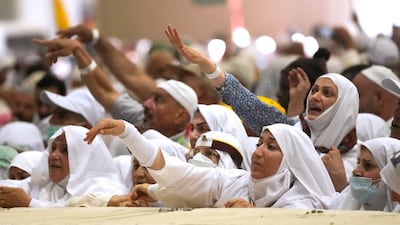
Pilgrims cast stones in the symbolic stoning of the devil ritual during the Hajj pilgrimage in Mina. AP -
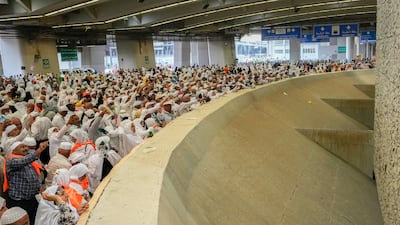
Thousands of Hajj pilgrims take part in the stoning of the devil ritual. AP -
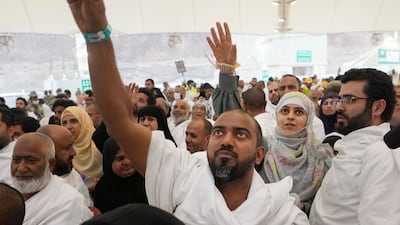
Pilgrims take part in the stoning of the devil ritual in Mina. AP -
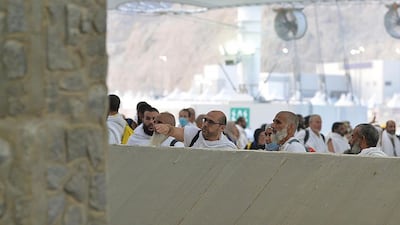
Pilgrims on the first day of Tashreeq take part in the stoning ritual. SPA -
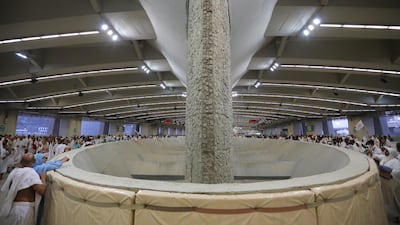
Pilgrims throw pebbles as part of the stoning of the devil ritual at the Jamarat Bridge during Hajj. EPA -
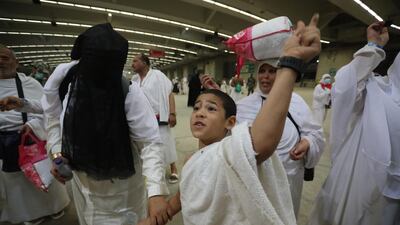
Pilgrims throw pebbles as part of the symbolic stoning of the devil ritual. EPA -
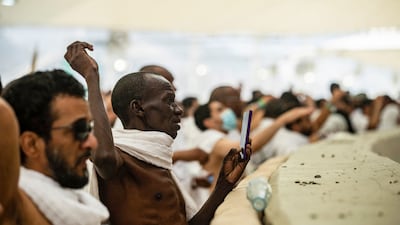
Pilgrims perform the stoning of the devil ritual as this year's expanded Hajj comes to an end. AFP -
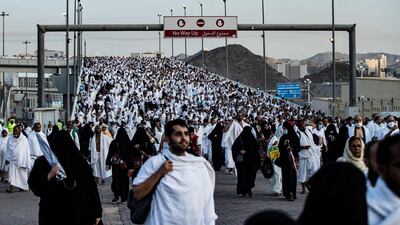
Thousands of pilgrims make their way across Mina to perform the stoning of the devil ritual, which marks the start of the Eid Al Adha holiday. AFP -
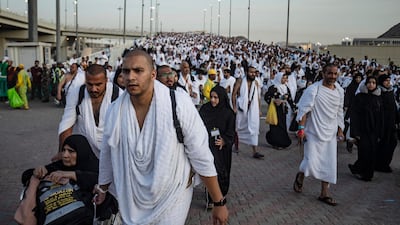
Thousands of pilgrims make their way across the valley of Mina, near Makkah, to perform the stoning of the devil ritual which marks the start of the Eid Al Adha holiday. AFP -
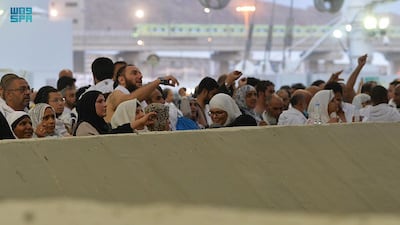
Pilgrims throw stones as part of the ritual. SPA -
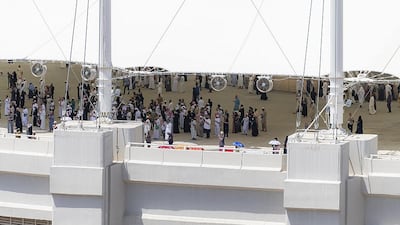
Pilgrims on the first day of Tashreeq take part in the ritual stoning of the devil. SPA


How to prepare for Hajj
Before setting off for Hajj, Muslims must first purify and declare their Niyyah, or intention, to God. Their Niyyah for Hajj should be sincere and for the sake of Allah only, not other worldly matters.
Pilgrims must also enter what is known as a state of Ihram, whereby they prepare their bodies and mind for the rituals ahead. This requires them to recite an intention and adhere to a certain dress code.
The essentials to take with you
Stripping yourself of anything that could indicate your social standing is key to Hajj. While on pilgrimage, everybody, regardless of their financial of social status, is equal in God's eyes.
It is for this reason that a simple wardrobe has been prescribed to Muslims during this time. Men must wear two sets of white sheets, symbolising purity, that do not contain stitches and have no seams. These sheets must be worn when they are in a state of Ihram while performing the Hajj rituals.
Women must wear simple, long, modest dresses or abayas.
Pilgrims should not be scented, perfumed or use any cosmetics while in the state of Ihram.
A good pair of slippers are key to a comfortable Hajj, as is a fan during the years when Hajj falls in summer.
What is forbidden during Hajj?
Ihram is a sacred state that Muslims must enter before performing Hajj or Umrah, the pilgrimage that takes place at any time throughout the year except during Hajj.
A pilgrim must enter this state by performing the cleansing rituals and wearing the previously described attire.
While in a state of Ihram, there are some acts that are forbidden to pilgrims.
These include:
- Having sex
- Obscene or immoral speech and committing sinful acts
- Cutting their hair and nails or wearing perfume
- Hunting
- Wearing gloves
- Getting married or arranging a marriage for someone else
- Men wearing anything on their heads
- Women covering their faces
How to apply for Hajj
Those who wish to perform Hajj must first apply for a permit through the official government website.
For those travelling from abroad it is recommended to go through a licensed travel agent, who will arrange a visa and travel. The travel agent will send your application form to the Saudi consulate.

Security and crowd management
The Ministry of Interior uses tens of thousands of security personnel in Makkah and Madinah to ensure the safety of the pilgrims.
With more than two million people expected to be carrying out the same rituals, crowd management is essential to stop people from being stuck in massive crowds or even trampled.
For many years now, Saudi Arabia has used a variety of technology to manage crowds. Inside the Grand Mosque of Makkah complex is the Crowd Management Operation Room. This is filled with giant screens that show the movements of pilgrims, filmed by thousands of strategically placed cameras.
Highly trained medical staff and security officers are positioned across the entire Hajj area so they can spring into action if needed. They also share any and all developments they see with the control room.
When certain areas are at capacity, officers on the ground are immediately notified and begin to redirect worshippers.
The bridge leading to Jamrat Al Aqabah was one of the deadliest places in the Hajj due to stampedes until the Saudi government built a new bridge with five floors. One of the floors is dedicated to disabled pilgrims but the rest are used to spread out traffic and are closely monitored by the Crowd Management Operation Room.
Hajj apps and information
The kingdom's Ministry of Hajj and Umrah in December 2021 launched Nusuk, an electronic platform that provides services for domestic and international pilgrims in Saudi Arabia.
Nusuk now offers more than 121 services to assist the arrival of pilgrims from all over the world.
The app offers a user-friendly platform for international pilgrims to plan their visit to Makkah and Madinah.
Nusuk is one of the initiatives of the Pilgrims Service Programme, launched by the Ministry of Hajj in partnership with the Saudi Tourism Authority, as a unified official platform that enables those wishing to perform Umrah or visit to secure visas and permits.
Users can book for Umrah and to visit the Prophet's Mosque in Madinah through the portal.
Nusuk also assists users in applying for an e-visa, as well as booking flights and hotel accommodation.
Where to eat during Hajj
Over the centuries, Makkah has become a sprawling city with malls, restaurants, hospitals and other facilities catering to residents and the influx of visitors the city hosts throughout the year.
For millions of pilgrims, eating during Hajj can be a challenging prospect as some days the schedule does not allow for a trip back to the city.
The ministry will monitor food for hygiene and to ensure there is enough.
All tourist agencies, through which the bulk of pilgrims from abroad arrange their Hajj, provide all-inclusive packages with meals, transport and accommodation.
During Covid-19 and strict regulations, the ministry authorised fresh food and buffets for pilgrims.
“In the area of licensing, compliance and monitoring of food shops, the municipality has set up teams and committees to monitor markets, food shops and restaurants,” with round-the-clock checks, to ensure the safety of food, an official spokesman for the Makkah municipality said.
But pilgrims are advised not to overeat as Hajj requires an intense amount of walking, praying and standing as they move from place to place.
This updated article was first published on July 13, 2019.

