


Live updates: Follow the latest on Israel-Gaza
The US and UK are implicated in a new report claiming that Israeli forces have carried out at least eight strikes on aid workers in Gaza since October, despite co-ordination with authorities to ensure their safety.
The report from Human Rights Watch comes after humanitarian groups cast doubt on US President Joe Biden's administration's recent assertion that it did not have enough evidence to support claims that Israel has violated US or international law during the war in Gaza.
The report found eight separate Israeli strikes on aid convoys or premises had killed or injured at least 31 workers, and that the affected groups say there were no known military targets near the location of the strikes.
“If confirmed, this would make the attacks unlawfully indiscriminate or unlawful for having failed to take sufficient precautions to ensure the target was military,” HRW said.
The group added that the findings outline “fundamental flaws” in the deconfliction zone system – the practice of aid agencies co-ordinating their movements and sharing their locations with military parties.
That practice in the context of the war in Gaza was first called into question when Israeli forces last month killed seven World Central Kitchen workers travelling through one of those protected areas.
“One of the biggest flaws is the will or desire on the part of the Israeli government to create a deconfliction process that protects aid workers,” Sarah Yager, HRW's Washington director, told The National.
World Central Kitchen workers killed in Israeli strike – in pictures
-
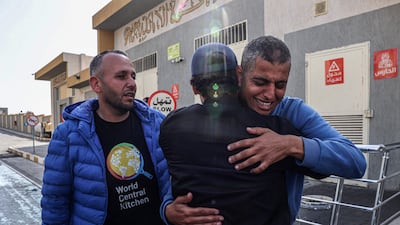
Relatives and friends mourn Saif Abu Taha, a worker with World Central Kitchen who was killed when Israeli strikes hit the NGO's vehicles in Gaza, during his funeral in Rafah. AFP -
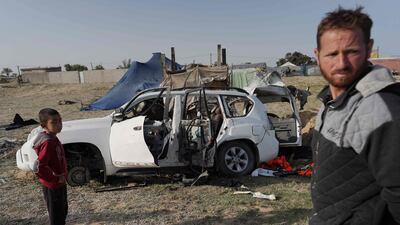
The wreckage of a car used by aid group World Central Kitchen that was hit by an Israeli strike in Deir Al Balah, central Gaza. AFP -
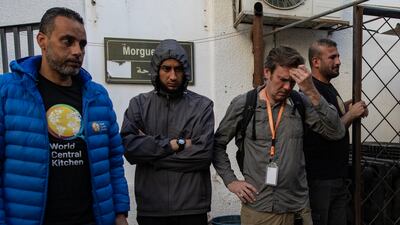
World Central Kitchen workers gather around the bodies of their colleagues after they were transferred to Al Najjar Hospital in Rafah, southern Gaza. EPA -

United Nations staff members inspect one of the World Central Kitchen vehicles hit by the deadly Israeli strike. AFP -
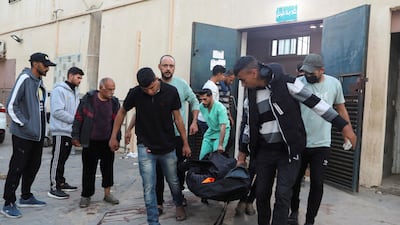
World Central Kitchen suspended operations in Gaza after seven of its staff were killed in the Israeli air strike. Reuters -
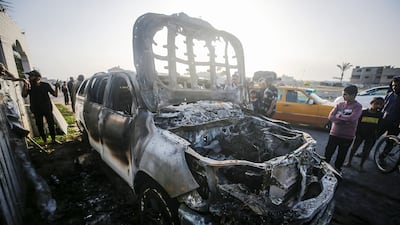
The team was killed while travelling through a deconflicted zone in armoured vehicles branded with the WCK logo. EPA -
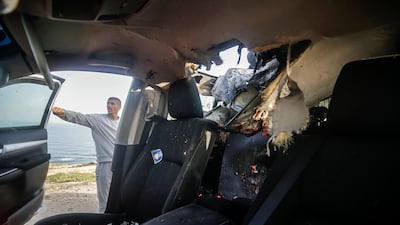
The group's car was hit after leaving a warehouse in Deir Al Balah, despite co-ordinating its movements with the Israeli military. EPA -

The Israeli military said it was conducting a thorough review at the highest levels to understand the circumstances of this 'tragic' incident. Reuters -
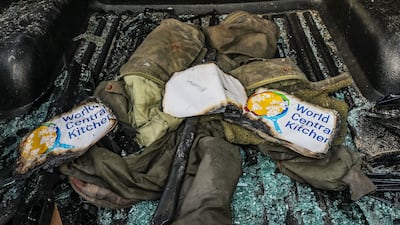
Clothes of members of the NGO are seen inside their destroyed car on Al Rashid road in the Gaza Strip. EPA -

Australian Lalzawmi Frankcom, left, was among the WCK employees killed in the strike. Reuters -

The uniform of a woman WCK employee who was killed in Israeli air strike in Deir Al Balah. EPA -

Employees of World Central Kitchen mourn after their colleagues were killed in the Israeli air strike. Reuters -

A man displays blood-stained British, Polish, and Australian passports after the Israeli air strike that killed WCK workers, including foreigners, in Deir Al Balah. AP -

A World Central Kitchen barge loaded with food arrives off the Gaza coast, where there is risk of famine after five months of Israel's military campaign. Reuters


The State Department concluded in a recent National Security Memorandum to Congress that Israel’s use of US-provided weapons in Gaza had probably breached international humanitarian law.
The HRW report provides a concrete example of that probability.
The report states that in one attack on January 18, Israel is “likely” to have used US-made munitions in a strike on a “joint guesthouse belonging to two aid organisations”, which injured three people.
The report also notes that “one of the aid organisations, Medical Aid for Palestine, said UN inspectors concluded” that the bomb dropped in that attack was delivered by an F-16 aircraft, which uses British-made parts.
Washington said in its report, released on Friday, that it would not stop support to its ally because wartime conditions made “it difficult to assess or reach conclusive findings”.
Ms Yager says that lack of clarity still presents problems for Washington's decision to continue supporting Israel, particularly when it comes to its care for aid workers.
“Caring about aid workers is a mental state more than what IDF [Israeli military] procedures and rules of engagement say," she said.
"We, unfortunately, don't have their rules of engagement, calculus, procedures, and neither does the United States, according to the NSM report."
“The problem is that Israel is saying, 'Just trust us, we care [about aid workers]' but have shown nothing to prove it.”
Meanwhile, aid groups in Gaza are dealing with intensified danger in an already risky line of work.
“This is by far the most dangerous place in the world to be an aid worker,” Scott Paul, associate director at Oxfam, which conducts humanitarian work in Gaza, told The National.
“We owe our staff a duty of care, but its difficult to fulfil it when there is no safe option. We do our best to manage the security situation.
“Bottom line is that the core of our team is Palestinian. They live in Gaza and there's nowhere safe for them to go.”
More than 250 aid workers have been killed in Gaza since the October 7 Hamas attack in Israel, according to the UN.
The Israeli embassy in Washington did not immediately reply to The National's request for comment on the report's findings.

