


Live updates: Follow the latest news on Israel-Gaza
Israeli forces have killed 10 Palestinians across the occupied West Bank in the past 24 hours, according to official Palestinian media and the Israeli army.
They included three people killed in a drone strike on the outskirts of the densely populated Jenin refugee camp on Wednesday night, Wafa news agency reported.
The camp has been frequently targeted in Israeli strikes and raids over the past year.
Abed Zaytoun, a 63-year-old man from Hebron, was also shot and killed by the Israeli army south of Bethlehem on Thursday morning, Wafa reported.
Palestinian medics were not allowed to approach or take his body to the hospital, the agency added, saying he was taken from the scene in an Israeli ambulance.
The Israeli army and internal security agency Shin Bet said an “aircraft”, believed to a drone, struck two “senior Islamic Jihad operatives inside a vehicle” in the Jenin attack.
Israel has used drones and jets to strike suspected targets in the occupied West Bank, but drones are more commonly used because they can track targets for long periods.
Four people, including an 18-year-old, were also killed in a continuing Israeli raid on Tulkarm's Nur Shams refugee camp, the Palestinian Red Crescent said.
On Thursday afternoon, the Israeli military said it had shot and killed a Palestinian who “aroused suspicion” at the Elazar Junction in the occupied West Bank.
The Palestinian health ministry did not immediately confirm the death.
It came hours after a 19-year-old was shot and killed by the Israeli army in Al Bireh, near Ramallah.
Israel has increased drone strikes in the occupied West Bank since the war in Gaza began in October. Jenin has been a recent target of strikes and raids, with violence escalating sharply even before the current war.
Israeli forces also raided Qalqilya and two other villages in Jenin in the early hours of Thursday, Wafa reported.
Two Palestinians aged 16 and 18 were arrested in Husan, west of Bethlehem.
Last week, Israeli security forces shot dead a Palestinian teenager after a stabbing attack in the West Bank amid rising tension during Ramadan.
After rising deaths throughout last year, violence in the West Bank spiked sharply after the war in Gaza broke out.
At least 430 Palestinians have been killed by Israeli soldiers or settlers there since early October and thousands more have been arrested, the Palestinian Authority said,
-
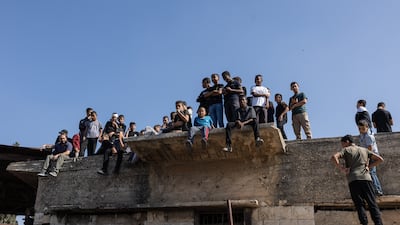
When Israeli troops raided the Jenin camp on the night of November 2-3, five resistance fighters and at least one Israeli soldier were killed. The next day the community came together to bury their fighters. All photos: Stefanie Glinski for The National -
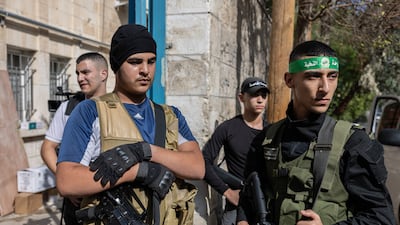
Before a funeral in Jenin refugee camp, resistance fighters gather outside the morgue. Allegiances in the camp are fluid and constantly shift, depending on who is willing to equip and support the fighters -
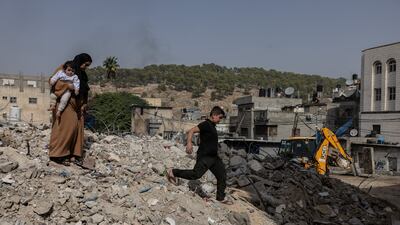
Ayat Abdullah, 31, with her daughter Aylar, one, on the rubble of the building, destroyed by the Israeli army, where she used to have a shop – her sole source of income -
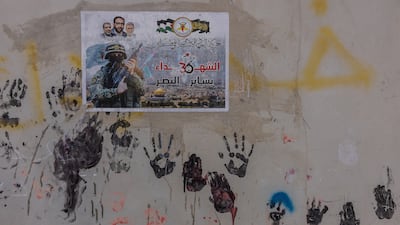
Paintings of children's hands and a poster of a resistance fighter in Jenin refugee camp in the northern part of the occupied West Bank -
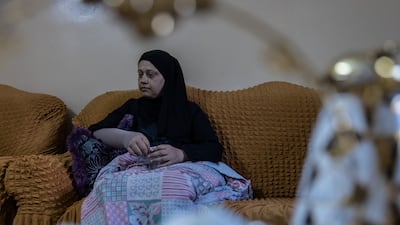
Kefah Amouri, 49, mourns her dead son Weam Hamoun, 26, who was killed in a recent Israeli raid on Jenin refugee Camp. 'Life here is terrifying at all times ... there’s death everywhere,' she says -
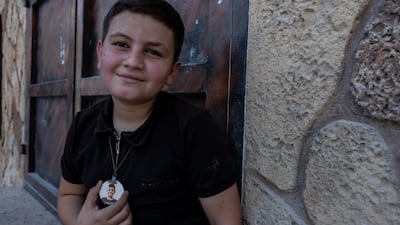
Talal, 13, son of Ayat Abdullah, 31, lost two of his friends in the recent raid on Nur Shams camp. They were his classmates and he now wears their photos around his neck. -
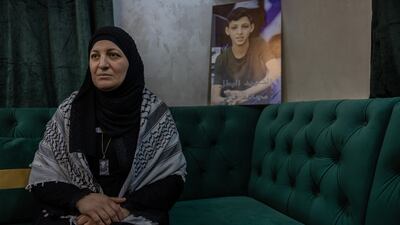
Abier Shole, 42, lost her son Mujahid, 16, in an Israeli strike in Nur Shams refugee camp. 'He was just a child,' she says. 'What happened to me is still easier to process compared to what is happening to people in Gaza.' She carries around her neck a copy of the poster of her son on the wall behind her -
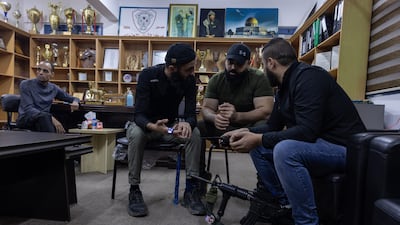
Fighters in Jenin in a community centre that is part of the refugee camp. Resistance to Israel's occupation is growing -
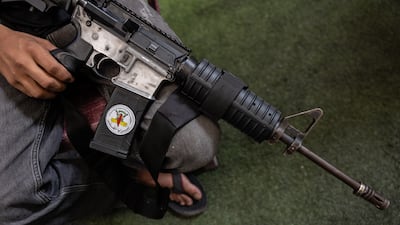
Ahmed, 18, joined Islamic Jihad two months ago -
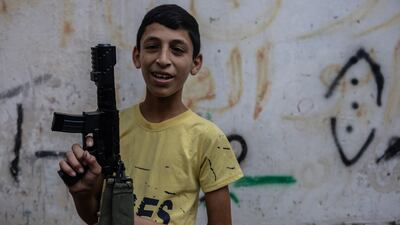
Karam, 14, with a toy gun in Nur Shams refugee camps. Karam grew up a refugee - he has never been able to leave Nur Shams camp -
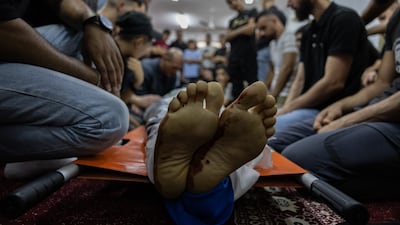
The community in Jenin refugee camp prepare to bury one of the men killed in the Israeli raid of November 2-3 -
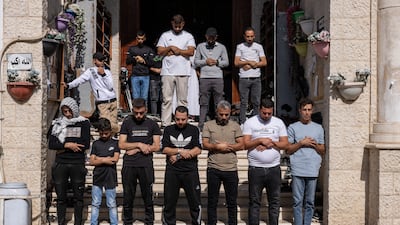
Prayers at the funeral of the men killed in the Israeli raid



