


Live updates: Follow the latest news on Israel-Gaza
A quarter of the population of the Gaza Strip – more than half a million people – is one step away from famine, the UN warned on Tuesday, as Israel continues its war on the Palestinian militant group Hamas.
“In December, it was projected that the entire population of 2.2 million people in Gaza would face high levels of acute food insecurity by February 2024,” Ramesh Rajasingham, UN director of Co-ordination of Humanitarian Affairs, told the 15-member UN Security Council.
“And here we are at the end of February with at least 576,000 people in Gaza, one quarter of the population, one step away from famine.”
One in every six children under the age of two is acutely malnourished, he said.
Mr Rajasingham said that if nothing is done, widespread famine in Gaza is “almost inevitable”.
"The humanitarian community is facing overwhelming obstacles just to get a bare minimum of supplies into the besieged enclave," he said.
Maurizio Martina, deputy director general of the Food and Agriculture Organisation, said the entire food supply chain has been affected, with power cuts, water shortages and severe restrictions on fuel shipments.
Ninety-seven per cent of the groundwater in Gaza is reportedly “unfit for human consumption”, Mr Martina said.
Agricultural production is also beginning to collapse, he said.
Desperate Gazans scramble to secure bags of food from aid lorries – video
Carl Skau, deputy executive director of the World Food Programme, said the UN agency is ready to “swiftly expand and scale up” operations should there be a ceasefire agreement.
“But in the meantime, the risk of famine is being fuelled by the inability to bring critical food supplies into Gaza in sufficient quantities, and the almost impossible operating conditions faced by our staff,” Mr Skau said.
Israel's almost five-month assault on Gaza, which has resulted in the deaths of more than 29,800 people, according to local health authorities, has made the entire population reliant on international aid.
It followed Hamas-led raids on southern Israeli communities, which killed 1,200 people.
Israeli forces are “systematically” blocking access to Gaza, Jens Laerke, spokesman for Ocha, said in Geneva earlier on Tuesday.
All planned aid convoys to the north have been blocked from entry by Israel in recent weeks.
Algeria's UN envoy, Amar Bendjama, said that with Gaza's entire population totally dependent on humanitarian aid, Israel is using starvation as a warfare tactic.
Latest from the Israel-Gaza war – in pictures
-
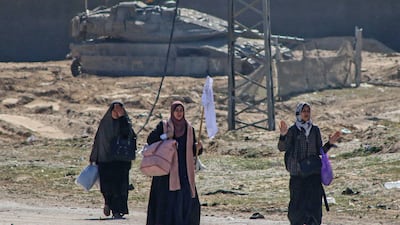
Displaced Palestinians hold a white flag as they pass an Israeli tank position while fleeing the Hamad Town district of Khan Younis. Bloomberg -
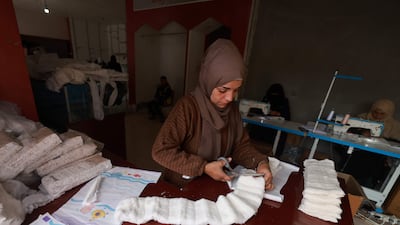
A Palestinian woman cuts material to be used for sewing nappies at a workshop in Rafah. AFP -
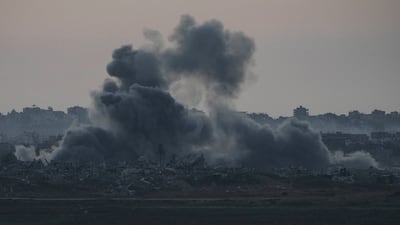
Smoke rises following an explosion in Gaza, as seen from southern Israel. AP -

Parachutes carrying relief for Palestinians drop from an Egyptian Air Force cargo plane over central Gaza. Bloomberg -
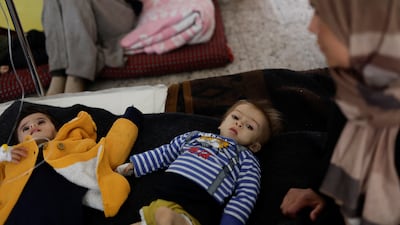
A Palestinian boy who is suffering from malnutrition is treated at a healthcare centre amid widespread hunger. Reuters -
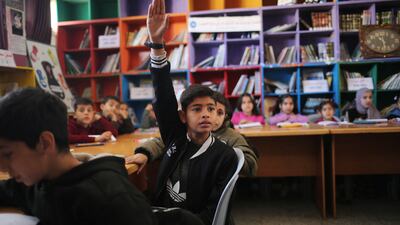
Palestinian children attend an English class in the library of the school housing displaced people in Rafah, the southern Gaza Strip. AFP -
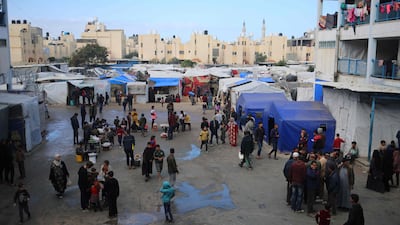
An UNRWA-run school housing displaced Palestinians in Rafah. AFP -
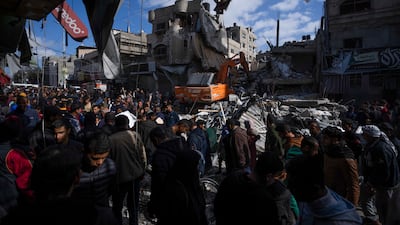
Palestinians search for bodies and survivors in the rubble of a residential building destroyed in an Israeli air strike in Rafah. AP -
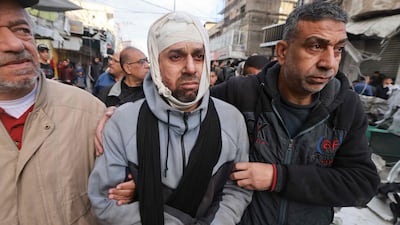
A wounded Palestinian man who lost his wife and daughter walks past a neighbours' house destroyed by Israeli bombing in Rafah. AFP -
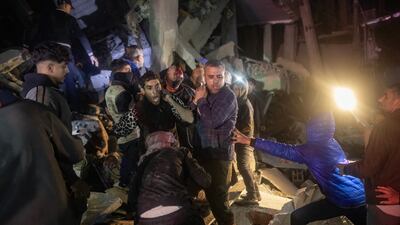
An injured man is rescued from the rubble after an Israeli air strike on the Rafah camp in Gaza. EPA -
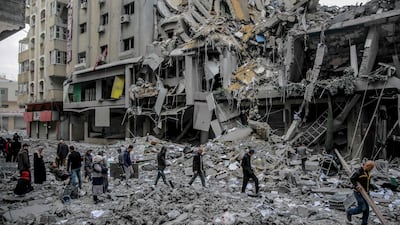
Palestinians walk amid the rubble of houses destroyed by the Israeli bombardment of Gaza city. AFP -

Aid is dropped into Gaza from US military aircraft. Reuters -
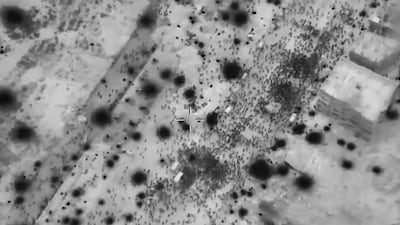
Palestinians gather at air lorries in Gaza. More than 100 were killed when Israeli troops opened fire. AP -
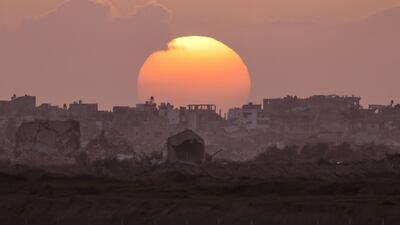
The sun sets behind destroyed buildings in Gaza. AFP -

A Palestinian man enters a heavily damaged house following an Israeli strike in Rafah, in the southern Gaza Strip. AFP -
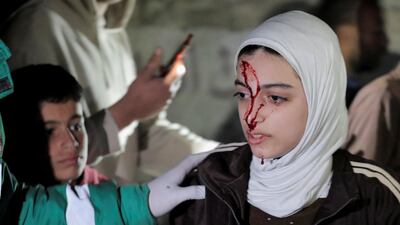
A wounded Palestinian is assisted at the site of an Israeli strike in Deir Al Balah, in the central Gaza Strip. Reuters -
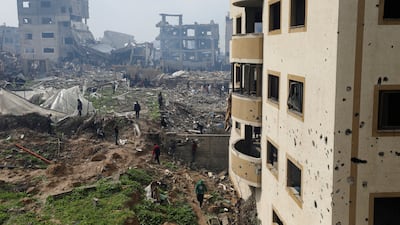
Palestinians gather in the hope of getting bags of flour carried by air lorries near an Israeli checkpoint in Gaza city, as the enclave's residents face crisis levels of hunger. Reuters -

Palestinian children wait to receive food cooked by a charity kitchen as the conflict between Israel and Hamas continues in Gaza. Reuters -
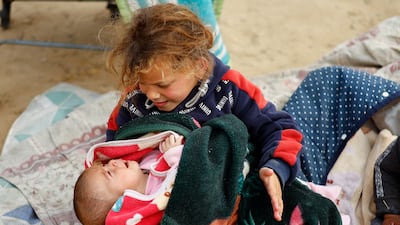
A displaced Palestinian child holds a crying baby in a camp in Rafah, in the southern Gaza Strip. Reuters


“The deliberate use of starvation as a policy is a blatant violation of international law with the intent to push the Gaza population to lose hope and dignity, and to push them to violence and to a breakdown of law and order,” Mr Bendjama said.
US deputy UN ambassador Robert Wood urged Israel to keep border crossings open for humanitarian aid to enter Gaza, open more crossings, meet humanitarian needs at scale and support the rapid, safe delivery of relief items.
“Simply put, Israel must do more,” Mr Wood said.
Samuel Zbogar, Slovenia's envoy to the UN, underscored the urgency of addressing the escalating crisis in Gaza, highlighting the series of significant briefings the Security Council has received.
“Which one of these briefings is a straw that will break the camel's back?” Mr Zbogar asked.
He stressed the critical juncture at which the international community stands, faced with difficult choices.
“There are times when we need to make choices and we need to prioritise among them," Mr Zbogar said.
"Slovenia is choosing a ceasefire to prevent famine in Gaza, a ceasefire to provide relief to Palestinian people and to release hostages."

