


Live updates: Follow the latest on Israel-Gaza
As the war in Gaza continues, Israel has vowed to step up aerial attacks on the enclave as it prepares for a ground invasion.
Many in Israel are still reeling from the Hamas attack on the south, the most violent in the country's history, which killed more than 1,400 people, mostly civilians, a little more than half of whom have been identified.
Israeli Prime Minister Benjamin Netanyahu and government ministers have vowed to definitively wipe out Hamas in response but as the civilian death toll mounts, so too do calls for an end to the attacks.
"This killing will bring no safety, no security, no peace for the people in Israel," Alon-Lee Green, co-founder of the Standing Together movement, told The National.
"It will not bring back to life anyone who lost their lives in the Hamas massacre ... and it will not bring back the Israeli hostages alive right now in Gaza."
Standing Together was set up in 2015 and works to bring Jews and Arabs together in what is becoming an increasingly divided society under a far-right government.
Like many in Israel, its members have been personally affected by the Hamas attack on October 7.
"We have members who lost their parents, we have leadership members that lost their cousins, we have parents that have been abducted and are alive right now in Gaza, and those people they managed to maintain a human message," Mr Green said.
Several bereaved relatives have issued calls for peace, including Noy Katsman, the brother of peace activist Hayim Katsman who was killed at his home in a southern kibbutz.
"I want you to keep on what my brother did and fight for peace and not agree to do stuff that will cause more violence and more hate,” he said a week after the attack.
Footage of Israeli hostage Noa Argamani has gone viral on social media, depicting the young woman pleading for her life as she was driven into Gaza on the back of a motorcycle.
Her father Yaakov later said of the hostages: "They are suffering too, they are being battered too. We have to stop this killing."
-
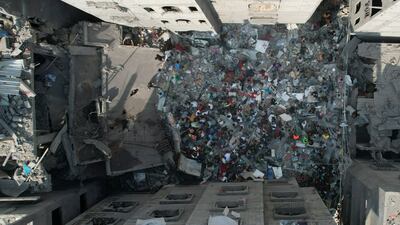
Palestinians look for survivors of Israeli bombardment of the Gaza Strip at Nusseirat refugee camp. AP -
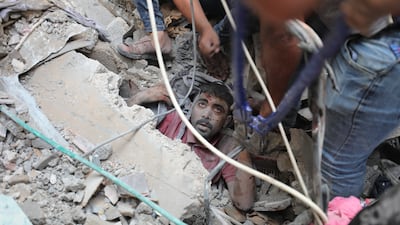
A survivor is found in the rubble in Nusseirat. AP -
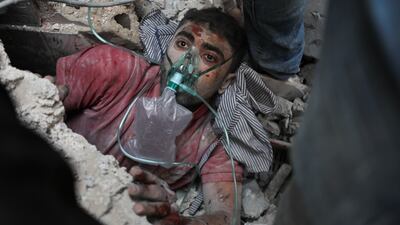
A man is given oxygen and pulled from the rubble in Nusseirat. AP -
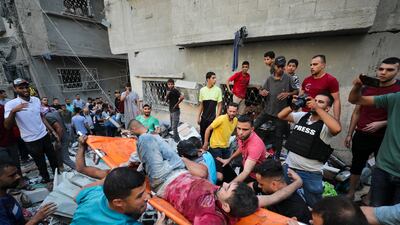
This desperate search for survivors is being replicated across the Gaza Strip. AP -
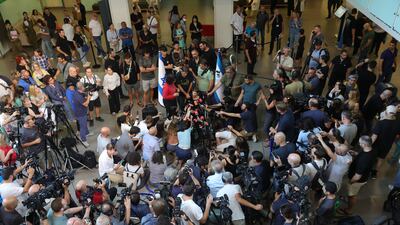
Yocheved Lifshitz speaks to the media outside a Tel Aviv hospital after being released by Hamas. EPA -
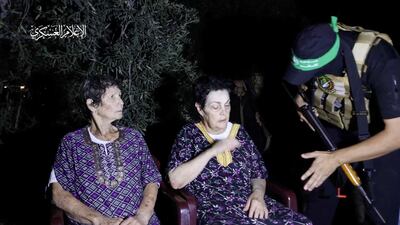
Israeli women who were held hostage by Palestinian Hamas militants, Yocheved Lifshitz and Nurit Cooper (also known as Nurit Yitzhak), are released by the militants. Reuters -
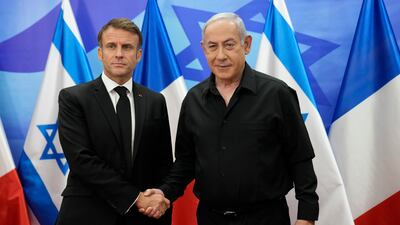
Israeli Prime Minister Benjamin Netanyahu, right, welcomes French President Emmanuel Macron before their talks in Jerusalem. AP -

Palestinians search for casualties at the site of an Israeli air strike on a house in Khan Younis, in the southern Gaza Strip. Reuters -

Palestinians inspect the damage of a destroyed house that was hit by an Israeli air strike in Khan Younis. AP -
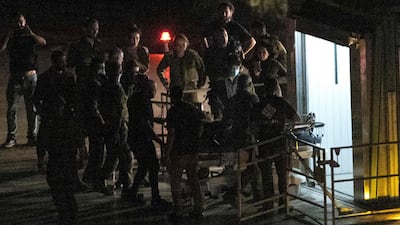
Ms Cooper and Ms Lifshitz arrive at the Tel Aviv Sourasky Medical Centre after being released by Hamas on Monday. AFP -
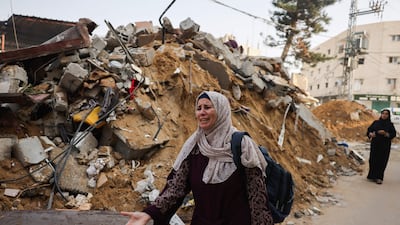
A woman cries next to the rubble of a building after Israeli strikes on Rafah in the south of the Gaza Strip. AFP -
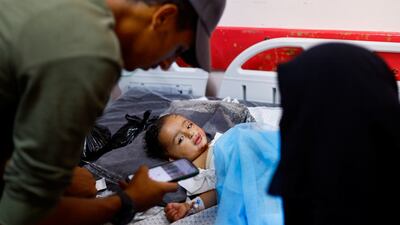
Wateen, a 14-month-old Palestinian baby, who was wounded in an Israeli strike that killed her mother and injured her twin brother Ahmed, recovers at Nasser hospital, in Khan Younis, Gaza Strip. Reuters -
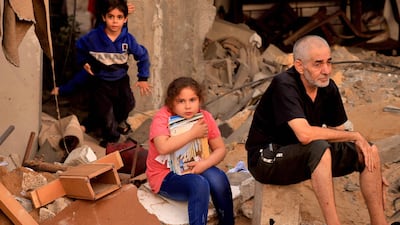
A Palestinian girl clutches salvaged books as people look for survivors in the rubble of a destroyed building hit in an Israeli strike in Khan Younis. AFP -
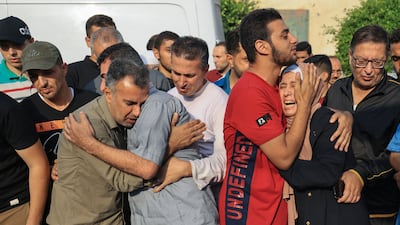
People mourn during the funeral of members of the Abu Morad family who died following Israeli strikes, in Khan Younis. AFP -
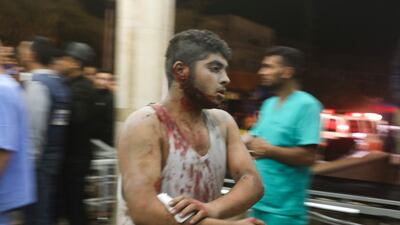
A wounded Palestinian man arrives at Nasser Medical Complex, following Israeli air strikes on the town of Khan Younis in the southern Gaza Strip. AP -
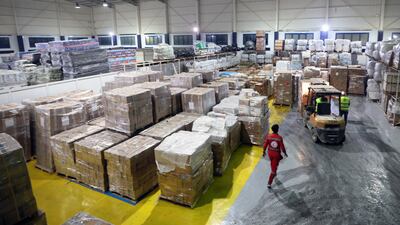
Red Crescent Society employees sort humanitarian aid bound for Palestinians in Gaza, at a warehouse in Arish, Egypt. EPA -
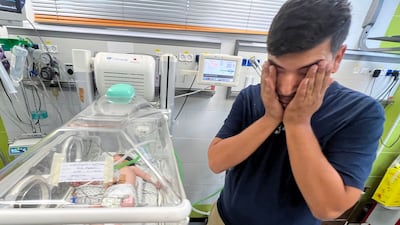
Ayman Abou Chamalah stands next to his daughter Mecca as she receives care inside an incubator at a hospital in Rafah. AFP -
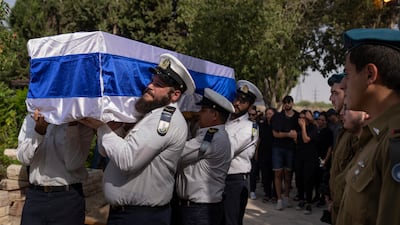
Israeli soldiers carry the coffin of Erik Kraunik, chief of security in the kibbutz of Be'eri, during his funeral at a cemetery in Yehud, Israel. AP -
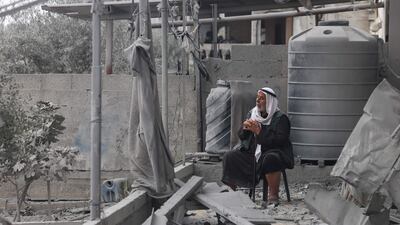
A man sits among the rubble of a building destroyed in Israel's bombardment of Rafah, in the southern Gaza Strip. AFP -
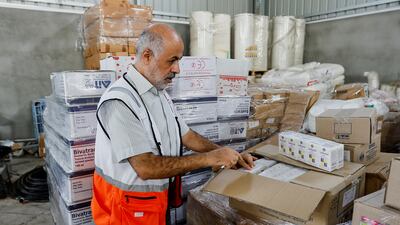
A Red Crescent worker sorts aid for Palestinians in Khan Younis, in the southern part of the blockaded enclave. Reuters -
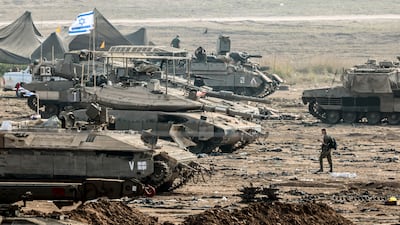
Israeli soldiers take part in a drill near the border with Gaza ahead of an expected ground invasion. EPA -
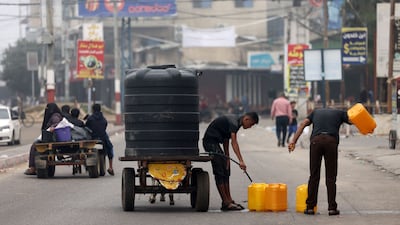
Men fill fuel containers with drinking water in Rafah. AFP -

Smoke billows over Gaza after an air strike, as seen from southern Israel. AP -
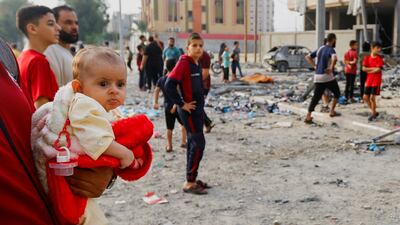
A person holds a child as Palestinians gather in Khan Younis at the site of a house destroyed during an Israeli bombardment. Reuters -
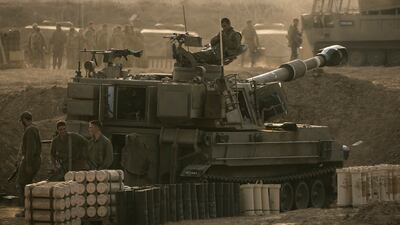
Israeli soldiers sit on top of a tank near the border with Gaza. Getty Images -
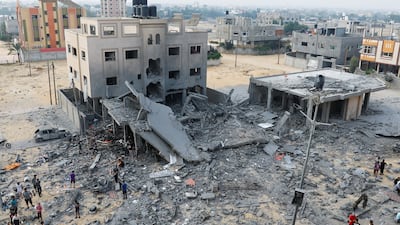
Buildings destroyed by Israeli air strikes in Khan Younis. Reuters -
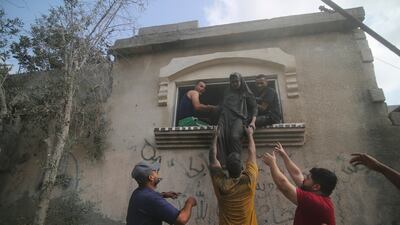
Palestinians are evacuated from a building in Rafah that was hit during Israel's bombardment. AP -
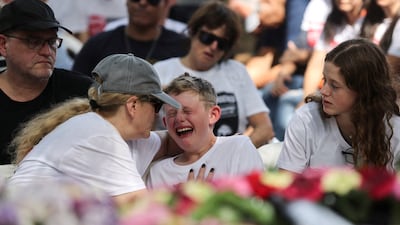
Shahar Idan, 9, mourns during the funeral of his brother Maayan, 18, who was killed by Hamas gunmen in the kibbutz of Nahal Oz. His father Tzahi is being held hostage in Gaza. Reuters -

Palestinian doctors treat a premature baby at Al Aqsa Hospital in Deir Al Balah, Gaza. AP -
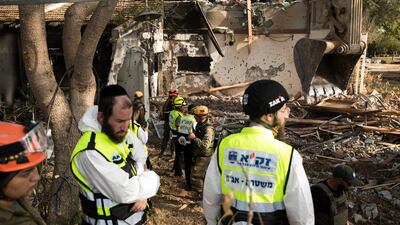
Rescue crews search for bodies after Hamas militants attacked the kibbutz of Be'eri in Israel. Getty Images -
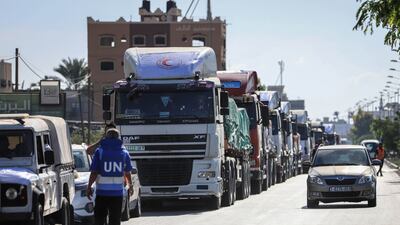
Lorries carrying humanitarian aid head to Deir Al Balah after crossing from Egypt through Rafah. Bloomberg -
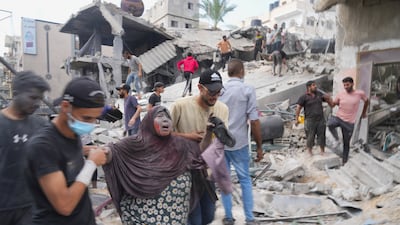
Palestinians evacuate survivors in Deir Al Balah after an Israeli bombardment. AP -
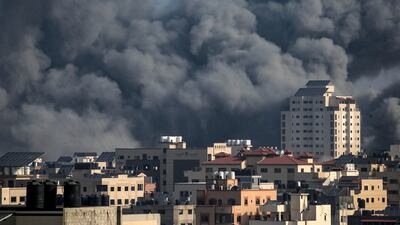
Smoke rises after Israeli air strikes on Gaza. EPA -
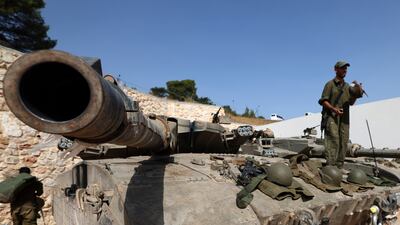
Israeli soldiers at a position along the border with Lebanon. EPA -
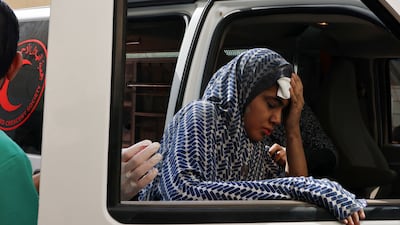
A woman leans against the window of an ambulance outside Kuwait Hospital after an Israeli strike in Rafah. AFP -
A Palestinian cries as the body of his daughter is recovered from beneath the rubble of a building destroyed during an Israeli air strike on Rafah. AFP -
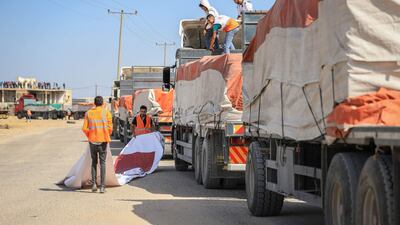
A convoy carrying humanitarian aid arrives in Rafah after crossing into the Gaza Strip from Egypt. Bloomberg -
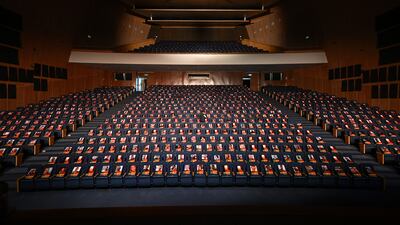
The pictures of more than 1,000 people abducted or killed during the attack by Hamas militants are displayed on empty seats at Tel Aviv University. Getty -
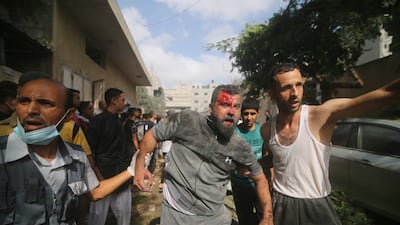
Palestinians are evacuated from buildings in Rafah after the bombardment of the Gaza Strip. AP -
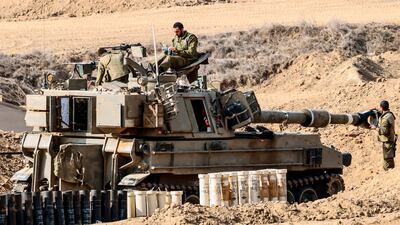
Israeli soldiers gather at an undisclosed location near the border with Gaza. EPA -
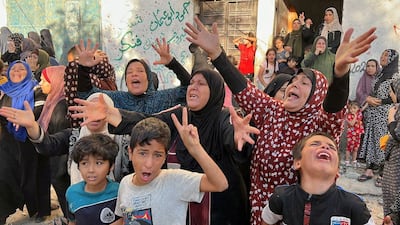
Palestinians mourn outside a house in Gaza struck by Israel. Reuters -
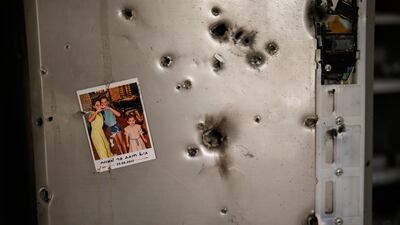
A bullet-riddled fridge in a house in the kibbutz of Kissufim in southern Israel, where 14 people were killed and four were abducted by Hamas militants on October 7. AP -
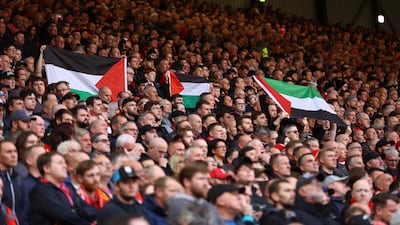
Football fans inside Anfield stadium hold up Palestine flags during the Liverpool-Everton derby on Saturday. Reuters -
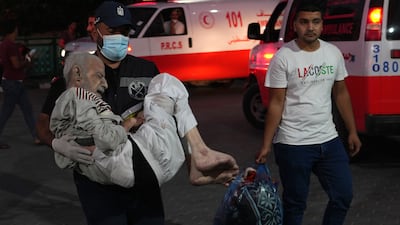
Palestinians wounded in the bombardment of Gaza are taken to Al Asa Hospital in Deir Al Balah. AP -
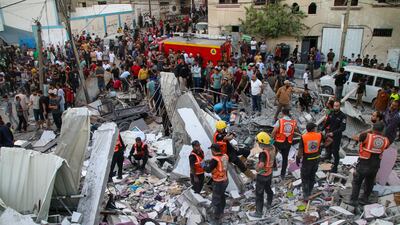
Rescuers search for victims and survivors in buildings destroyed by air strikes in Khan Younis, Gaza. Getty -
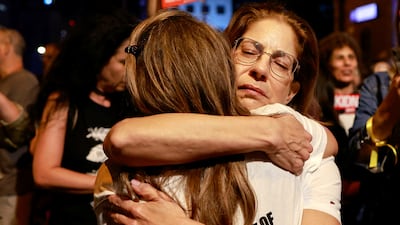
Residents of Tel Aviv show support for the families of hostages being held in Gaza by Hamas. Reuters


Magen Inon, a UK-based teacher who lost her parents Bilha and Yakov in the attack, has also called for peace.
“Our shared future is based on the belief that all human beings are equal and deserving of respect and safety. This is how I was raised and how I am raising my own children,” he wrote in an opinion piece for The Guardian.
“In the long term, and even if it’s very far away, the only real future is that of hope and peace. Please, stop the war.”
The daughter of 84-year-old Dita Heiman, also held in Gaza, has called for aid to enter the enclave to avoid "further human suffering", in a statement published on Instagram.
Others have taken a harder stance, warning that Hamas will target other communities if Israel relents with its attacks on Gaza.
Many of the hostages confirmed to be in Gaza are known for working with Palestinians in and outside Israel.
Oded Lifshitz, 83, who was taken captive by Hamas, has worked for decades campaigning for Palestinian rights, the National Union for Journalists said.
Mr Lifshitz, taken hostage with his wife, "was devoted to human rights and peace" and protested against Bedouin evictions in the Negev, the NUJ said.
"Every week, he went out in his car to the Erez checkpoint to transport sick residents of Gaza for treatment in the hospitals in Israel," it added.
Vivian Silver, 74, was kidnapped from her home in Kibbutz Be'eri and is a leader of Women Wage Peace, a joint Palestinian-Jewish drive.
"We hear words of revenge: 'all restraints have been removed', 'we’ll wipe out Gaza'. But one cannot resolve one injustice with another," the organisation said in a statement confirming her abduction.

