How Lebanon’s economic crisis unfolded - in pictures
-

November 1, 2019: Banks implement capital controls after shutting for two weeks. Reuters -
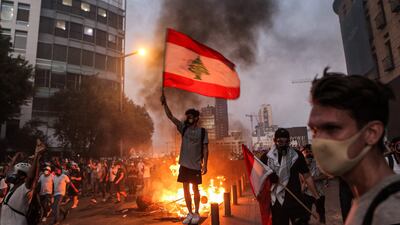
March 2020: Lebanon defaults on its sovereign debt for the first time in its history, amid protests in the country. AFP -
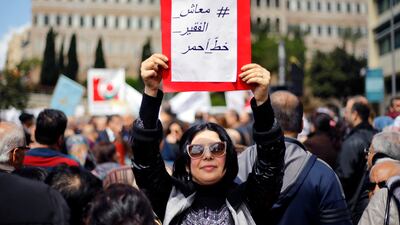
April 2020: The government of Hassan Diab, prime minister at the time, pictured with President Michel Aoun, approves a financial recovery plan. Reuters -
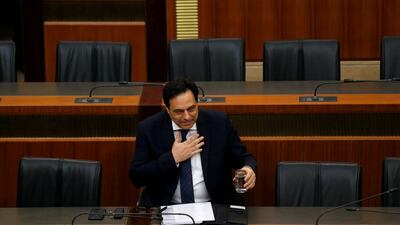
May 1, 2020: Mr Diab's government requests assistance from the International Monetary Fund. The Association of Banks in Lebanon rejects the plan. Reuters -
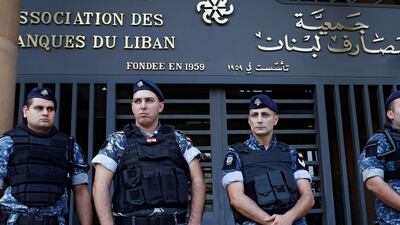
May 20, 2020: the ABL presents an alternative plan. Reuters -
July 1, 2020: a Parliamentary fact-finding committee backs the ABL. The IMF suspends negotiations with Lebanon. AP -
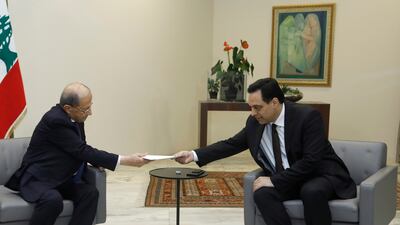
August 10, 2020: Mr Diab resigns following a devastating explosion at Beirut’s port, in which at least 232 people died and 7,000 were injured. AP -
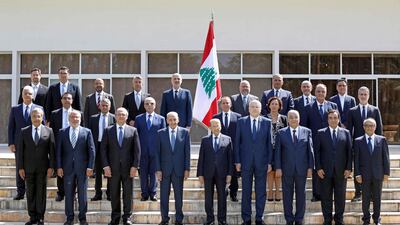
September 10, 2021: Najib Mikati, fourth from right, forms a government. AFP -
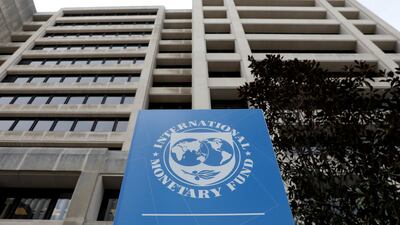
January 2022: Lebanon re-starts negotiations with the IMF. Reuters -
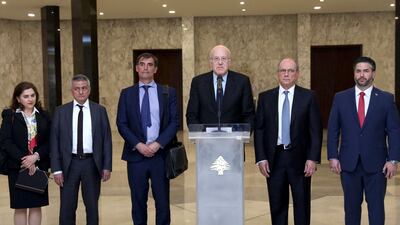
April 7, 2022: The IMF and Lebanon reach a staff-level agreement. AFP -
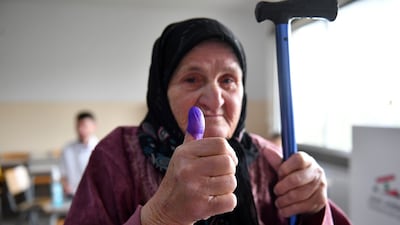
May 15, 2022: Lebanon holds parliamentary elections. EPA -
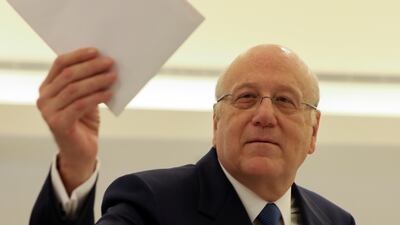
May 20, 2022: Mr Mikati’s government approves a new financial recovery plan. Reuters -
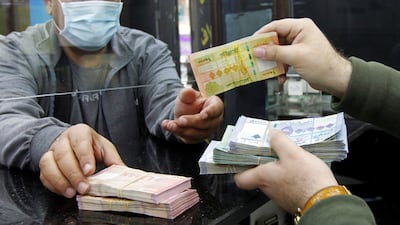
May 24, 2022: The ABL rejects the plan. The local currency hits the record low of 34,000 Lebanese pounds to the dollar – 95 per cent lower than the official rate. Reuters


Most popular today

