

Lama Ramadan is 33, but Lebanon’s parliamentary elections on Sunday will be the first time she has voted in polls that come as the country grapples with a range of competing crises.
A brand strategist she was an activist in the 2019 protests against Lebanon’s leaders that led to the collapse of the government.
Having not voted in the previous Lebanese election, in 2018, now Ms Ramadan is urging her compatriots to seek a better future through the ballot box and ignore those who say it won't change anything.
She hopes that the election on Sunday can usher in a new wave of politicians independent from the traditional parties that have ruled since the end of the civil war in 1990.
“It’s my first time as a voter because I didn't believe that there was a credible candidate before that. And honestly, I know some of the individuals that are running and I believe that they are honest individuals who want to bring change, who want to bring accountability.
“And I think that it's our time now to prove a point that we want to make a change, that we want to improve this country and we want to work together as a whole team,” said Ms Ramadan, who will be voting in Jezzine in southern Lebanon.
-

Druze opposition candidate Firas Hamdan greets members of the sect in a hall in the village of Kfeir in South Lebanon. All Photos: Oliver Marsden for The National -
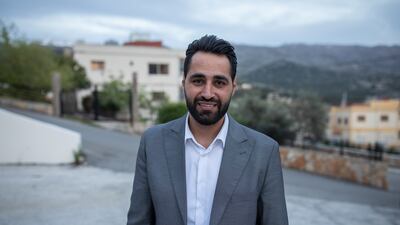
Mr Hamdan is running for the first time in parliamentary elections scheduled for next month. -
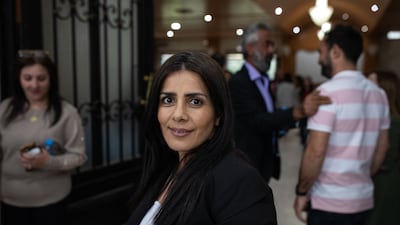
Hweida Al Halabi, who works in a medical laboratory, stands outside the hall in Kfeir after a meeting with Mr Hamdan. -
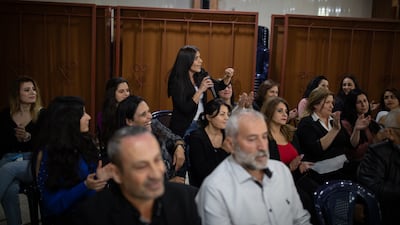
Ms Al Halabi is applauded as she poses a question to Mr Hamdan. -
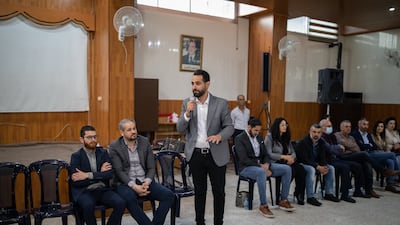
Mr Hamdan answers questions from the audience. -
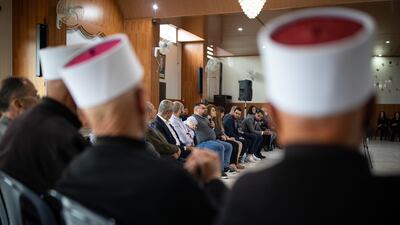
This is the first year that such a meeting has taken place in the area before an election. -

Men of the Druze sect gather at the hall in the village of Kfeir. -
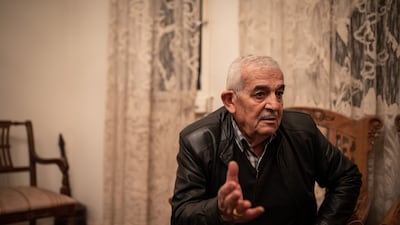
Retired teacher and member of the Druze Progressive Socialist Party Faysal Naoufal explains why he will be voting for the opposition in this year’s elections.


Lebanon has been gripped by a devastating economic collapse that became apparent in 2019 and caused the local currency to lose more than 90 per cent of its value against the US dollar. A blast in August 2020 at Beirut’s port, which killed at least 214 people, is regarded as a symptom of the endemic corruption and mismanagement in Lebanon and the negligence of its top officials.
Ms Ramadan spoke from her office in Beirut’s leafy upmarket Sursock neighbourhood, much of which was destroyed by the explosion.
“Unfortunately, everything was destroyed here. Luckily, no one was at the office. But everything was a mess and it took us months to repair again, and it's like part of the Lebanese DNA to rebuild, over and over again.”
So far, no one has been held accountable for the blast.
Asked what she felt was the most pressing issue, Ms Ramadan said the lack of accountability in Lebanon — in regards to the blast, but also more generally across the country.
“So we have many, many issues here. Firstly, personally, I believe that the lack of accountability is key because if we resolved that, it's going to be like a domino effect. If we tackle the lack of accountability it is going to create this very good effect on several other issues because they are already connected.”
On the day of the blast, Ms Ramadan and her colleagues were not in the office because of Covid-19, but she says the blast “shook us” and “created something that we cannot forget”.
“For me, it was like the death of the country. It was something that really hurt us to the core. It made us feel that we lost a lot — we lost ourselves, we lost the country, we lost a lot of individuals that we didn't know — we felt that we knew them, but we lost them. And it was very painful and we cannot forget. It made us very disoriented.
“Until now it is not something that we can forget. So I think that bringing accountability and just putting the people that are culpable behind [bars] or seeing something that's right in front of us bringing justice. It’s very necessary for our healing. You know, it's collective healing that we need.”
Politicians have managed to delay the investigation into the blast, in which hundreds of tonnes of chemicals exploded seven years after being delivered and stored at at the port.
“It’s our right to know,” Ms Ramadan said. “I believe if we don't have an answer, it's always going to be something that will stay, like a mark that will stay, for generations to come."
She believes that justice and change can be achieved on Sunday. “We're hoping for that. And I think it's a long journey, it's a marathon. It's not something that will happen overnight. It's a step-by-step thing, but we need to be very persistent and very dedicated to our cause.”

