


The UN's special rapporteur on extreme poverty says Lebanon is at risk of becoming a failed state, and blasted an “outrageous level of inequality” as he wrapped up a 12-day tour of the country.
“Lebanon is not a failed state yet, but it is a failing state, with a government failing its population,” Olivier De Schutter told a press conference in Beirut.
Mr De Schutter was ending a trip in which he met nine ministers, Prime Minister Najib Mikati and impoverished communities across the country. A punishing economic crisis and collapsing local currency has forced huge numbers of the country’s population into poverty. He used his departing press conference to blast the government over its failure to implement meaningful reforms in the face of “four convergent crises”.
-

Mohammad Chehab sits under a solar panel he installed at his home in the coastal town of Khaldeh, south of Beirut. Reuters -
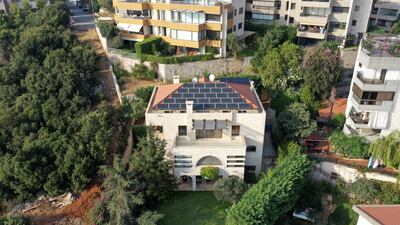
With the fuel crisis worsening across Lebanon, solar panels are becoming a common sight, as seen atop a building in the town of Sehayleh, north of Beirut. Reuters -
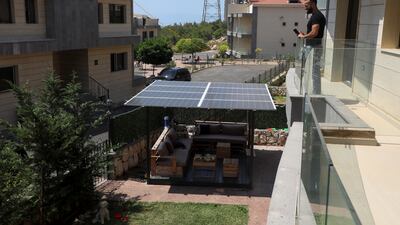
Mohammad Chehab, of the coastal town of Khaldeh, has installed a solar panel in his house to ensure uninterrupted electricity. Reuters -
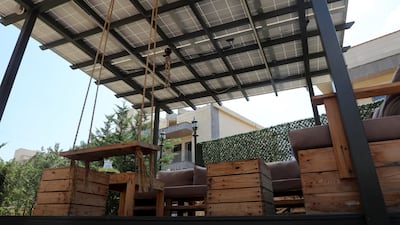
More and more Lebanese, such as Mohammad Chehab from the town of Khaldeh, are resorting to alternative source of power such as solar energy. Reuters -

Mohammad Chehab is among the many in Lebanon exploring alternative solutions to fuel shortages. Reuters -
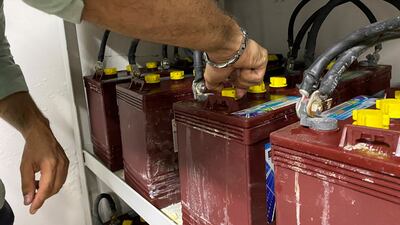
Elias Daou, operation manager at Mectric Engineers, checks batteries linked to solar panels, in the Lebanese town of Sehayleh, 25 kilometres north of Beirut. Reuters -

A solar panel installed on a building in the Lebanese coastal town of Khaldeh, south of Beirut. Reuters


“The Government’s inaction in the face of this unprecedented crisis has inflicted great misery on the population, especially on children, women, stateless and undocumented individuals, and people with disabilities who were already marginalised,” he said.
Mr De Schutter, who was appointed by the UN secretary general last year, will present a report on his findings to the UN Human Rights Council next June. He condemned the country’s political establishment and said he did not believe the government was dealing with the issue seriously.
“The dereliction of responsibility at top levels of political leadership is astonishing. While I met with dedicated officials at lower levels of Government, I was shocked by the disconnect between the political establishment and the reality of those in poverty on the ground,” he said.
“These people need credible solutions today, and I am deeply concerned that the Government is not taking their plight seriously.”
He drew particular attention to Lebanon’s failing taxation and banking systems, linking them directly to the country’s soaring levels of inequality.
“Inequality has remained at unacceptable levels for years in Lebanon. Even before the crisis, the richest 10 per cent received five times more income than the bottom 50 per cent. This outrageous level of inequality is furthered by a tax system that rewards the banking sector, encourages tax evasion and concentrates wealth in the hands of the few. In the meantime, the population is subject to regressive taxes that hit the poorest most,” he said.
“This is a human-made disaster that was long in the making.”
A study published by the UN Office for the Co-ordination of Humanitarian Affairs found, as of March, that 78 per cent of Lebanon’s population is living in poverty. The World Bank has described Lebanon’s crisis as one of the worst in history.

