

When Dr Zaki Sleiman cycled home from work on Saturday, he had little idea that he was about to go viral.
The gynaecologist had finished another shift delivering babies when he paused for a photo with one of his newest arrivals.
In the image, posted to Facebook on Saturday, Dr Sleiman is wearing cycling shorts and his red helmet — the same gear he wears every day for his commute. He holds the bewildered baby up for a photo.
But it was the accompanying caption that caught the internet’s eye.
-

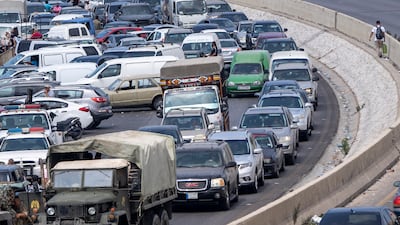
A crowded petrol station on the main road that links Beirut to south Lebanon. AP -
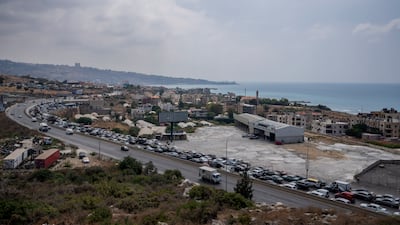
Drivers come from every direction to fill their tanks with fuel. AP -

Chronic fuel shortages have plagued the country in recent months, with long queues at petrol stations a common sight. AP -
Last month, central bank governor Riad Salameh announced that fuel imports would no longer be subsidised. AP -
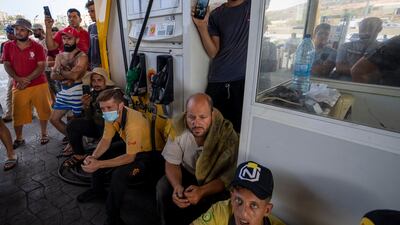
Worshippers listen as cleric Ali Al Hussein delivers a sermon during Friday prayers at a fuel station to protest against the severe shortages. AP -
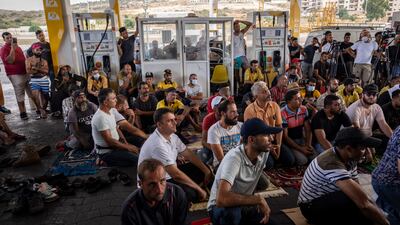
People listen to Al Hussein's sermon in the coastal town of Jiyeh, south of Beirut. AP


“Keep this picture, little boy,” he wrote. “One day, your parents will tell you that your doctor came on his bike to deliver you, because you were born in the era of a lack of petrol, medication, electricity, food …"
Dr Sleiman has experienced the slow collapse of the Lebanese state from within one of its top hospitals and it was in the Facebook post that his frustrations boiled over.
A triathlon enthusiast, he is somewhat protected from at least one of the inconveniences of Lebanon’s dire situation because he cycles about 20 kilometres to work every morning and then back home again. This means he does not have to deal with the meandering queues of cars outside petrol stations.
“It is barely a warm-up,” says the doctor who completed an ironman triathlon just two weeks ago.
Within hours of his post, he was fielding calls from almost every TV station in the country. Lebanon is facing a breakdown in even its most basic institutions and the gynaecologist's straight-talking hit a nerve.
Dr Sleiman says having a baby in Lebanon now costs anything from 30 to 40 million Lebanese Lira, more than $2,000 at the current street rate.
Costing more than 50 times the minimum wage, a qualified gynaecologist like Dr Sleiman has become a luxury that many of those having children have to forsake.
“It’s about the quality of care,” he says. “Most of the middle class will not be able to go to private any more. They are going to have to go to the government hospitals where the level of care is not the same.”
“I was born during the war. It’s the same story again and again. These babies most likely will face the same fate that I faced when I was born.”
For now, Dr Sleiman is enjoying his viral fame. During a video call with The National, he flips the camera to show himself on Lebanese TV and chuckles.
gynaecologist.
But it has also allowed him to issue some dire warnings about the struggles he is seeing. Many of his fellow professionals are leaving the country.
For those who stay, even getting to work is a struggle.
“I need the patient to get to the hospital first. And then I need to get to the hospital. I need the midwife and the nurse and the cleaner to get to the hospital. It’s a team. If someone is missing, then we cannot do the surgery,” he says.
“I’m not talking about medication, or drugs or the number of operating rooms or that we lack electricity. I’m not talking about this. We need to get to the hospital — no more. The basics do not exist.”

Lebanon’s collapse has turned a job that used to bring Dr Sleiman continuous joy into a bittersweet experience.
“It’s a confusing feeling,” he says. “You want to be happy that you are bringing some human beings into life and putting a smile on the faces of the parents.
“But when you think that this baby, after 20 years, may face the same fate that I am facing now, and that it will face the same fate that my parents faced during the war, it’s very confusing. It’s like bitter and sweet.”
As in his viral post, Dr Sleiman says the crisis gripping Lebanon’s hospitals is about far more than elite-level corruption. He says it is a holistic failure.
“At the end, it’s the culture of the people. It’s not only a problem of governance — we are electing the government.
“As long as we don’t change our culture, the way of governing is going to be the same.”
-
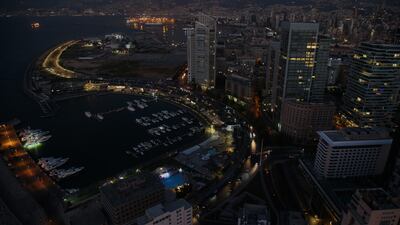
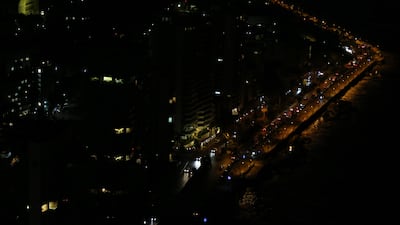
A view of Lebanon's capital, Beirut, with the lights on only in some buildings. Lebanese rely on highly polluting diesel generators run by private neighbourhood operators to make up for shortfalls in electricity supply from the state utility. EPA -
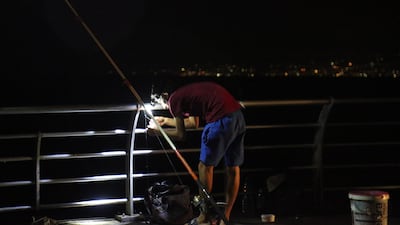
A fisherman uses a headlamp at the seaside corniche in Beirut, Lebanon. EPA -
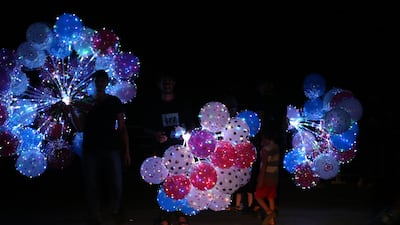
A vendor sells LED balloons in full darkness at the corniche in Beirut. EPA -
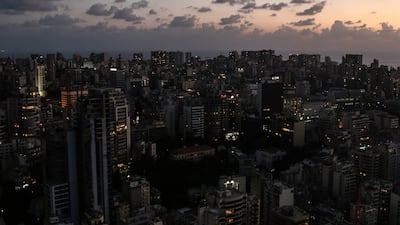
The near collapse of the national grid has increased the duration of power cuts across Lebanon. EPA -
Residents of Beirut are experiencing power cuts of up to 20 hours a day. EPA



