



Listen to the latest podcast on the Beirut blast here
Hadi Succar died of a heart attack on August 12, 2020 – eight days after a massive blast tore through Beirut. The death certificate signed by a doctor states it was the direct result of the explosion. Yet a year later, the retired 76-year-old lawyer appears on no official or unofficial list of the dead.
Succar’s unemployed widow Liliane, 61, has yet to receive the payment given by the Lebanese government to other victims’ families. “Nobody has ever talked to me about recognition or compensation,” she said.
There is no final, public official tally of the dead from the August 4 blast and documents viewed by The National indicate there may be many cases like that of the Succars.
In the absence of an official tally, media reports place the toll at anywhere between 207 and 218. Activists say the figure could be closer to 250.
The lack of interest in counting exactly who was killed last year is part of a pattern of systematic state disregard for human life that can be tied back to Lebanon’s 1975-1990 war, said Lynn Maalouf, regional deputy director for Amnesty International.
Widely used figures of 17,000 disappeared and 150,000 killed during the war were never verified by government bodies and may differ vastly from the reality.
“With this blast and every pattern of violence in this country, the Lebanese state has failed to deliver justice and reparation in a meaningful way,” Ms Maalouf said.
“The first necessary step in doing so is to have a consolidated database of all victims. The fact that we still don’t have one, a year on, is just another indicator of the state’s utter failure in dealing with the blast’s aftermath.”
The Health Ministry did not respond to The National’s request for a recently updated list of victims. It has communicated only twice publicly on the matter: first on August 7, when it published 152 names of the dead, and on September 9, with a final tally of 191. It included a Bangladeshi man and a woman from the Philippines who were unidentified.
Succar appears in neither. His wife told The National he had been sleeping in their apartment close to the port when the explosion occurred. The blast shattered windows, and glass shards entered his right eye, which appears bruised and cut in pictures.
A hospital in Beirut sent him home with paracetamol and antibiotics. But on August 8, Succar collapsed from a heart attack at his stepmother’s home outside the capital, where the couple had moved after their apartment was wrecked.
He was pronounced dead at 1.10pm, on arrival at Serhal hospital, a privately run institution in the town of Rabieh.
Another patient who died in Serhal Hospital from wounds incurred in the blast was accounted for. But the administration did not send a detailed medical report for Succar to the Interior Ministry.
One hospital source said this was because Succar died en route to the hospital. This may explain why he does not appear on any list of the dead.
The hospital source queried the cause of death, saying it was listed as a result of the Beirut blast based on explanations and photos provided by the family.
On Wednesday, exactly one year after the explosion, the Beirut Bar Association will hold a commemoration for Succar and two other lawyers – Khalil Moujaez and Elie Naoufal – who died.
None appears in the Health Ministry’s September list of the dead, and none died on the day of the explosion.
A source at the Beirut Bar Association said Moujaez fell into a three-month coma on August 4 after he was hit in the head by a gas canister.
Naoufal was wounded by the blast while awaiting treatment for another condition. He was transferred to a different hospital and succumbed to his injuries on the way.
-
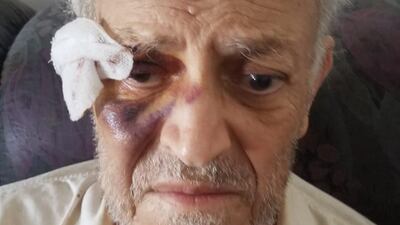
Hadi Succar, 76, was wounded in the blast and later died of a heart attack. -
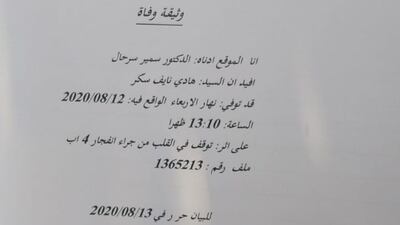
Hadi Succar's death certificate that says he died of a heart attack following the port blast. -
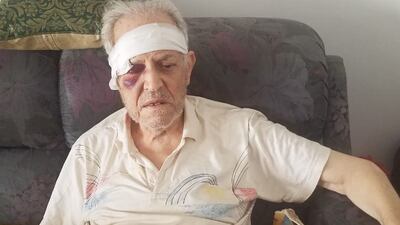
Hadi Succar, 76, was wounded in the blast and later died of a heart attack. -
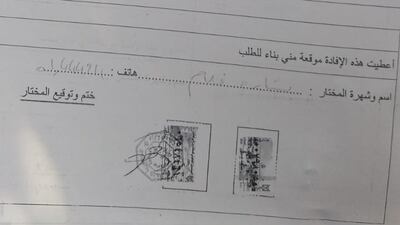
A hand-written document provided by the mayor of Mr Succar's neighbourhood dated September 20, 2020, stating that Mr Succar died from a heart attack in the aftermath of the Beirut port blast.


Such confusion may explain why official figures differ widely from what activists have discovered through months of painstaking research.
Lebanese NGO Maan says it is the only organisation with the contacts of the families of everyone who died. It has found that 218 people were killed but says that figure may change again. Some names were added only weeks ago.
Maan’s co-founder Ahmad Mroue described the data collection process as a “nightmare”. With no response from the Health Ministry, Maan researchers spent months calling hospitals, mayors and churches to recoup the names of the victims.
“The saddest part was discovering that elderly people with no relatives had died. We had to ask neighbours and supermarkets about them because they were the only ones who knew them,” he said.
Mr Mroue was inspired by a book published in 2010 by another local NGO, Umam, about those who disappeared during Lebanon’s civil war. After much effort, Umam was able to track down only 1,000 families.
“The lesson learned, for us, was that we didn’t want this to happen to the victims of the Beirut blast,” Mr Mroue told The National.
“They are not just numbers. They are people who have faces and names and ages and families.”
Maan shared its database with The National, which also consulted a list compiled by the Internal Security Forces and a list of foreigners who died in the explosion prepared by the Anti-Racism Movement, an NGO that advocates rights for migrant workers in Lebanon.
The ISF’s list of 214 victims is not official and is not intended for publication, an ISF source said, and stressed it is the Health Ministry’s responsibility to communicate on the matter.
The three lists contain many discrepancies, sometimes down to spelling variations and errors. The inconsistencies are the most important when it comes to foreigners. Most of them were migrant workers from Syria, Bangladesh or the Philippines.
-
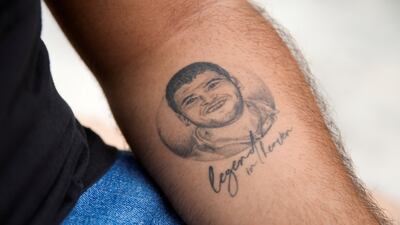
A tattoo on Roy Samaha's arm shows a picture of his late cousin Joe Noun, a firefighter who was a victim of last year's Beirut port blast, in Beirut, Lebanon. -

A scar from last year's Beirut port blast is seen on a Lebanese trainer Ramzi Baaklini's elbow, in Baabda, Lebanon. -

Lebanese trainer Ramzi Baaklini shows a scar on his knee from last year's Beirut port blast, in Baabda, Lebanon. -

Roy Samaha looks at his tattoo of his late cousin Joe Noun, a firefighter who was a victim of last year's Beirut port blast. -

Joa Antoun, a tattoo artist, works on a drawing of Sahar Fares, a firefighter who was a victim of last year's Beirut port blast. -

Lebanese trainer Ramzi Baaklini, who was injured during last year's Beirut port blast, holds a phone in Baabda, Lebanon. -

Joa Antoun, a tattoo artist, works on a drawing of Joe Noun, a firefighter, who was killed during last year's Beirut port blast.


ARM believes that little effort has been made to track down migrant workers because the Lebanese state has a long history of discrimination against them.
“There is a racist element to this but additionally, a lot of bodies of both Lebanese and migrant workers were unidentified because they were in parts,” said Farah Baba, advocacy and communication manager at ARM.
The three lists indicate that more than 250 people died.
The National was unable to independently verify this figure with the family of each victim, but the result is close to what independent Lebanese media organisation The Public Source found.
Its team worked for the past three months to collate names using a leaked government list, Syrian media reports and lists produced by Maan and the Health Ministry.
Syrians represented the largest number of non-Lebanese citizens killed. No government body it approached responded to them, said The Public Source’s founder, Lara Bitar.
Errors, though, are highly possible, she said.
“None of us have the capacity to do this on our own, but if we join forces, we can get more realistic estimate of how many people died,” she said.
“Initially, while planning for a special issue on the explosion, we didn’t set out to find out how many people had died. But what we found shocked us, considering that most lists don’t exceed 218 people,” she told The National.
Hurdles remain. Without an official framework, what counts as having died from the Beirut blast remains contested.
“At a certain point, we considered including people who did not directly die from the blast but, for example, months later from suicide because they couldn’t process what had happened to them,” Ms Bitar said.
“But it became too difficult to establish these direct connections. This is something I am hoping to work on in collaboration with others in the coming months.”
The National spoke to the doctor of a 6-month-old Syrian boy who died in a hospital near the port, which was obliterated. The doctor says the baby, who was born with a severe liver disease, would have died on August 4, 2020 whether there had been an explosion or not. The doctor accused the parents of the baby, named Kousay Fadi Ramadan, of lying about his death to get money from the state.
But Maan said it registered the baby as a victim because it considers, based on the parents’ account, that the final blow to his life was delivered by the blast.
A representative of victims’ families said the government gave them a one-off sum of 30 million Lebanese pounds each but there were significant delays in its disbursement.
Late in 2020, Parliament voted through legislation to allow families to receive monthly compensation payments, similar to those paid to the relatives of soldiers who die on duty.
But the value of the Lebanese pound has plunged since the start of the country’s financial crisis in mid-2019, and such monthly compensation is now worth little more than $70.
Most families say that money is not what they are after – what they want is recognition.
Hampik Sousani, 42, said his mother, Zahwa Dada, 69, died early in October from the consequences of a stroke. It occurred on August 9, five days after the blast threw her against the wall of her home, injuring the back of her neck.
Dada did not attend hospital the next day because the family was not insured and could not afford treatment, Mr Sousani said. On August 9, she suffered a stroke and was admitted to hospital. But her son said doctors refused to register her condition as being linked to the explosion because she had not arrived there on August 4.
“I want the truth,” he told The National. “Money will not bring my mother back.” Dada’s picture and biography can be found in Maan’s book.
Ms Succar said that she did not know she could claim financial help from the state.
She still feels overwhelmed by her husband’s death, compounded by those of her father and her mother, who died only two weeks ago. She asked for help.
“I have no money. I have lost everything. My husband, my father, my mother, my car and my house,” she said. “I’m traumatised and depressed.”

