
Iran has sentenced 10 members of the armed forces to prison after finding them guilty of involvement in the shooting down of a Ukrainian airliner, the judiciary's Mizan Online website reported on Sunday.
A commander received 10 years in prison and nine others were sentenced to between one and three years, Mizan reported, in the 2020 incident which led to the deaths of all 176 people on board.
Most were Iranians and Canadians, including many dual nationals.
Iranian forces shot down Ukraine International Airlines flight PS752 shortly after its take-off from Tehran on January 8 that year.
Three days later, the Iranian armed forces admitted to downing the Kyiv-bound plane “by mistake”.
Tensions between Iran and the US were soaring at the time of the incident.
Iranian air defences were on high alert for a US counterattack after Tehran fired missiles at a military base in Iraq that was used by American forces.
Ukraine lost 11 citizens in the disaster.
Iran's judiciary had said in November 2021 that a trial had opened in Tehran for 10 military members in connection with the jet's fate.
-
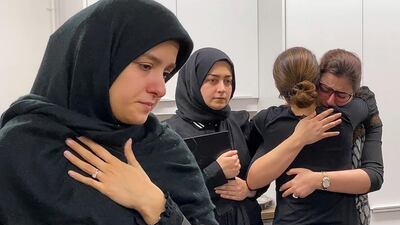
Mourners attend a vigil at the University of Toronto for the victims of a Ukrainian passenger jet which crashed in Iran. Reuters -
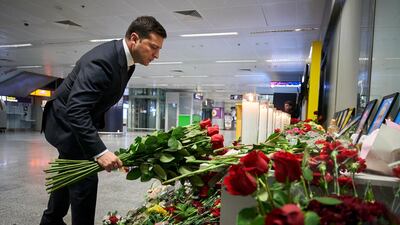
Ukrainian President Volodymyr Zelenskiy lays flowers to commemorate victims of the Ukraine International Airlines Boeing 737-800 plane crash, at a memorial in Boryspil International airport outside Kiev. Reuters -
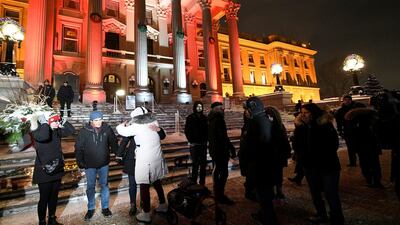
A candlelight vigil held at the Edmonton Legislature building in memory of the victims of a Ukrainian passenger plane that crashed in Iran. Reuters -
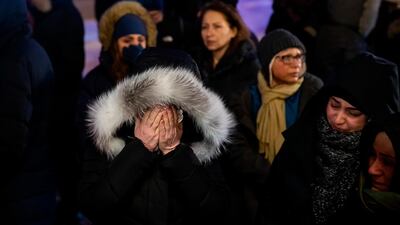
A woman mourns outside the Alberta Legislature Building in Edmonton, Alberta, during a vigil for those killed after a Ukrainian passenger jet crashed. AP -
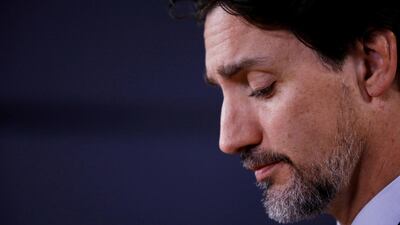
Canada's Prime Minister Justin Trudeau attends a news conference about flight PS752 from Tehran to Kiev that crashed shortly after takeoff, in Ottawa, Ontario, Canada. Reuters -
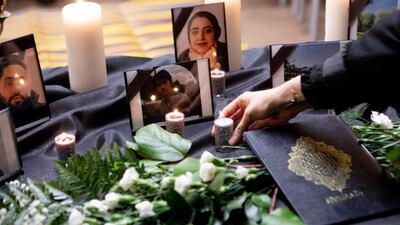
A candle is placed on a table bearing photos of some of the victims of a Ukraine International Airlines passenger flight that crashed after takeoff near Tehran, Iran. AP -

Mourners place candles and photographs outside the Alberta Legislature Building in Edmonton, Alberta during a vigil for those killed after a Ukrainian passenger jet crashed. AP -
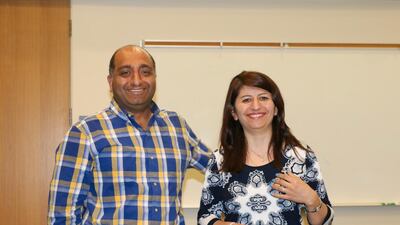
Victims of the Ukraine crash in Iran, University of Alberta professors Mojgan Daneshmand and Pedram Mousavi, pose in an undated family photo in Edmonton, Alberta, Canada. Reuters -

A victim of the Ukraine International Airlines crash in Iran, Dr Parisa Eghbalian poses with her husband Dr Hamed Esmaeilion at their dentistry practice in Aurora, Ontario, Canada. Reuters -
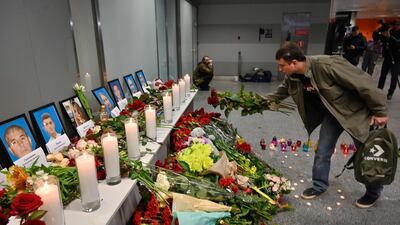
A man places flowers at a memorial for the victims of the Ukraine International Airlines Boeing 737-800 crash in the Iranian capital Tehran, at the Boryspil airport outside Kiev. AFP -
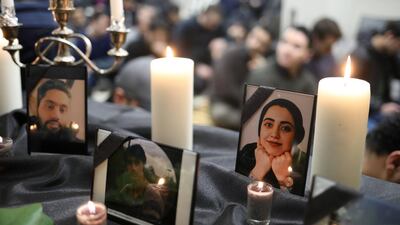
Photographs of student victims of a Ukrainian passenger jet which crashed in Iran are seen during a vigil at University of Toronto. Reuters -
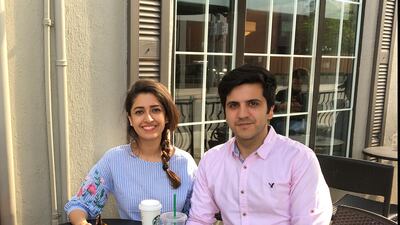
Victims of the Ukraine International Airlines crash in Iran, Negar Borghei and Alvand Sadeghi pose in Toronto, Ontario, Canada. Reuters -
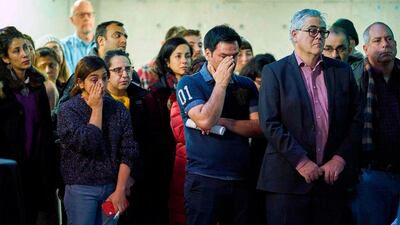
Attendees wipe away tears during a memorial service at Western University in London, Ontario on January 8, 2020 for the four graduate students who were killed in a plane crash in Iran. AFP -
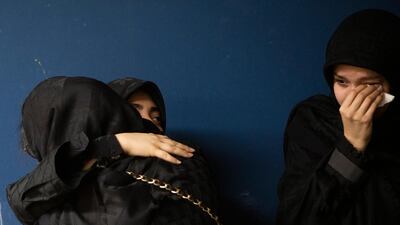
Members of Toronto's Iranian community attend a vigil in Toronto to mourn victims of Ukraine International Airlines Flight PS752 that crashed after takeoff near Tehran, Iran. AP -

Flowers and candles are placed in front of the portraits of the flight crew members of the Ukraine International Airlines Boeing 737-800 plane that crashed in Iran, at a memorial at the Boryspil International airport outside Kiev. Reuters
The National's picks
4.35pm: Tilal Al Khalediah
5.10pm: Continous
5.45pm: Raging Torrent
6.20pm: West Acre
7pm: Flood Zone
7.40pm: Straight No Chaser
8.15pm: Romantic Warrior
8.50pm: Calandogan
9.30pm: Forever Young
Labour dispute
The insured employee may still file an ILOE claim even if a labour dispute is ongoing post termination, but the insurer may suspend or reject payment, until the courts resolve the dispute, especially if the reason for termination is contested. The outcome of the labour court proceedings can directly affect eligibility.
- Abdullah Ishnaneh, Partner, BSA Law
INFO
Everton 0
Arsenal 0
Man of the Match: Djibril Sidibe (Everton)
Men's football draw
Group A: UAE, Spain, South Africa, Jamaica
Group B: Bangladesh, Serbia, Korea
Group C: Bharat, Denmark, Kenya, USA
Group D: Oman, Austria, Rwanda
While you're here
Who's who in Yemen conflict
Houthis: Iran-backed rebels who occupy Sanaa and run unrecognised government
Yemeni government: Exiled government in Aden led by eight-member Presidential Leadership Council
Southern Transitional Council: Faction in Yemeni government that seeks autonomy for the south
Habrish 'rebels': Tribal-backed forces feuding with STC over control of oil in government territory
Mercer, the investment consulting arm of US services company Marsh & McLennan, expects its wealth division to at least double its assets under management (AUM) in the Middle East as wealth in the region continues to grow despite economic headwinds, a company official said.
Mercer Wealth, which globally has $160 billion in AUM, plans to boost its AUM in the region to $2-$3bn in the next 2-3 years from the present $1bn, said Yasir AbuShaban, a Dubai-based principal with Mercer Wealth.
“Within the next two to three years, we are looking at reaching $2 to $3 billion as a conservative estimate and we do see an opportunity to do so,” said Mr AbuShaban.
Mercer does not directly make investments, but allocates clients’ money they have discretion to, to professional asset managers. They also provide advice to clients.
“We have buying power. We can negotiate on their (client’s) behalf with asset managers to provide them lower fees than they otherwise would have to get on their own,” he added.
Mercer Wealth’s clients include sovereign wealth funds, family offices, and insurance companies among others.
From its office in Dubai, Mercer also looks after Africa, India and Turkey, where they also see opportunity for growth.
Wealth creation in Middle East and Africa (MEA) grew 8.5 per cent to $8.1 trillion last year from $7.5tn in 2015, higher than last year’s global average of 6 per cent and the second-highest growth in a region after Asia-Pacific which grew 9.9 per cent, according to consultancy Boston Consulting Group (BCG). In the region, where wealth grew just 1.9 per cent in 2015 compared with 2014, a pickup in oil prices has helped in wealth generation.
BCG is forecasting MEA wealth will rise to $12tn by 2021, growing at an annual average of 8 per cent.
Drivers of wealth generation in the region will be split evenly between new wealth creation and growth of performance of existing assets, according to BCG.
Another general trend in the region is clients’ looking for a comprehensive approach to investing, according to Mr AbuShaban.
“Institutional investors or some of the families are seeing a slowdown in the available capital they have to invest and in that sense they are looking at optimizing the way they manage their portfolios and making sure they are not investing haphazardly and different parts of their investment are working together,” said Mr AbuShaban.
Some clients also have a higher appetite for risk, given the low interest-rate environment that does not provide enough yield for some institutional investors. These clients are keen to invest in illiquid assets, such as private equity and infrastructure.
“What we have seen is a desire for higher returns in what has been a low-return environment specifically in various fixed income or bonds,” he said.
“In this environment, we have seen a de facto increase in the risk that clients are taking in things like illiquid investments, private equity investments, infrastructure and private debt, those kind of investments were higher illiquidity results in incrementally higher returns.”
The Abu Dhabi Investment Authority, one of the largest sovereign wealth funds, said in its 2016 report that has gradually increased its exposure in direct private equity and private credit transactions, mainly in Asian markets and especially in China and India. The authority’s private equity department focused on structured equities owing to “their defensive characteristics.”


