


People across Turkey will head to the polls on Sunday for what is considered the country's most critical vote in its modern history.
The election pits long-time President Recep Tayyip Erdogan against former civil servant Kemal Kilicdaroglu, who heads a six-party opposition alliance.
The vote is seen as the greatest electoral challenge Mr Erdogan has faced during his long reign, and its outcome will have regional and global ramifications.
A record number in the diaspora have already cast their vote, with polls predicting a tight result.
So what is really at stake in Turkey?
Why is the election so important?
Mr Erdogan has ruled Turkey, as prime minister and then president, since 2002, and is the country's most prolific leader since Mustafa Kemal Ataturk, the founder of modern Turkey.
Millions of people have known nothing other than life under Mr Erdogan during more than 20 years of uninterrupted rule.
The AKP leader has positioned himself as a bastion against secularism and the more progressive opposition, and a defender of Turkey against the West, making the fight for power as much about identity as it is about politics.
He has pushed for the election to be held during a highly symbolic year as Turkey marks its centenary.
The country is reeling from the devastation of a massive earthquake that hit the county in February, exacerbated by a crippling economic crisis, inflation and a record devaluation of the Turkish lira — factors that will play a role in steering voters one way or another.
The outcome of the election will not only shape the start of Turkey's second century, but will also determine the legacy of Mr Erdogan, now in his final bid for the presidency.
A victory for the opposition — which has pledged to “return democracy” to Turkey — will be decisive for the country's large Kurdish minority and thousands of government critics who have been imprisoned since Mr Erdogan adopted an increasingly hardline rule following a failed coup attempt in 2016.
The CHP, a secularist party headed by Mr Kilicdaroglu, has allied itself with the HDP, a pro-Kurdish party that has borne the brunt of the government clampdown, with hundreds of its officials dismissed.
The HDP, which is campaigning under the banner of the Green Left party following a proposed ban before the elections, is now backing the opposition and its support for the CHP may boost Kurdish votes.
“The world is watching because this is also an experiment, because Turkey, like some other countries, has been going down the authoritarian path for a while,” Ozgur Unluhisarcikli, director of the German Marshall Fund’s Ankara office, told AFP.
“And if this trajectory can be reversed through elections only, that could set an example for other countries.”
-

Turkish President and People's Alliance's candidate Recep Tayyip Erdogan at a campaign rally in Ankara. AFP -
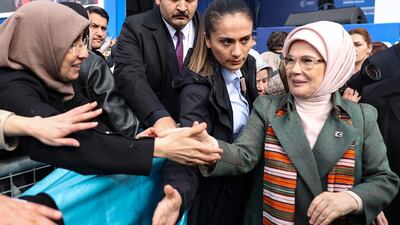
Emine Erdogan, the President's wife, greets his supporters in Ankara on Sunday. AFP -

Supporters of Mr Erdogan at the Ankara rally. AFP -
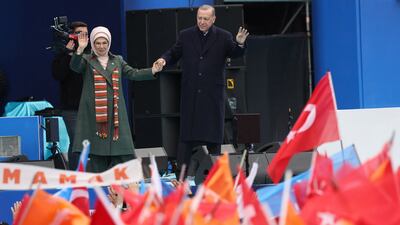
Mr and Mrs Erdogan wave to supporters. AFP -
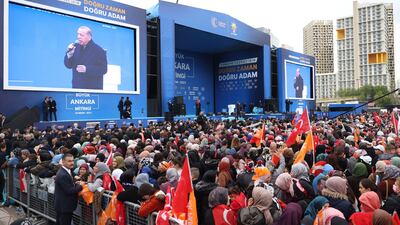
Mr Erdogan delivers his speech in Ankara on Sunday. AFP -

Mr Erdogan delivers his speech in Ankara on Sunday. AFP -
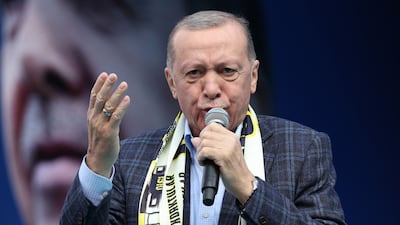
Mr Erdogan delivers his speech in Ankara on Sunday. AFP -
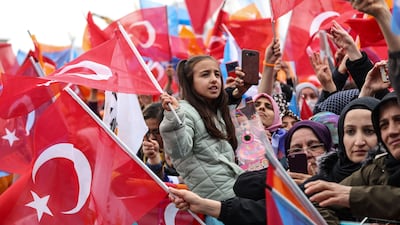
Supporters of Mr Erdogan wave Turkish flags at the Ankara rally. AFP -
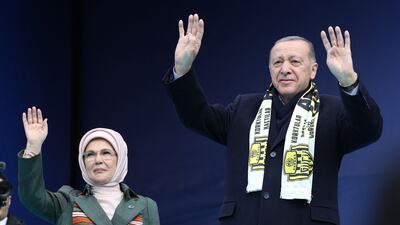
The Erdogans wave to supporters. AFP -
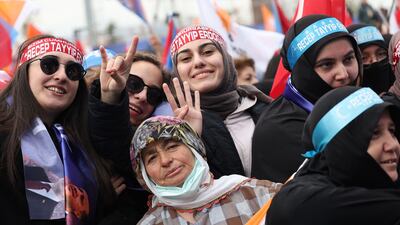
Erdogan supporters smile at the campaign rally. AFP -
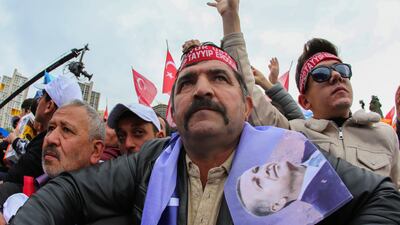
Supporters listen to Mr Erdogan's address in Ankara on Sunday. AP -
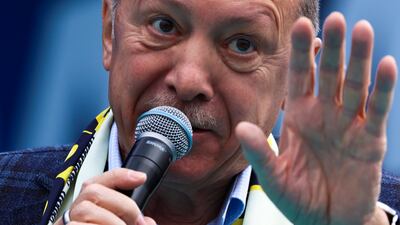
Mr Erdogan speaks with an Ankara football club's scarf around his neck. AP -
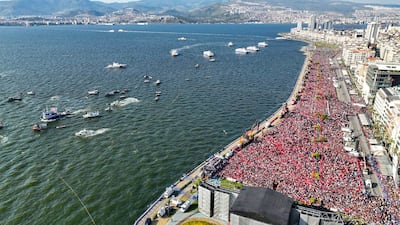
Supporters of Turkey's Republican People's Party chairman and Presidential candidate Kemal Kilicdaroglu rally in Izmir, Turkey, on Sunday. Republican People's Party Press Service / AFP -
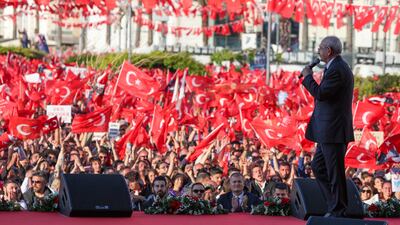
Mr Kilicdaroglu delivers a speech in Izmir. Republican People's Party Press Service / AFP -
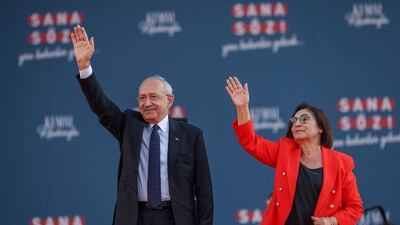
Mr Kilicdaroglu and his wife Selvi wave to supporters. Republican People's Party Press Service / AFP -
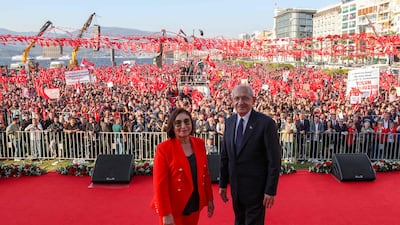
Mr and Mrs Kilicdaroglu pose in front of thousands of his supporters. Republican People's Party Press Service / AFP -
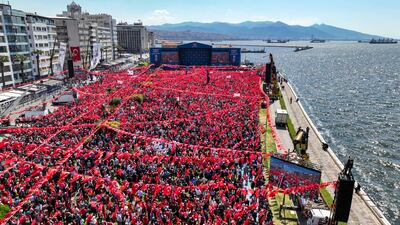
Mr Kilicdaroglu's supporters throng in Izmir. Republican People's Party Press Service / AFP -
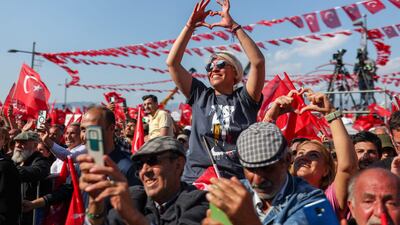
Supporters of Mr Kilicdaroglu make the heart gesture in Izmir. Republican People's Party Press Service / AFP -
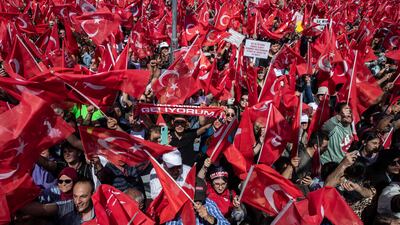
Supporters wave flags and chant while awaiting the arrival of CHP presidential candidate Kemal Kilicdaroglu at a campaign rally on Sunday in Izmir, Turkey. He is considered to pose a major threat to President Recep Tayyip Erdogan's long rule in the May elections. Getty -
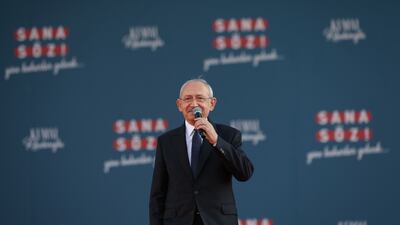
Mr Kilicdaroglu addresses his supporters on Sunday. Republican People's Party Press Service / AFP -
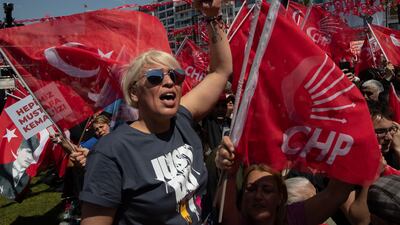
Supporters await Mr Kilicdaroglu's arrival in Izmir. Getty -
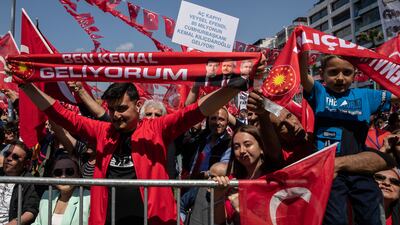
Supporters await Mr Kilicdaroglu's arrival in Izmir. Getty -
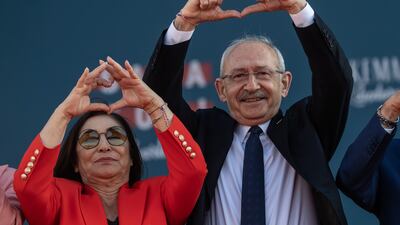
The Kilicdaroglus return the heart gesture to his supporters. Getty -

Supporters await Mr Kilicdaroglu's arrival in Izmir. Getty


What are the key issues?
Turkey's economy has been battered by record inflation — peaking at over 85 per cent last year — and a deadly earthquake that killed more than 50,000 people in February and inflicted an estimated $35 billion in damages.
The soaring cost-of-living crisis has been a key point of discussion in the run-up to the elections, and the opposition has pledged to boost small business and reduce chronic unemployment.
However, economists have said many of the working-class hardest hit by inflation will still back the ruling AKP.
When it comes to foreign relations, the opposition has pledged to unfreeze EU accession talks and end a Turkish veto on Sweden's bid for Nato membership.
Regionally, analysts expect Turkey to normalise relations with Syria in either case, but this may be expedited under Mr Kilicdaroglu, who has also pledged to send home Syrian refugees — almost 5 per cent of Turkey's population — within two years.
Another big issue domestically is the state of democracy in the country. Mr Kilicdaroglu claims that an opposition victory will bring back democracy and free speech and restore foreign trust in Ankara.
Mr Erdogan's rule has been criticised both domestically and internationally as largely authoritarian.
Who is predicted to win?
It is an extremely tight race. But under current polling, Mr Kilicdaroglu is predicted by many to secure a narrow victory over Mr Erdogan.
An average of the last 18 polls conducted by Euronews put Mr Kilicdaroglu on 48.9 per cent of the vote, ahead of Mr Erdogan's 45.8 per cent. It was conducted before Muharrem Ince, who polled an average of 2.3 per cent, withdrew from the race.
While Mr Erdogan has a large and loyal support base domestically and in diaspora, millions of first-time voters are taking to the polls this weekend, and young people are expected to back the opposition.
There is a big chance that voting will go to a second round on May 28 and may trigger unrest across the country.

