Gen Mohamed Hamdan Dagalo, commander of Sudan's Rapid Support Forces paramilitary group, says he is open to peace talks with the army. AP Photo

Sudan paramilitary chief Dagalo demands end to army bombing before talks


  • English
  • Arabic

Follow the latest news from the Sudan crisis here

The commander of Sudan’s Rapid Support Forces paramilitary group has demanded that the army stop its bombing campaign before the rival sides can hold talks to end fighting that has thrown the country into crisis.

More than 500 people have been killed and tens of thousands have fled Sudan since clashes between Gen Mohamed Hamdan’s Dagalo’s paramilitary forces and the Sudanese military led by Gen Abdel Fattah Al Burhan broke out on April 15. Ceasefires brokered by international mediators have been largely ignored.

Gen Dagalo said his forces continued to be bombed “relentlessly” by the army despite both sides agreeing to a further 72-hour ceasefire on Thursday.

Speaking to the BBC by phone, he said he was open to peace talks but only if the ceasefire was observed.

"Cease hostilities. After that we can have negotiations," the BBC quoted him as saying.

"We don't want to destroy Sudan."

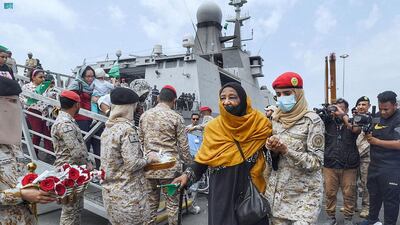
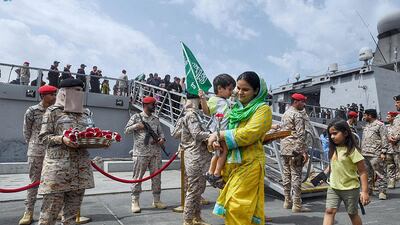
  • Evacuees disembark from Saudi ship Amanah after it docked in Jeddah. AP Photo
    Evacuees disembark from Saudi ship Amanah after it docked in Jeddah. AP Photo
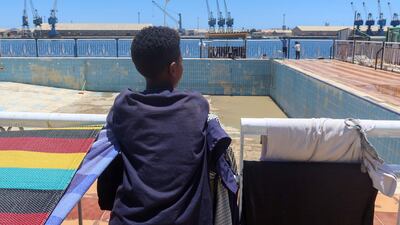
  • A boy waits with his family's luggage before being processed for evacuation in Port Sudan. Reuters
    A boy waits with his family's luggage before being processed for evacuation in Port Sudan. Reuters
  • Smoke billows during fighting in Khartoum. AFP
    Smoke billows during fighting in Khartoum. AFP
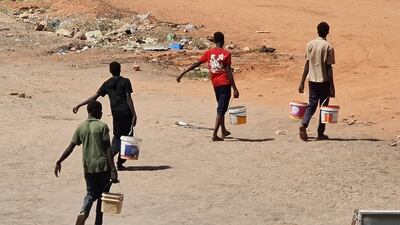
  • Youths carry buckets of water in the Sudanese capital. AFP
    Youths carry buckets of water in the Sudanese capital. AFP
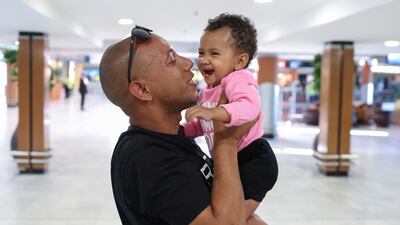
  • South African evacuee Muzzammil Raubenheimer greets his one-year old daughter Amana after arriving home at Cape Town airport. Reuters
    South African evacuee Muzzammil Raubenheimer greets his one-year old daughter Amana after arriving home at Cape Town airport. Reuters
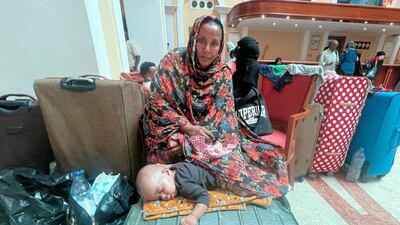
  • Sudanese citizens wait at a makeshift evacuation centre in Port Sudan amid the fighting in Khartoum. Reuters
    Sudanese citizens wait at a makeshift evacuation centre in Port Sudan amid the fighting in Khartoum. Reuters
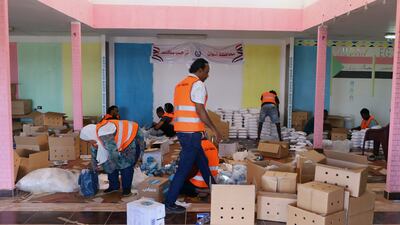
  • Volunteers prepare aid packages for people who fled the fighting in Sudan, at Wadi Karkar bus station in Aswan, Egypt. EPA
    Volunteers prepare aid packages for people who fled the fighting in Sudan, at Wadi Karkar bus station in Aswan, Egypt. EPA
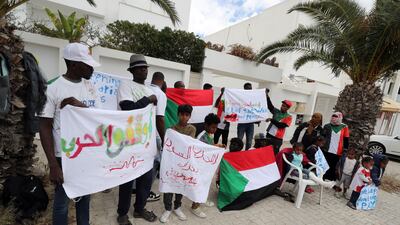
  • Sudanese call for the end of the war as they protest in front of their country's embassy in Tunis, Tunisia. EPA
    Sudanese call for the end of the war as they protest in front of their country's embassy in Tunis, Tunisia. EPA
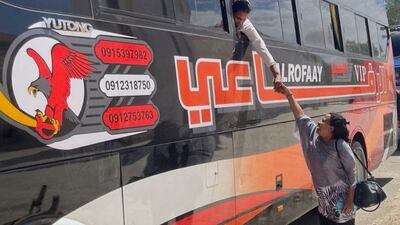
  • A Sudanese woman with UK citizenship leaves on a bus before being processed for evacuation. Reuters
    A Sudanese woman with UK citizenship leaves on a bus before being processed for evacuation. Reuters
  • Smoke rises above buildings after an aerial bombardment in Khartoum. Reuters
    Smoke rises above buildings after an aerial bombardment in Khartoum. Reuters
  • People walk on an almost empty street in southern Khartoum. AFP
    People walk on an almost empty street in southern Khartoum. AFP
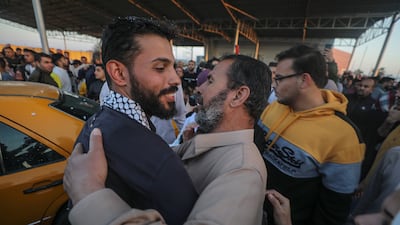
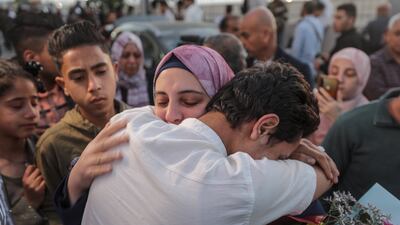
  • Palestinians evacuated from Sudan arrive at the Rafah crossing, between Egypt and the southern Gaza Strip. EPA
    Palestinians evacuated from Sudan arrive at the Rafah crossing, between Egypt and the southern Gaza Strip. EPA
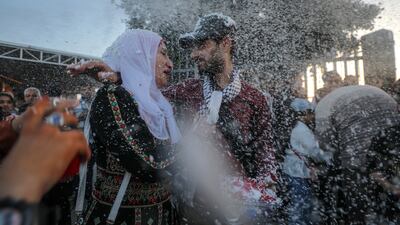
  • Palestinians greet each other at the Rafah crossing, after fleeing Sudan. EPA
    Palestinians greet each other at the Rafah crossing, after fleeing Sudan. EPA
  • The Palestinian evacuees crossed into Egypt first as they fled the fighting in Sudan. EPA
    The Palestinian evacuees crossed into Egypt first as they fled the fighting in Sudan. EPA
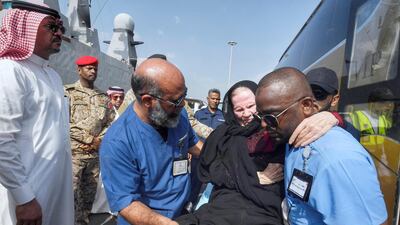
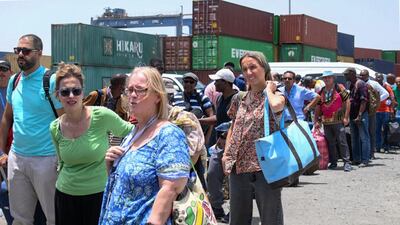
  • Civilians of different nationalities arrive at Jeddah Sea Port after being evacuated by Saudi Arabia from Sudan. Reuters
    Civilians of different nationalities arrive at Jeddah Sea Port after being evacuated by Saudi Arabia from Sudan. Reuters
  • Civilians of different nationalities arrive at Jeddah Sea Port after being evacuated by Saudi Arabia from Sudan. Reuters
    Civilians of different nationalities arrive at Jeddah Sea Port after being evacuated by Saudi Arabia from Sudan. Reuters
  • Civilians of different nationalities arrive at Jeddah Sea Port after being evacuated by Saudi Arabia from Sudan. Reuters
    Civilians of different nationalities arrive at Jeddah Sea Port after being evacuated by Saudi Arabia from Sudan. Reuters
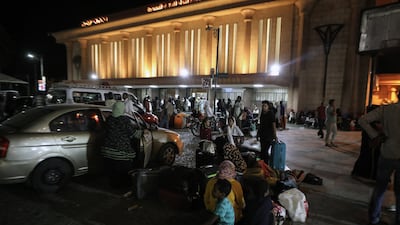
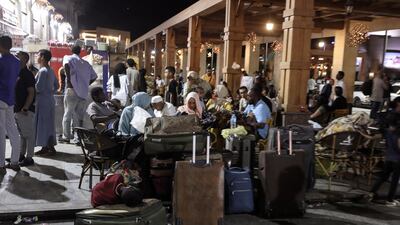
  • Passengers fleeing from Sudan wait outside the railway station in Aswan, Egypt. EPA
    Passengers fleeing from Sudan wait outside the railway station in Aswan, Egypt. EPA
  • Passengers fleeing from Sudan wait outside the railway station in Aswan, Egypt. EPA
    Passengers fleeing from Sudan wait outside the railway station in Aswan, Egypt. EPA
  • Zimbabwean evacuees from Sudan are seen upon arrival at Robert Mugabe International airport in Harare, Zimbabwe. AP Photo
    Zimbabwean evacuees from Sudan are seen upon arrival at Robert Mugabe International airport in Harare, Zimbabwe. AP Photo
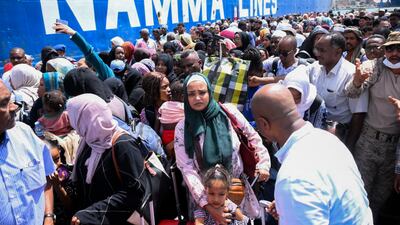
  • People fleeing war-torn Sudan queue to board a boat from Port Sudan. AFP
    People fleeing war-torn Sudan queue to board a boat from Port Sudan. AFP
  • People fleeing war-torn Sudan queue to board a boat from Port Sudan. AFP
    People fleeing war-torn Sudan queue to board a boat from Port Sudan. AFP

The fighting broke out after weeks of tensions between Gen Dagalo and Gen Al Burhan over plans to integrate the RSF into the military as part of an agreement to return Sudan to civilian rule.

The two generals jointly staged a coup against the previous civilian-led government in 2021. That government was installed after the army and RSF together toppled the dictator Omar Al Bashir in 2019 following a popular uprising against his 29-year rule.

Gen Dagalo told the BBC he had no personal problem with Gen Burhan, but regarded him as a traitor for bringing into government people loyal to Al Bashir, whose regime imposed a strict Islamist ideology on the country.

"Unfortunately Burhan is being led by the radical Islamic front leaders," he said.

He said the RSF were not enemies of the military but were fighting to protect the country from "the relics of the government of the past 30 years".

"We won't fight you. Please go back to your army divisions and we won't fight you," he said.

The paramilitary commander said he was committed to the return of civilian rule under the agreement reached with Sudanese pro-democracy groups last year.

"I am looking forward to having the civilian government today - before tomorrow, a fully civilian government. This is my principle," he said.


Mercer, the investment consulting arm of US services company Marsh & McLennan, expects its wealth division to at least double its assets under management (AUM) in the Middle East as wealth in the region continues to grow despite economic headwinds, a company official said.

Mercer Wealth, which globally has $160 billion in AUM, plans to boost its AUM in the region to $2-$3bn in the next 2-3 years from the present $1bn, said Yasir AbuShaban, a Dubai-based principal with Mercer Wealth.

Within the next two to three years, we are looking at reaching $2 to $3 billion as a conservative estimate and we do see an opportunity to do so,” said Mr AbuShaban.

Mercer does not directly make investments, but allocates clients’ money they have discretion to, to professional asset managers. They also provide advice to clients.

“We have buying power. We can negotiate on their (client’s) behalf with asset managers to provide them lower fees than they otherwise would have to get on their own,” he added.

Mercer Wealth’s clients include sovereign wealth funds, family offices, and insurance companies among others.

From its office in Dubai, Mercer also looks after Africa, India and Turkey, where they also see opportunity for growth.

Wealth creation in Middle East and Africa (MEA) grew 8.5 per cent to $8.1 trillion last year from $7.5tn in 2015, higher than last year’s global average of 6 per cent and the second-highest growth in a region after Asia-Pacific which grew 9.9 per cent, according to consultancy Boston Consulting Group (BCG). In the region, where wealth grew just 1.9 per cent in 2015 compared with 2014, a pickup in oil prices has helped in wealth generation.

BCG is forecasting MEA wealth will rise to $12tn by 2021, growing at an annual average of 8 per cent.

Drivers of wealth generation in the region will be split evenly between new wealth creation and growth of performance of existing assets, according to BCG.

Another general trend in the region is clients’ looking for a comprehensive approach to investing, according to Mr AbuShaban.

“Institutional investors or some of the families are seeing a slowdown in the available capital they have to invest and in that sense they are looking at optimizing the way they manage their portfolios and making sure they are not investing haphazardly and different parts of their investment are working together,” said Mr AbuShaban.

Some clients also have a higher appetite for risk, given the low interest-rate environment that does not provide enough yield for some institutional investors. These clients are keen to invest in illiquid assets, such as private equity and infrastructure.

“What we have seen is a desire for higher returns in what has been a low-return environment specifically in various fixed income or bonds,” he said.

“In this environment, we have seen a de facto increase in the risk that clients are taking in things like illiquid investments, private equity investments, infrastructure and private debt, those kind of investments were higher illiquidity results in incrementally higher returns.”

The Abu Dhabi Investment Authority, one of the largest sovereign wealth funds, said in its 2016 report that has gradually increased its exposure in direct private equity and private credit transactions, mainly in Asian markets and especially in China and India. The authority’s private equity department focused on structured equities owing to “their defensive characteristics.”

Skoda Superb Specs

Engine: 2-litre TSI petrol

Power: 190hp

Torque: 320Nm

Price: From Dh147,000

Available: Now

Updated: April 29, 2023, 6:25 AM