


Sudan’s latest bout of civil strife is a result of a fight over the principle of one nation, one army. It is a battle between two generals vying for dominance at a time when the nation is striving to shift to democratic rule.
Curiously, the two generals — army chief and military ruler Gen Abdel Fattah Al Burhan and commander of the powerful paramilitary Rapid Support Forces (RSF) Gen Mohamed Hamdan Dagalo — have been loosely allied since 2019.
The army and the RSF jointly removed Omar Al Bashir from power in 2019 during a popular uprising against the dictator’s 29-year rule.
Since the coup, Gen Dagalo has served as deputy chairman of the ruling military-led Sovereign Council, chaired by Gen Al Burhan.
They again joined forces and staged a 2021 coup that toppled a civilian-led government, upending Sudan’s democratic transition and plunging the Afro-Arab nation of 44 million into political and economic crises.
Why are they fighting?
At the heart of their differences now is the RSF’s full integration into the armed forces, which Gen Al Burhan has recently taken to insisting on as a precondition for signing a deal to end Sudan’s political crisis.
Gen Dagalo has voiced his support for the principle of “one army” but has never clearly stated his willingness to accept the assimilation of his heavily armed and combat-seasoned paramilitary into the armed forces.
For months, the two generals have rejected speculation on their differences, dismissing rumours from groups they say are seeking to drive a wedge between them that could end up destroying Sudan.
The sense that the two men were at odds emerged late last year, when Gen Dagalo, better known by the nickname Hemedti, said the coup in October 2021 had been a mistake that served as a gateway for Al Bashir loyalists to make a political comeback.
Gen Al Burhan tersely dismissed the charge, telling a TV interviewer that Gen Dagalo was entitled to his opinion.
The scope of their differences, however, was made clearer when Gen Dagalo last month accused Gen Al Burhan and others of clinging to power. The military last week issued a statement saying recent RSF mobilisation posed a security threat and could lead to clashes with the army.
Two days later, the two sides were fighting each other on the streets of Khartoum and a string of other cities across Sudan. They are using tanks, rocket launchers, artillery and, from the army’s side, fighter jets.
Caught in the crossfire, nearly 100 civilians have been killed and hundreds more injured.
The fighting is playing out in the wider context of months-long, internationally sponsored efforts to end Sudan’s political crisis. The deal’s blueprint provides for the military to quit politics, the RSF to be integrated into the armed forces and for a civilian prime minister to steer the country for two years until elections are held.
Gen Dagalo and the RSF
-
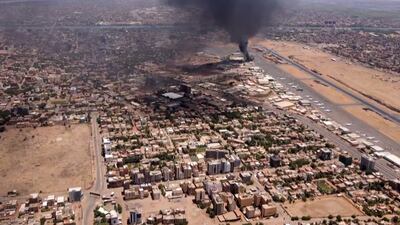
Smoke billows above Khartoum's international airport amid fighting between the forces of two rival generals in Sudan. AFP -
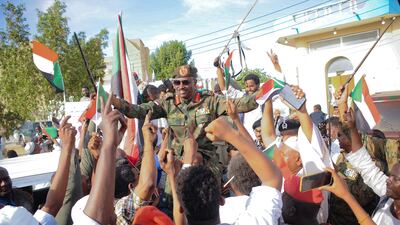
People carry Othman Mohamed, a senior military officer loyal to army chief Gen Abdel Fattah Al Burhan, in the Red Sea city of Port Sudan. AFP -
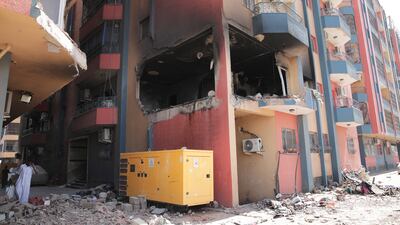
Residential buildings damaged in the fighting in Khartoum, Sudan. AP Photo -
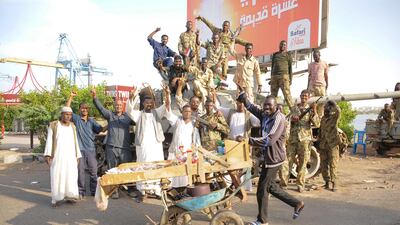
People cheer with Sudanese army soldiers manning a position in the Red Sea city of Port Sudan. AFP -
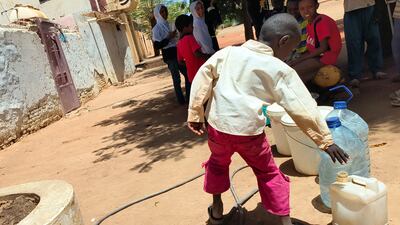
People queue for water in Khartoum. The fighting has resulted in food and water shortages. Reuters -
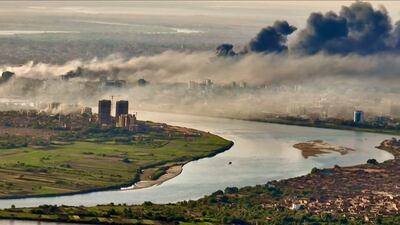
Black smoke covering the sky above the capital, Khartoum. AFP -

Vehicles destroyed during fighting in southern Khartoum. AFP -

People head for the station to flee Khartoum during clashes between the paramilitary Rapid Support Forces and the army. Reuters -
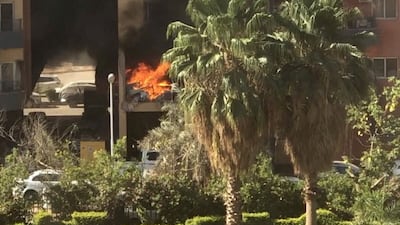
Smoke and fire rise from an apartment building, after a shell hit the complex in Khartoum. Reuters -
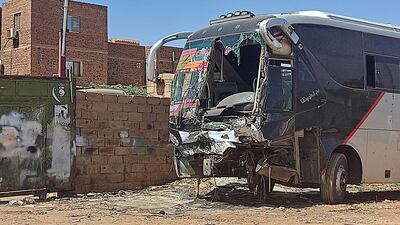
Heavy fighting has broken out across the country. AFP -
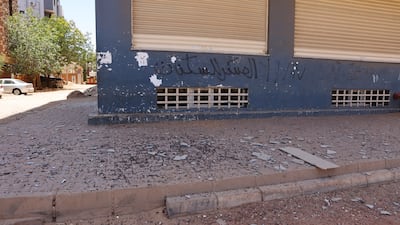
A building damaged by the fighting. EPA -
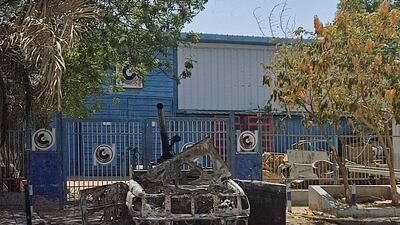
A destroyed vehicle of the paramilitary Rapid Support Forces in southern Khartoum. AFP -
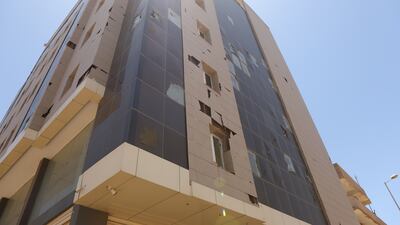
A building damaged by the fighting. EPA -
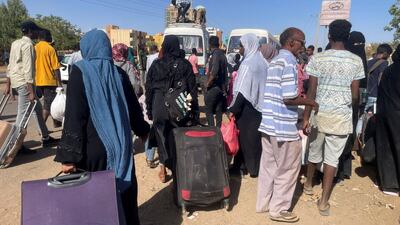
People gather at a bus station to escape Khartoum. Reuters -
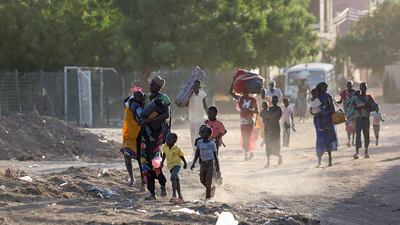
People leave their homes amid the fighting. AFP -

People look for drinking water in Khartoum, Sudan. Faiz Abubakr for The National -

A building burns at Merowe Airport in Sudan. AFP -

A man holds two bullets that hit his home. Faiz Abubakr for The National -
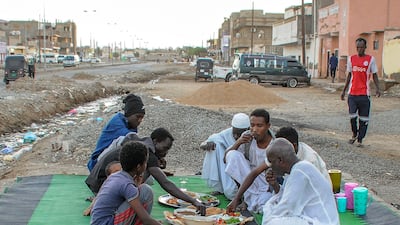
People gather for a meal to break their fast during Ramadan in Port Sudan. AFP -
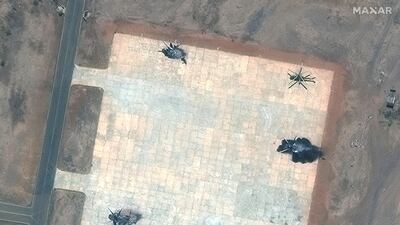
Satellite image shows a close-up view of destroyed helicopters in South Khartoum. Reuters -
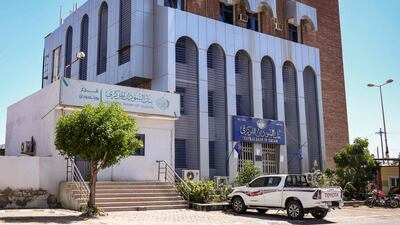
The Port Sudan branch of the Central Bank of Sudan. AFP -
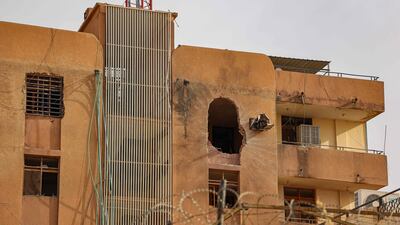
A hole from an explosion on the side of a building in Khartoum, after fighting between the Sudanese army and paramilitary forces led by rival generals. AFP -
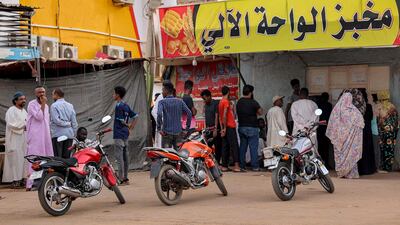
People queue for bread outside a bakery amid a food crisis in Khartoum. AFP -

Smoke rises above Khartoum. Faiz Abubakr / The National -

Fearful families try to shelter from the fighting in houses in Khartoum. Faiz Abubakr / The National -
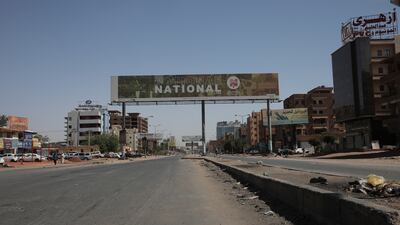
A deserted avenue in Khartoum as residents fear to go out due to intense fighting. AP -
A Sudanese army tank in a street in the Red Sea city of Port Sudan. AFP -
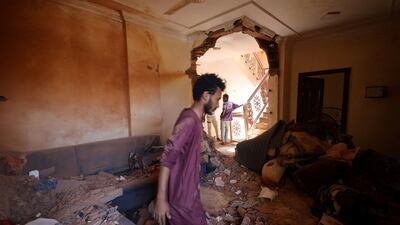
Houses have been severely damanged during clashes between the paramilitary Rapid Support Forces and the army. Reuters -
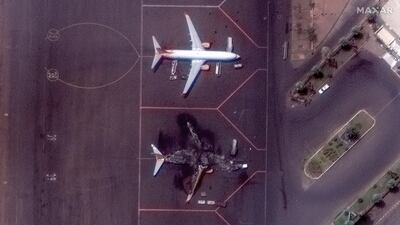
Satellite images show a destroyed Ukrainian plane at Khartoum International Airport. Reuters -
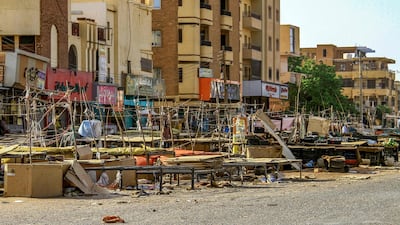
Market stalls abandoned in south Khartoum as fighting in the Sudanese capital rages for a third day. AFP -
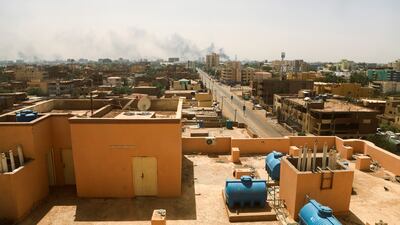
Smoke rises over buildings during clashes. Reuters -
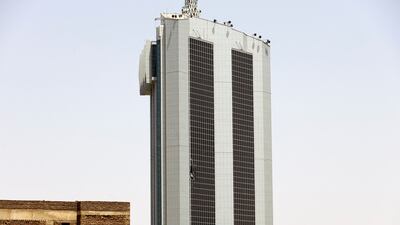
Damage at the Communications Authority Building. Reuters -
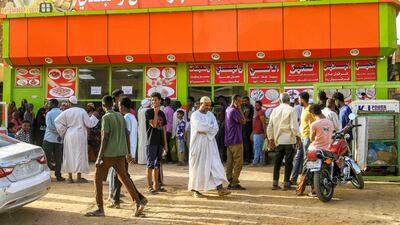
People queue for bread outside a bakery amid a food crisis. AFP -

Destroyed fuel trucks at a depot in Khartoum. Reuters -
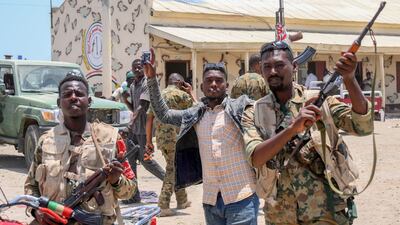
Sudanese army soldiers, loyal to Gen Abdel Fattah Al Burhan, at the Rapid Support Forces (RSF) base in the Red Sea city of Port Sudan. AFP -
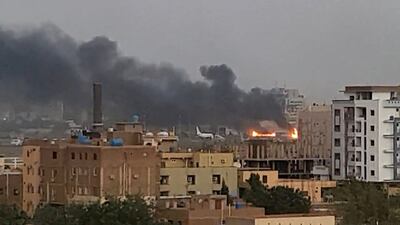
Smoke rises from a fire on the tarmac of Khartoum International Airport in Sudan as fighting between the government and the paramilitary Rapid Support Forces continues. Reuters -
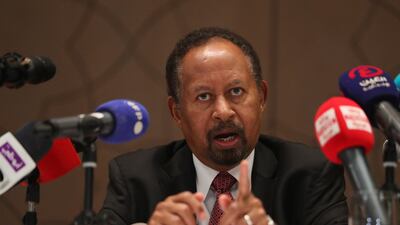
Abdalla Hamdok, former prime minister of Sudan, addresses the current crisis and violence on the streets of his homeland at a news conference in Abu Dhabi. Reuters -

Burning planes at Khartoum International Airport. EPA -
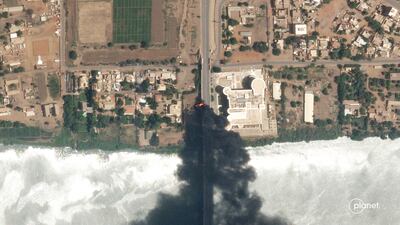
Damage and a fire on the Kobar Bridge in Khartoum. AFP -
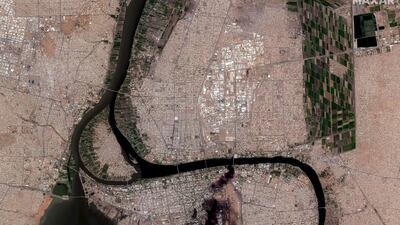
Heavy smoke billows above Khartoum International Airport. AFP -
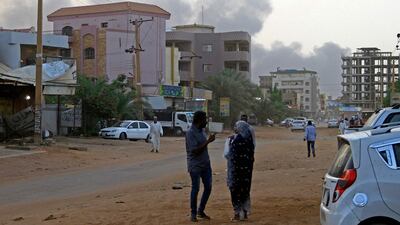
Smoke billows above residential buildings in Khartoum, as fighting in Sudan raged for a second day. AFP -
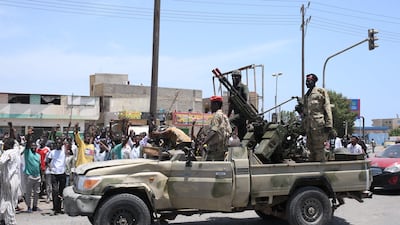
A military vehicle patrols the streets as the fighting continues. AFP -
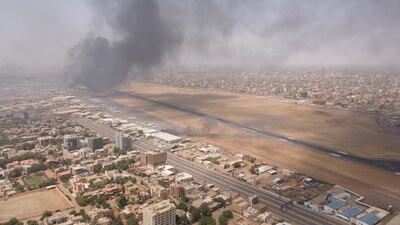
Smoke rises over the city. Reuters -
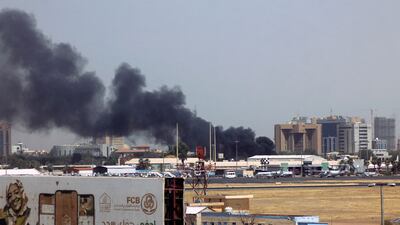
Thick smoke rises above buildings near the airport amid clashes between the army and the paramilitary Rapid Support Forces. AFP -

Explosions rock the Sudanese capital as paramilitary fighters and the regular army attack each other's bases. AFP -
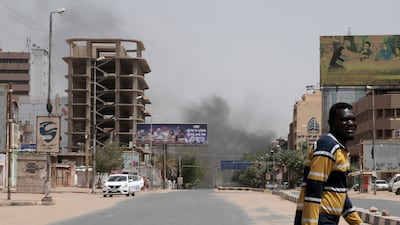
The fighting has raised fears of a wider conflict in the country. AP -
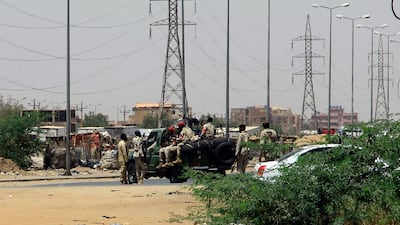
Government soldiers stationed on a key road in Khartoum. AFP -
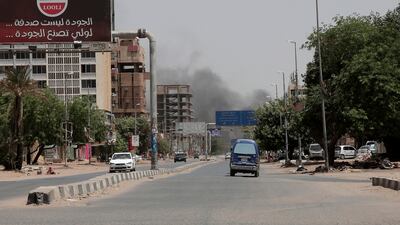
The fighting comes days after the army warned the country was at a 'dangerous' turning point. AP -
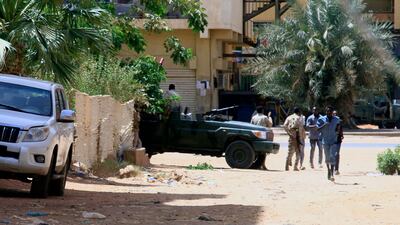
People walk past a military vehicle in Khartoum. AFP


Gen Dagalo, a close ally of Russia who has strong links to several regional powerhouses, has recently been promoting himself as an advocate of democratic rule while casting his rivals in the military as a power-hungry bunch clinging to power.
He has portrayed the fight against the army as an endeavour to place Sudan on the way to democratic rule and accused Gen Al Burhan of being a “radical Islamist”.
But his bid to reinvent himself as pro-democratic has been met with scepticism, with most Sudanese seeing him and Gen Al Burhan as enemies of the people who are bent on restoring dictatorship.
A member of Darfur's camel-herding Arab Rizeigat tribe, Gen Dagalo made his name as a leader of the feared Janjaweed militia that fought on the government’s side in Darfur’s civil war in the 2000s.
Gen Al Bashir legalised the militia and gave it its present name in 2013. In 2017, the Sudanese Parliament passed a law making it part of the armed forces, albeit with a large degree of autonomy.
In the face of protests in 2018 and 2019 against his rule, Gen Al Bashir ordered the RSF to come to Khartoum to protect his regime.
Gen Dagalo, however, arrived in the capital with his men but, sensing that the regime was likely to collapse, decided not to take part in suppressing the uprising, leaving that task to security forces.
He hoped his decision would win him the support of the protesters and the pro-democracy movement at large. But that act of political opportunism did not stop protesters from continuing to demand that the RSF be part of a single national army.
Their position was soon validated.
In June 2019, RSF members were widely suspected of leading the violent break-up of a sit-in protest outside the armed forces headquarters, killing at least 100 and committing well-documented sexual assaults on protesters.
Who is Gen Al Burhan?
A career soldier from northern Sudan who rose through the ranks under Al Bashir, Gen Al Burhan was born in 1960 in a village north of Khartoum. He remained relatively obscure for most of his career.
He commanded Sudan’s ground forces before Al Bashir appointed him inspector general of the army in February 2019, two months before the military removed the former dictator from power.
In 2015, he co-ordinated the deployment of Sudanese troops in Yemen as part of a Saudi-led coalition against the Iran-backed Houthi rebels. There, he worked closely with the RSF, inadvertently boosting his and his future enemy’s regional profile.
His first stint as chairman of the ruling Sovereign Council began in August 2019 when the transitional military-civilian administration he toppled in 2021 first took office. It was at that point that he started to swap his military fatigues for business suits and took up the role of the nation's de facto leader.
What next?
Gen Al Burhan has been the subject of intensifying speculation about his political ambitions and how close his links are to militants loyal to Al Bashir.
That he has political ambitions is a widely held belief in a country that generally distrusts military generals.
Gen Al Burhan is the latest in a long line of army officers who have seized or attempted to grab power in Sudan since independence.
His commitment to democratic rule, which he has profusely expressed in recent months, is questionable given the coup he co-led with Gen Dagalo 18 months ago.
Seeing in the fighting a chance to settle the score once and for all and emerge as the nation’s supreme soldier, Gen Al Burhan says he would not parley with the RSF and wants it dissolved. The RSF, he said repeatedly, was in mutiny.

