

Israeli air strikes hit southern Lebanon before dawn on Friday, when Khaled Abdel Zilo and his family were sitting down for suhoor, the meal eaten before the dawn of another day of fasting during Ramadan.
When the sky thundered and their flat shook with the impact, Mr Zilo’s five children sought shelter in their parents' arms, he told The National.
Much like everyone else in the southern part of Lebanon, Mr Zilo and his family had been expecting Israeli retaliation since Thursday evening, when a barrage of more than 30 rockets was fired from Lebanon towards Israel in the biggest escalation between the two countries in nearly two decades.
Qleileh resident
Israel’s Prime Minister Benjamin Netanyahu had promised to “hit back” after the rockets were launched into northern Israel.
The exchange of strikes came against the background of increased tension over violent raids by Israeli police at Al Aqsa Mosque in Jerusalem.
But expecting a reprisal did not make the bombardment any less distressing for Mr Zilo and his family.
Ramadan is a tense period throughout the eastern Mediterranean because of widespread fears of violence between Israel and Hamas in Gaza and Israel and pro-Palestinian militias in southern Lebanon, where Hezbollah, the Iran-backed ally of Hamas, holds sway.
In the south of Lebanon — which has technically been at war with Israel since the latter's foundation in 1948 — locals are no strangers to the anxiety of the ever-present possibility of escalation.
-
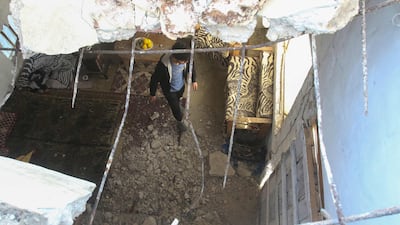
A man inspects damage at his house left by a rocket following Israeli air strikes in Al Qulaylah, on the outskirts of the city of Tyre, south of the Lebanese capital Beirut. AFP -
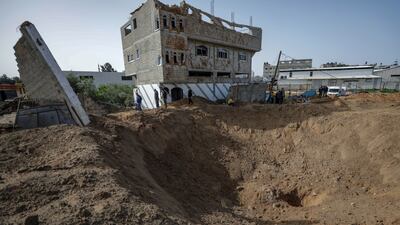
Palestinians inspect the damage after Israeli air strikes in Gaza City. EPA -
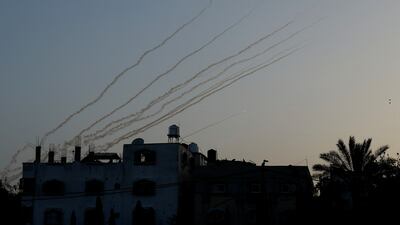
Trails of smoke is seen as rockets are fired from Gaza. Reuters -
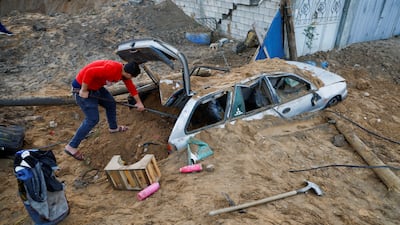
A Palestinian checks a car damaged by Israeli air strikes in Gaza city. Reuters -
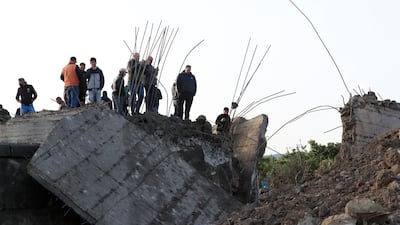
A bridge destroyed by an Israeli air strike in Maaliya village in south Lebanon. AP -
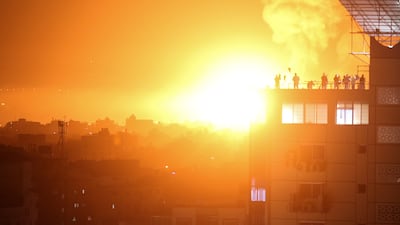
Flames and smoke rise after Israel bombarded south Lebanon and Gaza in the early hours of Friday. EPA -
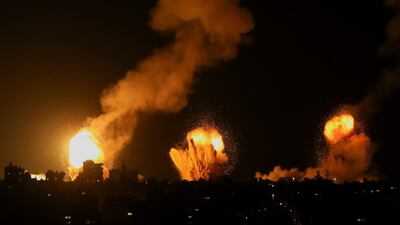
Explosions seen in Khan Younis in the southern Gaza Strip. Reuters -
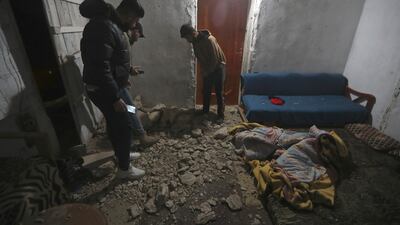
Lebanese residents examine the damage at a house after air strikes in Qalili village in south Lebanon. AP -
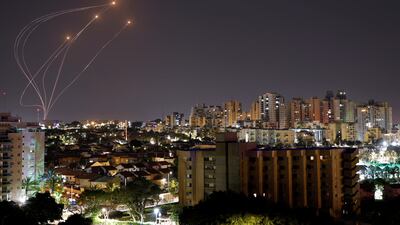
Streaks of light seen from Ashkelon in Israel as rockets fired from the Gaza Strip are intercepted. Reuters -

A Lebanese army unit finds a missile launcher near the towns of Zibqin and Qlaileh. Photo: Lebanese Army -
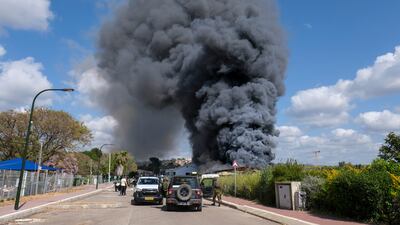
Smoke rises after rockets fired from Lebanon strike Bezet in northern Israel. AP -
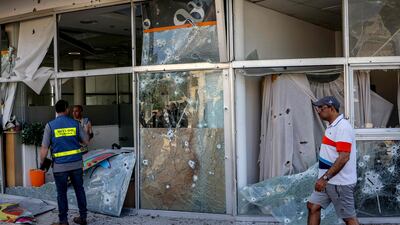
A damaged building in the northern Israeli town of Shlomi. AFP -

The remains of an intercepted rocket fired from Lebanon into the city of Shlomi in northern Israel. AP -
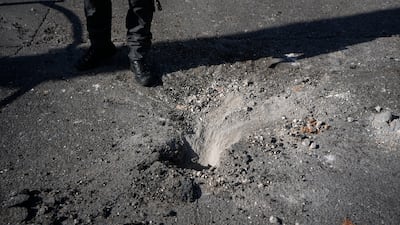
Ruins of a missile intercepted by Israeli military. AP


Mr Zilo said his children, the oldest of whom is ten years old, were too young to have experienced the 2006 war between Israel and Hezbollah in Lebanon.
“They’re not accustomed to all this like we are,” he said.
He stood over a crater of debris on Friday afternoon as he spoke to The National – the site of one of the Israeli airstrikes, which fell in the Qleileh agricultural area on the outskirts of Tyre. The region, near the Rashidieh camp for Palestinian refugees, is where security sources said Thursday's rockets were fired into Israel from.
One day earlier, the debris had been a concrete bridge built over an aqueduct fed by the nearby Ras Al Ain spring, which provided water for a stretch of about 10 kilometres of farmland.
Now, the rubble of the collapsed bridge blocks off the farms' primary water source.
“This spring water is all we have for watering crops,” said Qleileh resident Firas Salini.
The strikes on agricultural fields initially led to mockery on social media that Israel was targeting bananas. But the sight of the collapsed bridge was also a reminder that the enemy neighbor had destroyed some of Lebanon’s most vital civilian infrastructure during the 2006 war and could do so again.
Most residents who spoke to The National appeared unperturbed by the message.
“Israel wouldn’t dare do [what it did in 2006] again because Hezbollah is stronger now,” Mr Salini said as he milled around the site accompanied by a group of men.
Like others, he said he was not worried about further escalation because of Israel’s limited response, indicating no appetite for war.
Three strikes at dawn had “just affected some people’s livelihoods. But no lives were lost,” he said.
The Israeli army said on Friday morning that it had hit targets “belonging to the Hamas terror organisation in south Lebanon”.
But nearby residents said the aqueduct site was merely agricultural infrastructure vital for keeping crops watered.
A representative of the UN Peacekeeping Force in Lebanon (Unifil) declined to comment on the site of the strike, citing a continuing investigation.
Earlier, The National observed Unifil soldiers inspecting the site.
When they were gone, farm workers and residents of the nearby villages came to view the damage. Some brought their families along.
“Our kids were so terrified. They were screaming last night,” said Mustafa, a manual labourer who declined to give his last name.
He nodded towards his three children as they ran around, exploring the crater and dipping toes into the pool of water left by the destroyed aqueduct.
“So we brought them out today for some fun. To show them that there’s nothing to be scared of.”
Mr Zilo, carrying bags full of vegetables and baby formula, nodded in agreement with Mustafa.
He had stopped at the site of the impact on his way home from the supermarket, highlighting that normality prevailed among the residents of Tyre and its suburb, where the brunt of the Israeli strikes were felt.
“It was a strong strike,” Mr Zilo said. “But it didn’t hit in the very populated areas.”
The National drove further south from the point of the attack, speaking to farmers about how the water blockage would affect their harvest.
Kilometres of oranges, bananas, lettuce, melons, cauliflower, and cabbage are all depend on high and consistent quantities of water, they said.
“If the bridge isn't fixed the season is ruined,” said a farmhand. He explained that some farms had reservoirs fed by the aqueduct — but these would soon be empty.
Still, he considered the strikes to be part of a “theatre” — echoing the sentiments of many who dismissed Israel’s response as forceful, but not quite beyond the bounds of what passes for ordinary in south Lebanon.

