

Live updates: Follow the latest on the earthquake in Turkey and Syria
The night before a devastating earthquake struck southern Turkey, Sinan Guneri went to bed anticipating a normal week serving kebabs from his restaurant in Diyarbakir’s Yenisehir neighbourhood.
Within 12 hours he was frantically organising shipments of food and aid from the takeaway business, helped by staff, friends and an ad hoc collection of local business people.
Their efforts are just one example of the way people across the country have thrown themselves into the aid effort. Moved by the plight of fellow citizens caught in a disaster that had claimed more than 24,000 lives in the country as of Saturday evening, countless numbers have come together independently of any official prompting to help in any way they can.
-
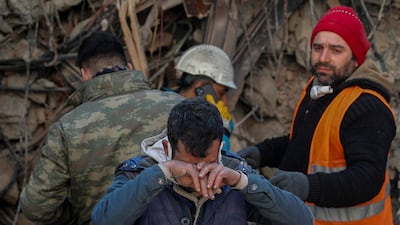
The brother of a survivor Gokhan Ugurlu, 35, who was pulled out of the rubble in Hatay, Turkey, reacts as a rescuer looks on. Reuters -
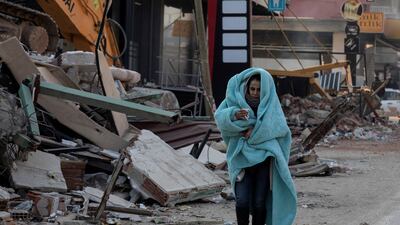
A woman walks past flattened buildings in a street in Hatay province, Turkey. Reuters -

A member of the army stands amid rubble in Kahramanmaras, Turkey. Reuters -
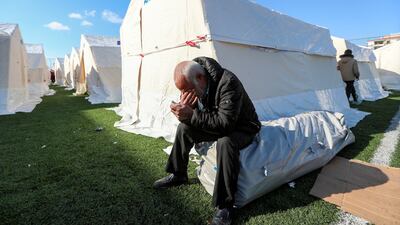
A man reacts while sitting outside a tent of a temporary accommodation centre set up on a football pitch in Gaziantep, Turkey. Reuters -
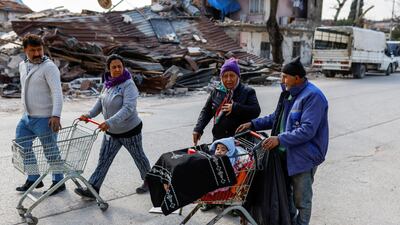
Earthquake survivors walk on a street in Hatay, Turkey. Reuters -
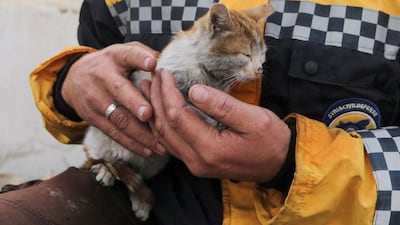
A White Helmets volunteer holds a rescued cat in the rebel-held town of Jandaris, Syria. Reuters -
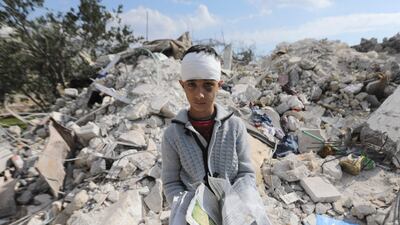
A Syrian boy, who lost his family in the deadly earthquake, stands amid the rubble of his family home in Jindayris. AFP -
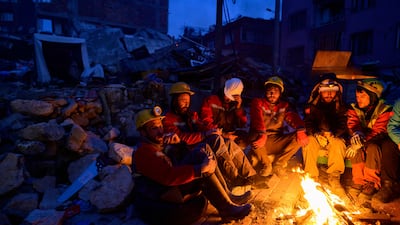
Rescuers sit by a bonfire in Hatay, Turkey. AFP -
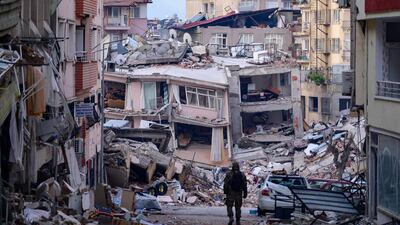
A Turkish soldier walks among destroyed buildings in Hatay. AFP -
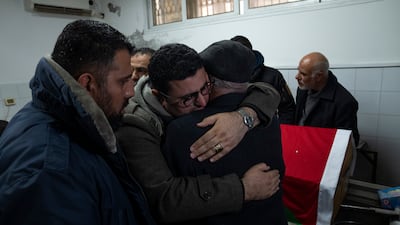
Relatives of Palestinian doctor Yusuf Darabeh, who died when the earthquake hit Turkey, comfort each other. AP Photo -
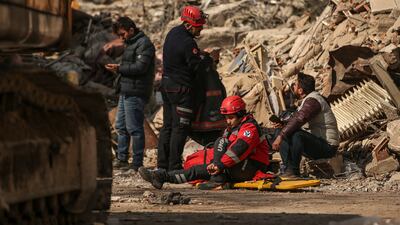
People stand by a collapsed building in Kahramanmaras, southern Turkey. AP Photo -
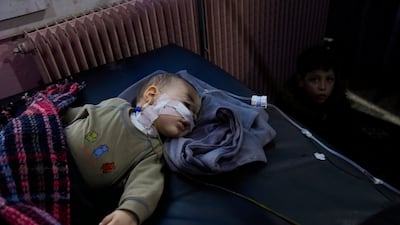
A child, injured in the earthquake, is treated at hospital in Bab Al Hawah, Syria. AP Photo -
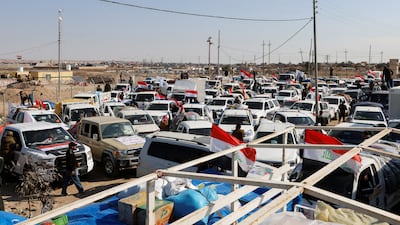
Vehicles containing aid from Hashid Shaabi (Popular Mobilization Forces) on the Iraqi side of the Iraq-Syria border. Reuters -
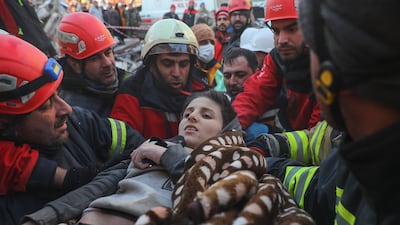
Rescuers carry Muhammed Alkanaas, 12, to an ambulance after five days under the rubble in Antakya, Turkey. AP -
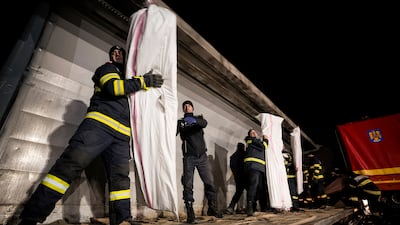
Romanian firefighters load a Turkey-bound train with emergency aid near Bucharest. AP -
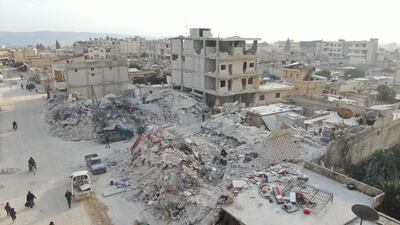
Collapsed buildings in Jandaris, Syria. Reuters -
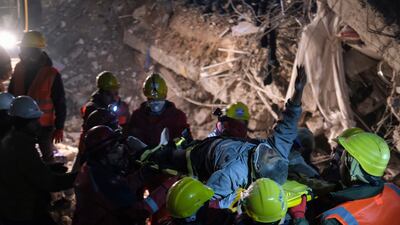
Abdulkerim Nano, 67, is rescued after five days under the rubble in in Kahramanmaras, Turkey -
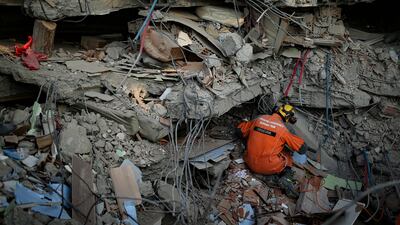
A Turkish rescue worker checks a collapsed building in Adiyaman. AP -
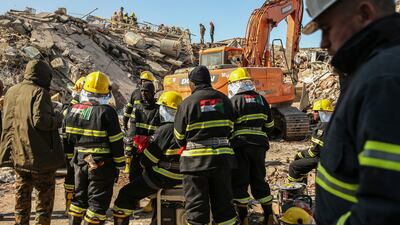
Rescuers in Adiyaman, Turkey. AP -
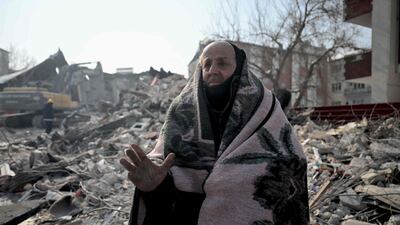
A resident in front of his collapsed building in the Elbistan district of Kahramanmaras. AFP -

Syrian refugees shelter in a public market in the Islahiye district of Gaziantep, Turkey. AP -
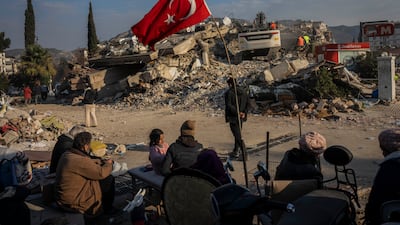
A family wait for the bodies of their relatives to be recovered in Antakya, Turkey. AP -
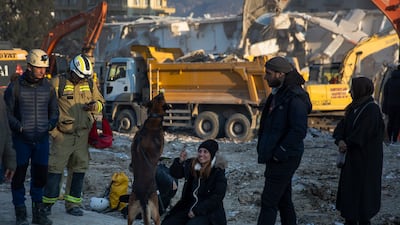
A woman plays with a sniffer dog in Antakya, Turkey. AP -

Collapsed buildings in Antakya, Turkey. AP -
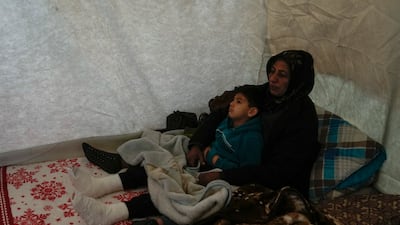
A Syrian woman takes care of her nephew Hasan Goayid, eight, in Islahiye district, Gaziantep. AP -

A Syrian child in a tent in the Islahiye district. AP -
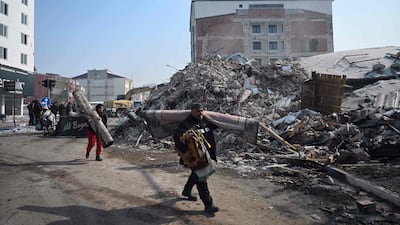
Collapsed buildings in the Elbistan district of Kahramanmaras. AFP -
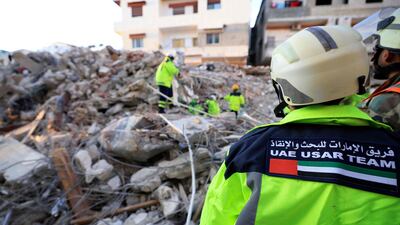
Emirati rescuers sift through the rubble of a collapsed building in the regime-controlled town of Jableh, northwest of the Syrian capital. AFP -
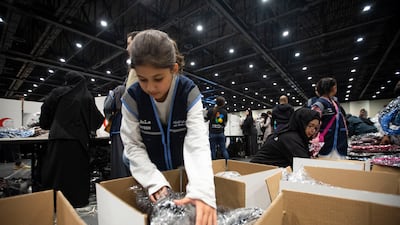
Volunteers at the Emirates Red Crescent 'Bridges of Goodness' campaign at the South Hall, Dubai Exhibition Centre at Expo City. Leslie Pableo for The National -
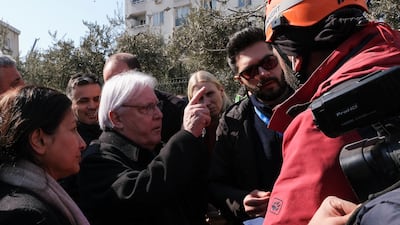
Martin Griffiths, UN Under Secretary General for Humanitarian Affairs and Emergency Relief Co-ordinator, in Maras, Turkey. Reuters -

Rescuers give water to a dog after a rescue operation in Hatay, southern Turkey. AP -
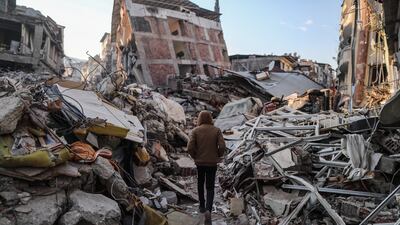
A deadly earthquake struck southern Turkey and northern Syria on February 6. EPA -
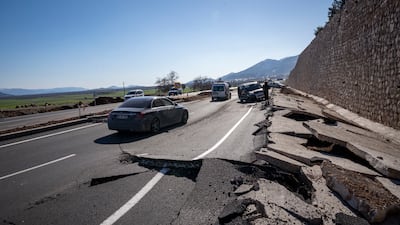
Fissures from the earthquake have crumpled the highway near Islahiyeh in Southern Turkey. Matt Kynaston / The National -
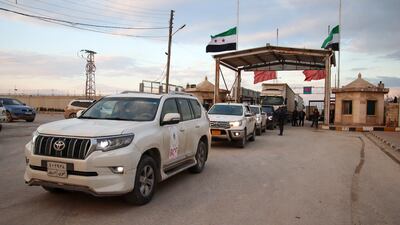
A Kurdish charity's aid convoy enters Syria through the Bab Al Salama crossing with Turkey, in the northern province of Aleppo. AFP -
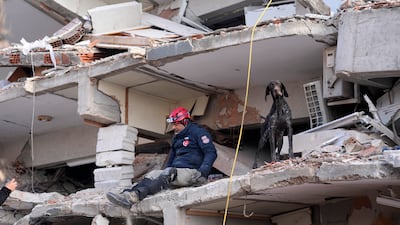
A rescuer with a sniffer dog searches in a destroyed building in Antakya, southern Turkey. AFP -
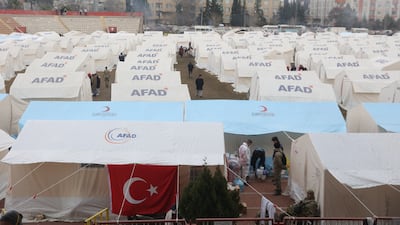
A makeshift camp erected in a stadium in the city of Kahramanmaras, southern Turkey. EPA -
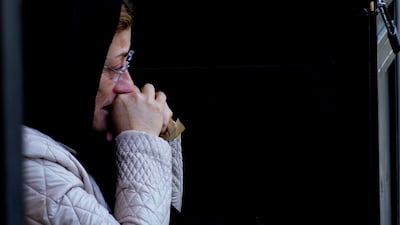
A woman mourns Turkish Cypriot victims of the earthquake, during a funeral procession in the Turkish occupied area in north-east coastal city of Famagusta, Cyprus. AP -
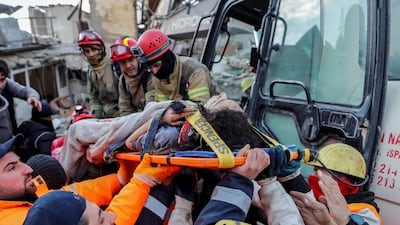
Rescuers carry survivor Rabia Ofkeli, 27, from the rubble in Hatay, southern Turkey. Reuters -
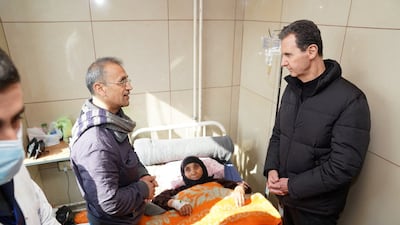
Syrian President Bashar Al Assad visits Aleppo university hospital. Reuters -
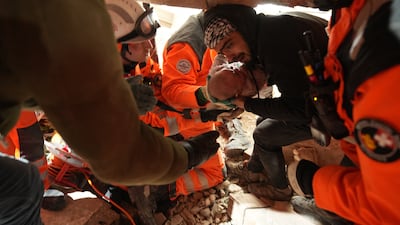
Members of the Swiss rescue team with a four-month-old girl, Abir, who was pulled out from the rubble in Antakya. AFP -
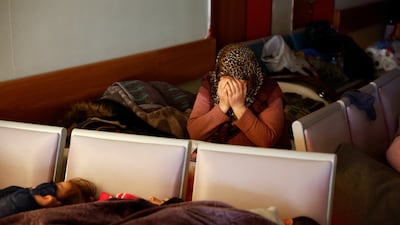
Survivors at a hospital in Kahramanmaras, Turkey. Reuters -
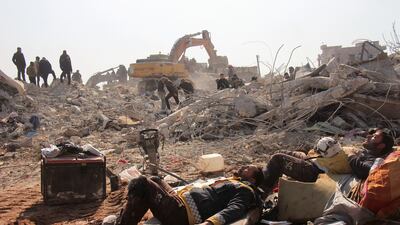
Members of the White Helmets during the fifth day of rescue operations in Jandaris, Syria. Reuters -
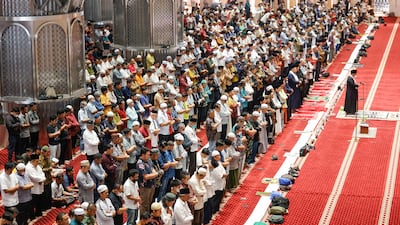
Indonesian Muslims perform a prayer for the victims at Istiqlal grand mosque in Jakarta. EPA -
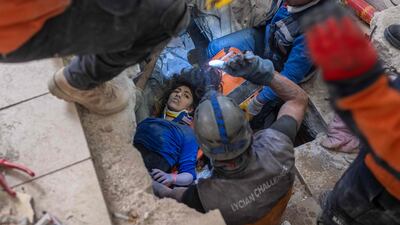
Emergency personnel conduct a rescue operation to save Melda, 16, from beneath the rubble of a collapsed building in Hatay, southern Turkey. AFP -
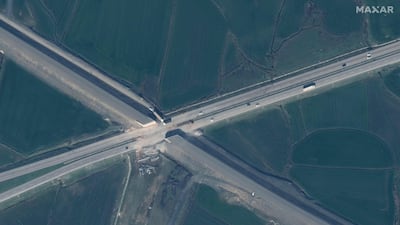
The earthquake caused a railbed overpass to collapse in Nurdagi, Turkey. AFP -
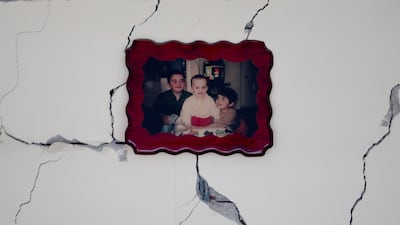
A framed picture on the cracked wall of a collapsed building in Kahramanmaras, south-eastern Turkey. EPA -
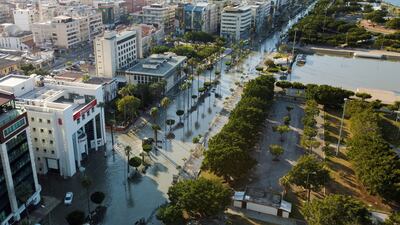
A coastal area of Iskenderun, Turkey, was flooded after the quake. Reuters -
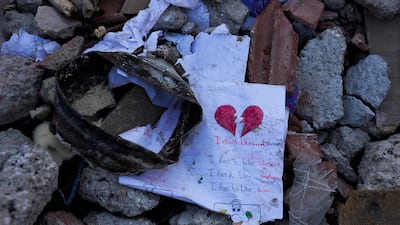
A sheet of paper lies among the rubble in Elbistan. AP -
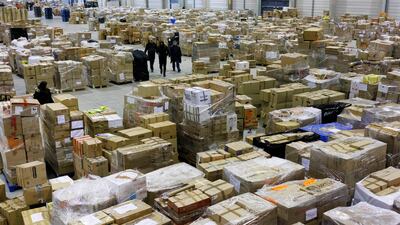
Relief supplies destined for earthquake survivors in Turkey, at a warehouse in Schoenefeld, near Berlin, Germany. AP -
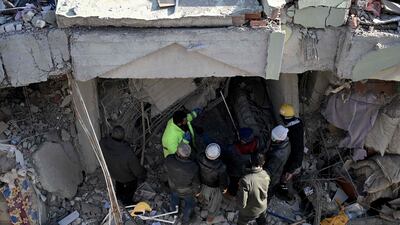
Rescuers search for survivors in the rubble of collapsed buildings in Kahramanmaras, three days after the earthquake struck. AFP -
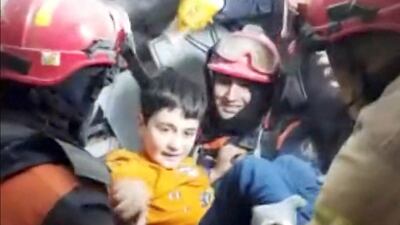
Rescuers with a child pulled out from under the rubble. Reuters -
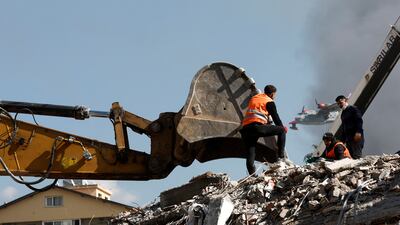
Rescuers rest on top of rubble as an aircraft drops water over a fire at the port in the quake-stricken town of Iskenderun. Reuters -

A rescue worker in Kahramanmaras, three days after a 7.8-magnitude earthquake struck south-east Turkey. AFP -
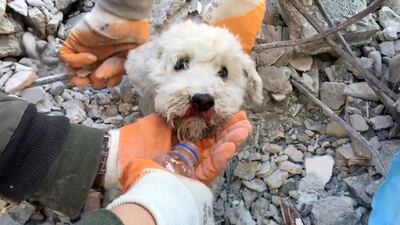
People try to pull out a dog trapped beneath the rubble in Iskenderun, Turkey. Reuters -
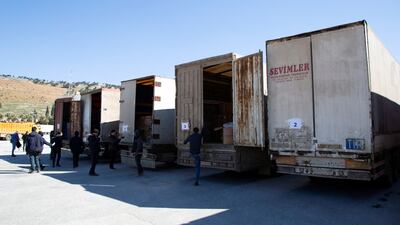
Lorries carrying humanitarian aid wait at Bab Al Hawa crossing on the Turkey-Syria border. Reuters -
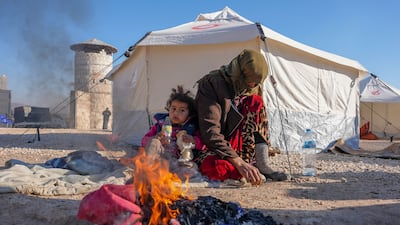
Syrians warm up by a fire outside a makeshift tent near the rebel-held town of Jindayris in Syria. AFP -
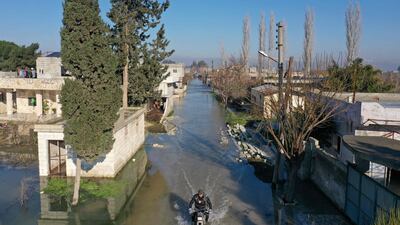
A dam on the Orontes river in Syria's rebel-held Idlib province collapsed after the quake, flooding the neighbourhood. AFP -
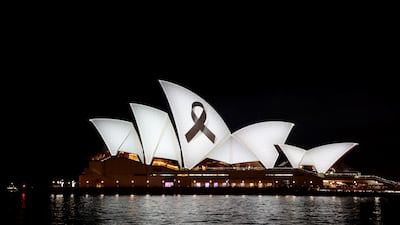
The sails of the Sydney Opera House lit with a black ribbon in remembrance and mourning of the earthquake victims. Getty -
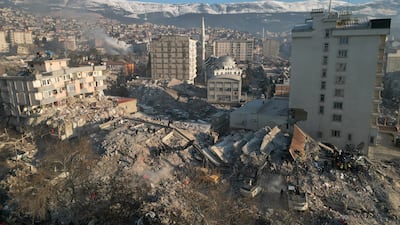
Smoke billows amid an expanse of collapsed and damaged buildings in Kahramanmaras, Turkey. Reuters -
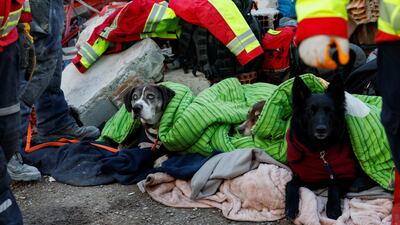
Dogs of the German International Search and Rescue team rest between operations in Kirikhan, Turkey. Reuters -
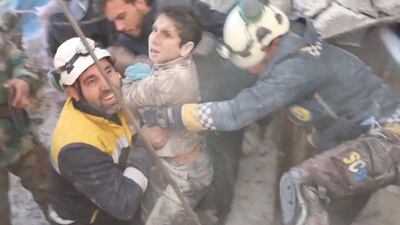
White Helmets volunteers rescue a child trapped beneath the rubble in Jandaris, Syria. Reuters -
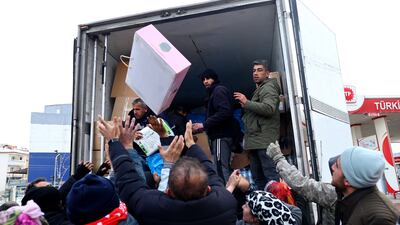
People gather to collect food and humanitarian aid in the Elbistan district of Kahramanmaras, south-east Turkey. EPA -
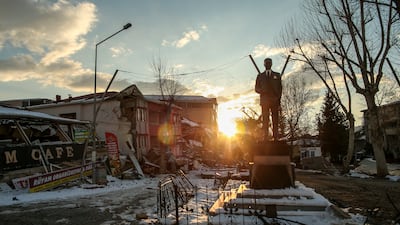
The statue of Mustafa Kemal Ataturk, founder of modern Turkey, is surrounded by damaged buildings in Adiyaman province. AP -
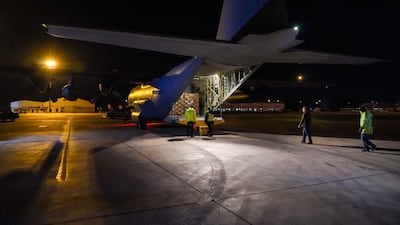
A plane carrying humanitarian air sent for earthquake survivors lands in Damascus. Mahmoud Rida / The National -
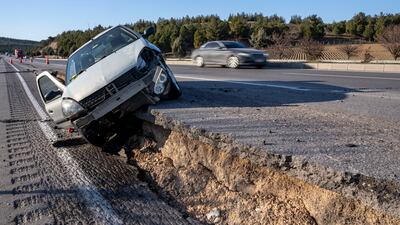
Motorway fractured by earthquake causes car crash near Kahramanmaras, Turkey. Matt Kynaston / The National -
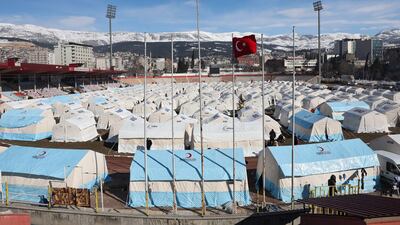
A tent camp has been set up at a stadium in south-eastern Turkish city of Kahramanmaras to shelter families whose homes were destroyed in the quake. AFP -
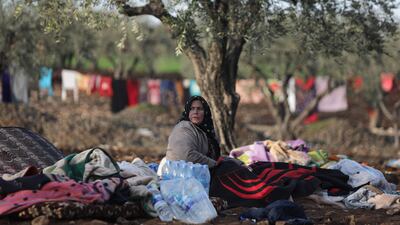
A displaced Syrian woman rests under a tree in a field on the outskirts of the rebel-held town of Jindayris. AFP


“We began by distributing food to all the people we could — emergency workers and ordinary people working on the collapsed buildings, as well as those who were made homeless by the earthquake,” Mr Guneri told The National on Saturday.
His unimposing restaurant, with a sign featuring cartoon character Obelix hanging above its glass door, has now become an informal distribution centre for all kinds of aid supplies, not just food but also tents, blankets and other necessities.
“Three or four trucks left yesterday for Adiyaman,” Mr Guneri said from his business, sitting near sacks of potatoes and crates of bread waiting to be loaded. “So far we have sent nine trucks to places outside Diyarbakir, as well as helping those in our city.”
Diyarbakir, the unofficial capital of Turkey’s Kurdish population, is the easternmost of 10 provinces within the disaster zone. Although just a handful of buildings in the city collapsed, the death toll across the province reached 219 by Saturday.
“We have 13 people here working to provide aid, many of them my family members, but we are working alongside a volunteer group of 60 or 70 people,” Mr Guneri said.
“We distributed 2,000 loaves of bread on the first day. Some people send us money which we use to buy blankets and heaters. The restaurant has become an aid distribution point. We work from early to late — I think I’ve slept about 10 hours over the last six days.
restaurant owner in Diyarbakir
“I get 650 to 700 calls a day and we co-ordinate with people on Twitter and WhatsApp. One WhatsApp group has 1,009 members.”
As the government faced criticism for failing to reach the disaster area in time, other groups also launched far-reaching aid operations.
The Diyarbakir City Protection and Solidarity Platform, a collection of civil society groups ranging from the city’s bar association to trade unions that was formed two months ago, is running its operation from the offices of the city’s Chamber of Commerce.
“The earthquake happened at 4.17 in the morning and by five o’clock we started work for food distribution, shelters, heating and tents,” said Sirac Celik, a trade union worker and member of the platform’s crisis desk.
“Our first priority was Amed and now we’re directing support to other cities,” he added, using the Kurdish name for Diyarbakir. “We’re focused on places like Malatya, Maras, Hatay and Adiyaman.
trade union worker
“We now have thousands of volunteers bringing in supplies and sending them out, working 24/7 every day.”
On the floor below the crisis centre, where a fog of cigarette smoke hangs over weary workers fuelled by black tea sipped from disposable cups, families have laid out blankets and a few belongings rescued from homes damaged by the quake and considered too dangerous to return to.
Evin Seker, 30, who usually works for a law firm, has been organising food distribution.
“My main duty is to co-ordinate between those making the food and the places where it is needed,” she said from behind an opulent desk normally occupied by the Chamber of Commerce’s chairman.
“Our motivation comes from wanting to support our people and that’s what we’re working for.”
At a distribution centre set up in a building belonging to a teachers’ association, volunteers form human chains to load aid on to lorries too large to enter the narrow street.
“We have up to 150 people working here, loading food, children’s needs, women’s needs, blankets, shoes, clothing, whatever we can,” Kurdish language teacher Fesih Zirek said. “The association has another building that we can’t use because it's not safe so we just use this two-storey building.”
Aziz Ozkan spoke to The National after driving from Ankara to Diyarbakir via Malatya, a city hit heavily by the quake, to drop off supplies. “The roads are very difficult and progress is slow,” he said.
“About 500,000 people are trying to leave Malatya. Normally it would take seven hours between Ankara and Malatya but it took us 13 hours. It’s not just traffic jams but also the snow.”
For the region’s hard-pressed volunteers, an end to their endeavours seems a distant possibility.
“We’re not sure when it’ll be finished,” Mr Celik said. “Besides what we’re doing now, we also have to help those whose buildings are damaged and can’t return home. It will take at least a year.”

