• Animal rights group Haytap rescues animals affected by the earthquake. All photos: Haytap Animal Rights Federation
    Animal rights group Haytap rescues animals affected by the earthquake. All photos: Haytap Animal Rights Federation
  • A cat being comforted by a rescue worker
    A cat being comforted by a rescue worker
  • A cat pulled from the rubble being treated by vets at Haytap Sahra Hospital
    A cat pulled from the rubble being treated by vets at Haytap Sahra Hospital
  • This dog's owners have no shelter themselves, so Haytap is taking care of it
    This dog's owners have no shelter themselves, so Haytap is taking care of it
  • Haytap continues to rescue animals days after the earthquake
    Haytap continues to rescue animals days after the earthquake
  • Staff and veterinary students from surrounding cities are helping in Malatya
    Staff and veterinary students from surrounding cities are helping in Malatya
  • A dog rescued in Malatya
    A dog rescued in Malatya
  • The owners of many of the animals being treated by Haytap are either dead or missing
    The owners of many of the animals being treated by Haytap are either dead or missing

Turkey animal rescue teams overwhelmed after earthquake


Taylor Heyman
  • English
  • Arabic

Follow the latest on the earthquake in Turkey and Syria

Under the rubble left behind from Turkey's earthquake, barks, miaows and even the cooing of birds have accompanied the cries of people trapped.

As rescue teams scrambled to reach areas devastated by the tremors, those who hear an animal in distress, or are worried about their own beloved pet, know who to turn to.

“There are thousands of calls coming in," says Zeynep Ceren Oktay, spokeswoman for Haytap, an animal rights charity currently working in the disaster zone.

The Haytap team sprang into action to help people and animals after the 7.8-magnitude earthquake. Local specialists were able to reach some of the collapsed buildings before international teams from countries including India, Saudi Arabia and the UK joined the effort.

Haytap members in nearby Osmaniye rushed to Antakya, a city reduced to ruins by the quake, setting up an aid tent at the Defne Tea Garden, Hatay. Later, volunteers, vets and trained search and rescue staff arrived from Istanbul to help.

Although the workers are stretched incredibly thin operating across the earthquake's affected area, they have also managed to set up an emergency tent in Malatya.

Videos showing Haytap staff and volunteers at work include footage of helping injured babies, pulling dogs from wreckage and even treating sheep at their makeshift tented surgery.

“Every minute our team is saving a life and every day we transport the pets that don’t have owners to Haytap safe houses,” Zeynep tells The National.

“Unfortunately 10 cities are affected by the earthquake and the area it covers is really big. We are trying our best to reach animals in need with limited resources."

But there are moments of light among the misery. Zeynep describes how a terrier was pulled from the rubble of a house and reunited with its owner, who also survived the earthquake.

In a video posted to the group's page, a volunteer holds a black-and-white cat in front of twisted metal and mangled concrete.

“Miracles continue to happen in Malatya,” she said.

“This cat came out of the wreckage in good health … we also found a nice, safe home for him.”

Thanks to a legal change in 2021, all pets in Turkey must now have a microchip or owners could be fined. This has raised owners' hopes of being reunited with their pets and animals.

But some owners will never return to collect them. The earthquake has killed more than 22,000 people in Turkey and Syria, undoubtedly among them thousands of pet owners, and even some survivors may struggle to take care of their pets, Zeynep says.

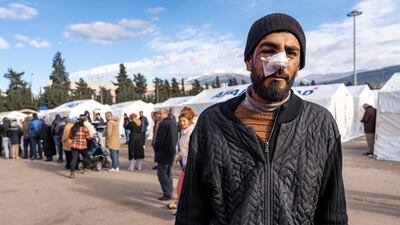
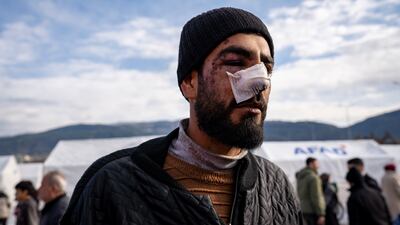
  • Hamid, from the Syrian town of Homs, was badly injured when his home collapsed during the earthquake. All photos: Matt Kynaston / The National
    Hamid, from the Syrian town of Homs, was badly injured when his home collapsed during the earthquake. All photos: Matt Kynaston / The National
  • 'We were screaming for help until people came to help us and they took us to the hospital,' said Hamid
    'We were screaming for help until people came to help us and they took us to the hospital,' said Hamid
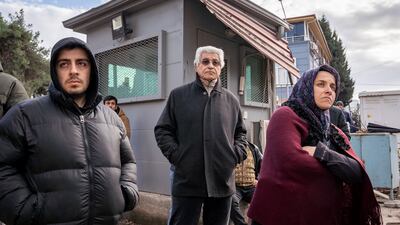
  • Residents of Turkish city Osmaniyeh watch as rescuers search for survivors
    Residents of Turkish city Osmaniyeh watch as rescuers search for survivors
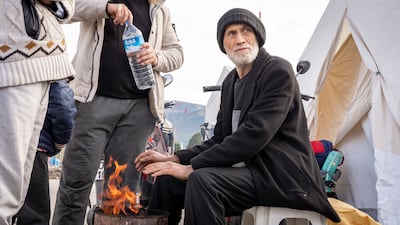
  • A man warms his hands by a fire at a camp in Osmaniyeh
    A man warms his hands by a fire at a camp in Osmaniyeh
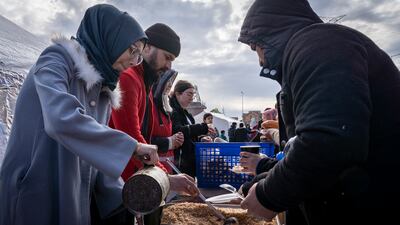
  • Aid workers serve food to the inhabitants of the camp. The quake killed at least 300 people in Osmaniyeh
    Aid workers serve food to the inhabitants of the camp. The quake killed at least 300 people in Osmaniyeh
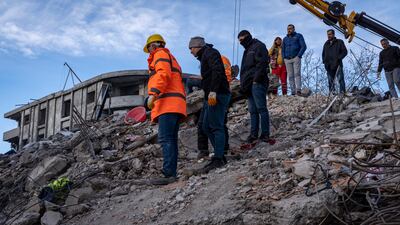
  • Rescuers search for survivors 36 hours after the quake, in Osmaniyeh
    Rescuers search for survivors 36 hours after the quake, in Osmaniyeh
  • The camp is in the car park of an adventure park and it is a temporary home to about 2,000 people
    The camp is in the car park of an adventure park and it is a temporary home to about 2,000 people
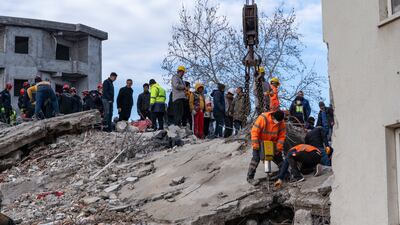
  • Rescuers search for signs of life at the site of a collapsed building
    Rescuers search for signs of life at the site of a collapsed building
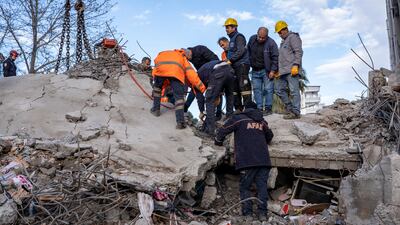
  • Rescuers carefully work through the rubble in hopes of finding survivors
    Rescuers carefully work through the rubble in hopes of finding survivors
  • Aid workers serve tea to survivors
    Aid workers serve tea to survivors

“It is really sad but some of the owners leave their animals to Haytap because they have lost everything and don’t have anything to maintain their needs,” she said.

The charity, founded in 2008 and run by lawyer Ahmet Kemal Senpolat, is appealing for help in transporting the hundreds of animals in their care from the disaster area, and funds to assist them in their work. But mostly, they want the world to keep survivors in their thoughts.

“We want the world to pray for us," said Zeynep. “The effect of the earthquake is something that no one can describe. People and pets have lost everything.”


Ten tax points to be aware of in 2026

1. Domestic VAT refund amendments: request your refund within five years

If a business does not apply for the refund on time, they lose their credit.

2. E-invoicing in the UAE

Businesses should continue preparing for the implementation of e-invoicing in the UAE, with 2026 a preparation and transition period ahead of phased mandatory adoption. 

3. More tax audits

Tax authorities are increasingly using data already available across multiple filings to identify audit risks. 

4. More beneficial VAT and excise tax penalty regime

Tax disputes are expected to become more frequent and more structured, with clearer administrative objection and appeal processes. The UAE has adopted a new penalty regime for VAT and excise disputes, which now mirrors the penalty regime for corporate tax.

5. Greater emphasis on statutory audit

There is a greater need for the accuracy of financial statements. The International Financial Reporting Standards standards need to be strictly adhered to and, as a result, the quality of the audits will need to increase.

6. Further transfer pricing enforcement

Transfer pricing enforcement, which refers to the practice of establishing prices for internal transactions between related entities, is expected to broaden in scope. The UAE will shortly open the possibility to negotiate advance pricing agreements, or essentially rulings for transfer pricing purposes. 

7. Limited time periods for audits

Recent amendments also introduce a default five-year limitation period for tax audits and assessments, subject to specific statutory exceptions. While the standard audit and assessment period is five years, this may be extended to up to 15 years in cases involving fraud or tax evasion. 

8. Pillar 2 implementation 

Many multinational groups will begin to feel the practical effect of the Domestic Minimum Top-Up Tax (DMTT), the UAE's implementation of the OECD’s global minimum tax under Pillar 2. While the rules apply for financial years starting on or after January 1, 2025, it is 2026 that marks the transition to an operational phase.

9. Reduced compliance obligations for imported goods and services

Businesses that apply the reverse-charge mechanism for VAT purposes in the UAE may benefit from reduced compliance obligations. 

10. Substance and CbC reporting focus

Tax authorities are expected to continue strengthening the enforcement of economic substance and Country-by-Country (CbC) reporting frameworks. In the UAE, these regimes are increasingly being used as risk-assessment tools, providing tax authorities with a comprehensive view of multinational groups’ global footprints and enabling them to assess whether profits are aligned with real economic activity. 

Contributed by Thomas Vanhee and Hend Rashwan, Aurifer

Updated: February 11, 2023, 2:30 AM