



Fadia Baroudeh lives with her husband in a spacious apartment in Beirut’s winding Geitawi district.
Her living room has a beautifully stained hardwood floor and is furnished with mid-century rattan antiques surrounding a big-screen TV — all remnants of a past life.
“We were living comfortably before the economic crisis. We were middle class, and we weren’t lacking for anything,” the 67-year-old said despondently .
Now she says she and her husband are in debt, despite their deceptively beautiful dwelling, and are partly dependent on money they receive from their son who lives in Saudi Arabia.
Such is the case for many Lebanese who have come to rely on remittances sent from outside the troubled country, which is battling an economic crisis in its third year that the World Bank describes as one of the worst in modern history.
Rising poverty and a shrinking middle class
The size of Lebanon’s once vibrant middle class — which comprised more than half the population in pre-crisis times — has shrunk through the course of its economic depression.
Now about 80 per cent of the nation’s population lives in poverty, the UN estimates.
While the country’s leaders have argued over the details of a financial rescue plan and struggled to enact reforms necessary to receive a bailout from the International Monetary Fund, the local currency has declined steeply, losing about 95 per cent of its value.
-

A view of Lebanon's capital, Beirut, with the lights on only in some buildings. Lebanese rely on highly polluting diesel generators run by private neighbourhood operators to make up for shortfalls in electricity supply from the state utility. EPA -
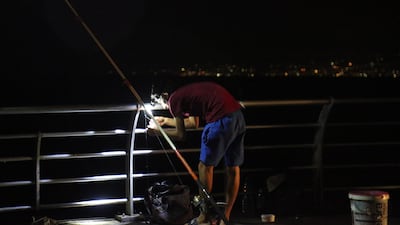
A fisherman uses a headlamp at the seaside corniche in Beirut, Lebanon. EPA -

A vendor sells LED balloons in full darkness at the corniche in Beirut. EPA -
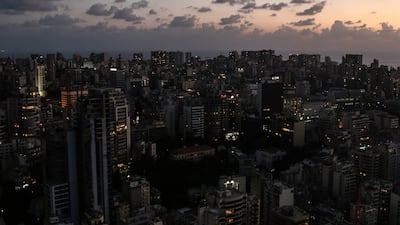
The near collapse of the national grid has increased the duration of power cuts across Lebanon. EPA -
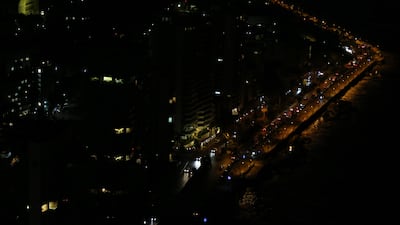
Residents of Beirut are experiencing power cuts of up to 20 hours a day. EPA


With the country's foreign reserves are steadily diminishing in the country's Central Bank, Lebanese banks have imposed informal capital controls that have made it impossible for depositors to gain access to their savings at their full US dollar value.
Instead, they can only withdraw local currency at a vastly depreciated rate.
This means the salaries of many workers in the public and private sectors have been greatly diminished in terms of purchasing power, while prices have risen exponentially.
Ms Baroudeh told The National that her family began to dig into their savings after her husband’s open-heart surgery forced him to retire less than a decade ago.
They thought they had enough to live well throughout their retirement.
But then the economic crisis hit, quickly depleting the remainder of their savings. With her husband, 78, unable to return to work, they were forced to sell land they owned.
“We were left with nothing,” Ms Baroudeh said. “We were never rich, never living a ‘wow’ life. But we were comfortable. Now we are below zero. We don’t have a life any more.”
Relying on loved ones for money and medicine
The couple now await their monthly remittance from their son, which along with help from other family members allows them to survive. He sends about $250 a month and more when he is able.
“But he has a family of his own,” said Ms Baroudeh.
She often downplays how difficult their situation in Lebanon is because “I don’t want to be a heavy burden for him, and I don’t want to put him under too much pressure”.
But it is not only remittances on which they depend on. Ms Baroudeh’s husband, who suffers from partial paralysis, relies on an assortment of medicine for his hemiplegia.
The drugs are often difficult or impossible to find in Lebanon’s pharmacies because of chronic shortages.
“We don’t find medicine here,” Ms Baroudeh said. “Every six months, my son sends medicine from Saudi Arabia so that his father won’t be cut off from his medication.”
In Lebanon's capital city, Beirut, long lines outside money transfer shops have become common at the end of every month.
More than one million Lebanese, or 21 per cent of the population, receive remittance payments from relatives or friends abroad, according to Information International, a local research and consultancy company.
But that number has probably gone up since the survey was conducted in 2021, said Mohammad Chamseddine, a research specialist at the company.
Mr Chamseddine said an accurate approximation of remittances from outside was difficult to make, as the survey did not include remittances physically brought into Lebanon by visitors.
Nor does it include remittances received by Syrian and Palestinian nationals living in Lebanon, who make up around 25 per cent of Lebanon’s population.
-
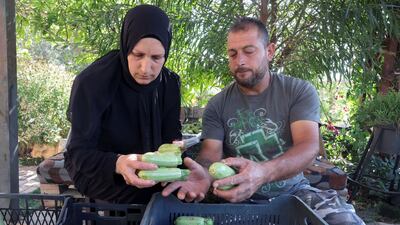
Lebanese couple Qassem and Khadija Shreim turn to agriculture to try and keep their family afloat amid the country's deteriorating financial situation. All photos: Reuters -

A former builder, Shreim "used to employ eight to ten men. Now, I can no longer employ a single one of them because I, myself, am not working, I am not able to find any work. We were very confused at first, we couldn't work so what did we do? We turned to agriculture.’’ -
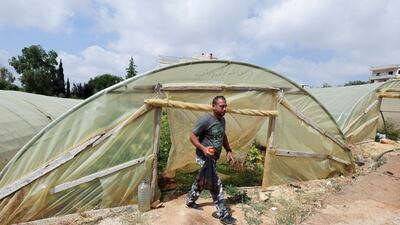
Shreim learned how to set up greenhouses by watching YouTube videos. -
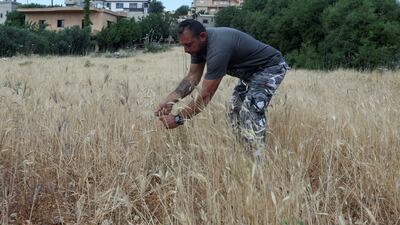
"I planted wheat, barley and lentils. I planted watermelons, and once the watermelon season finishes, we will plant mallow, and once mallow season finishes, we’ll plant 'makdous' (small eggplants). There are products such as grapes, we buy and sell them, the things we are missing, we bring what we are missing from someone else." -

Food prices have increased 11-fold in Lebanon since 2020 and the cost of fuel is also too high for the Shreims to take their produce to markets in Beirut, so they sell their fruits and vegetables locally instead. -
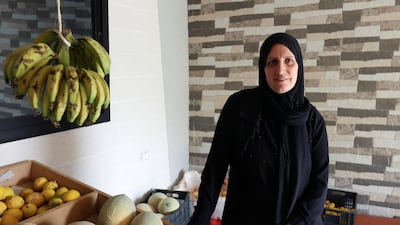
"My house here is very far from the village," says Khadija Shreim. "I have a group (on Whatsapp) with all the women I know, they call me the 'mukhtara' (mayor) of the village here, I know everyone in the village. I created a group and I send the prices daily, every morning at 9:00 a.m." -

"Thank God. Agriculture makes one steadfast," says Qassem Shreim. "It’s better than sitting around doing nothing - either not earning any money or losing money. I won’t go back to my old job, I won’t move backwards. I want to continue, farming has a future. Of course, I am thinking of expanding my cultivation."


Increasing dependence
For many Lebanese living in the US, the crisis in Beirut has changed the way they view home. It is no longer just a destination to connect with family and friends but has become a community they feel a personal responsibility towards.
Over the past three years, WhatsApp groups, fund-raisers and an underground network of concerned Lebanese in the US have emerged as part of efforts to help those back home who are facing financial, food and medicinal shortages.
George Shweih, 39, a Washington-based Lebanese journalist, is still adjusting to the reality that his middle-class parents, who worked hard for decades and built a safety net in the banks, must now rely on help.
Mr Shweih grew up in Dekwaneh, an eastern suburb of Beirut, and sends his family cash regularly.
-

November 1, 2019: Banks implement capital controls after shutting for two weeks. Reuters -

March 2020: Lebanon defaults on its sovereign debt for the first time in its history, amid protests in the country. AFP -
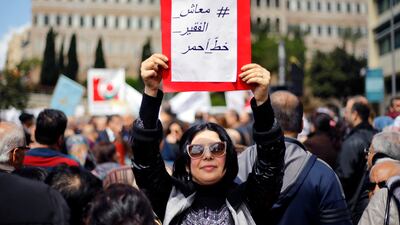
April 2020: The government of Hassan Diab, prime minister at the time, pictured with President Michel Aoun, approves a financial recovery plan. Reuters -
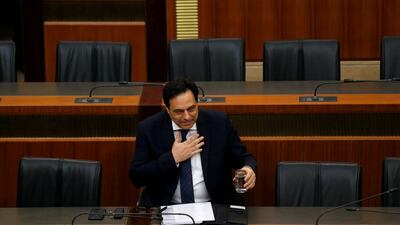
May 1, 2020: Mr Diab's government requests assistance from the International Monetary Fund. The Association of Banks in Lebanon rejects the plan. Reuters -
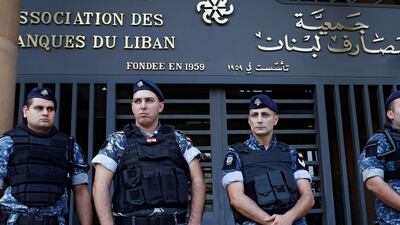
May 20, 2020: the ABL presents an alternative plan. Reuters -
July 1, 2020: a Parliamentary fact-finding committee backs the ABL. The IMF suspends negotiations with Lebanon. AP -
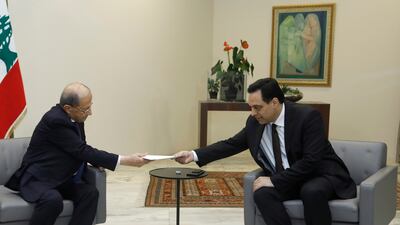
August 10, 2020: Mr Diab resigns following a devastating explosion at Beirut’s port, in which at least 232 people died and 7,000 were injured. AP -
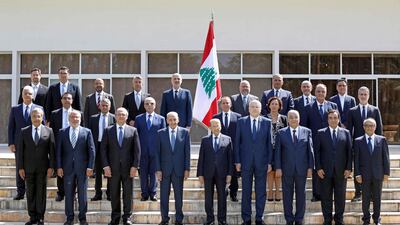
September 10, 2021: Najib Mikati, fourth from right, forms a government. AFP -
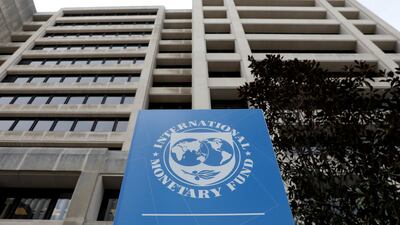
January 2022: Lebanon re-starts negotiations with the IMF. Reuters -
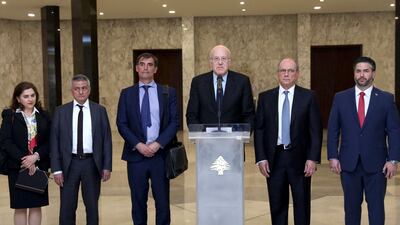
April 7, 2022: The IMF and Lebanon reach a staff-level agreement. AFP -
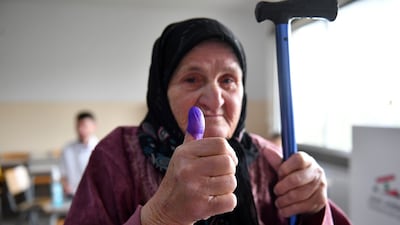
May 15, 2022: Lebanon holds parliamentary elections. EPA -

May 20, 2022: Mr Mikati’s government approves a new financial recovery plan. Reuters -
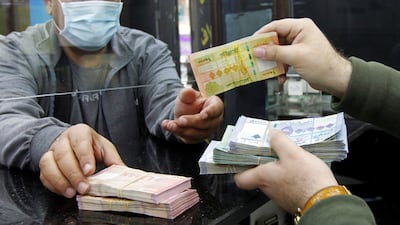
May 24, 2022: The ABL rejects the plan. The local currency hits the record low of 34,000 Lebanese pounds to the dollar – 95 per cent lower than the official rate. Reuters


He told The National that before the economic crisis, “I would send money occasionally as a gift. But now, it is every three months.”
As is the case with many Lebanese, Mr Shweih's preferred way of sending US dollars is through friends travelling to Beirut.
“The banks and Western Union take a percentage, so I am sending the money with friends.”
Mr Shweih's parents are not yet wholly dependent on him but as the crisis drags, he fears this may change.
His father’s grocery market has empty shelves because of the shortages and sharply rising inflation.
“They are not poor but they are slouching towards poverty,” Mr Shweih said. “In six to seven months, they might lose all their savings and then they will be dependent on me.”
For him and many Lebanese, there is a sense of injustice in seeing his parents go through this.
“They’re at an age where they were hoping to retire and live comfortably,” Mr Shweih said. “Instead they are now struggling to live.”
For Maya, a financial analyst in the US and the daughter of a former parliamentarian representing a Beirut suburb, the situation is surreal.
Her family’s situation is grim compared to the comfort of her youth, when they enjoyed the social privileges of her father’s political status.
Maya also sends money with friends and takes the maximum allowed amount of $10,000 when travelling there.
“It is not easy on my father to take the money but I know they need it,” she said. “They refuse to move here … and we cannot go back.”
Maya's words echo the resentment of many Lebanese youths who have been driven by the crisis in their homeland to seek opportunities abroad.
And it speaks of the sadness of Lebanese parents, who remain emotionally attached to a failing country that holds no future for their children.
Remittances not a permanent solution
Viva Al Khoury has yet to cross that bridge.
The thought of tearing her daughter, 7, away from Lebanon for an immigrant life abroad — away from the tight familial bonds of Arab communities — breaks her heart, despite the hardships that come with staying in the country.
“When times get really tough, I think, ‘It’s time to leave',” said Ms Al Khoury, 37. “Then when they get better, I change my mind.
“But if it wasn’t for my daughter I would have left Lebanon a long time ago.”
As with Mr Shweih's father, Ms Al Khoury’s husband owns a mini-market that he can no longer afford to keep open.
The fluctuating Lebanese currency complicates their ability to sell products at affordable prices, and they cannot keep the business afloat.
Their finances were good before the economic crisis, she said. They had extra money put aside and her husband could even afford to help his parents and siblings financially.
“But our finances became complicated with the economic crisis.”
Now, they are financially sustained by money sent by Ms Al Khoury’s brother, a doctor in Ireland, and by her mother in Jordan.
Together, they send between $2,000 and $3,000 every two or three months, and that goes towards “the necessities”, she said. “Rent, generator, school for my daughter — and nothing else.”
Unlike most people who spoke to The National about receiving remittances from abroad, Ms Al Khoury was unabashed.
To her, living off remittances has simply become a fact of life in the collapsing nation. She called it a temporary solution until the crisis — which shows no signs of abating — is over.
“But it is not a real solution,” Ms Al Khoury said with resentment. “Until when are we going to depend on remittances?”

