
A huge fire on Monday at a state-owned oil storage facility in southern Lebanon was brought under control before it could spread.
It broke out at a tank holding petrol at the Zahrani Oil Facilities, about seven kilometres south of the coastal city of Saida, said the state-run National News Agency (NNA).
-
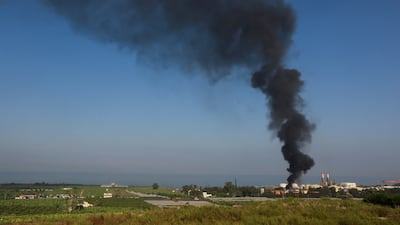
Smoke billows from the fire at the Zahrani oil storage plant in southern Lebanon. Reuters -
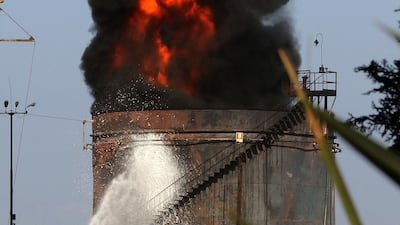
The blaze caused alarm as the country grapples with dire fuel shortages. AFP -
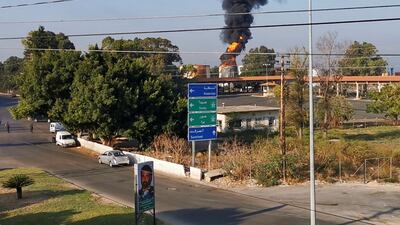
Prime Minister Najib Mikati sent Energy Minister Walid Fayad to inspect the scene. Reuters -
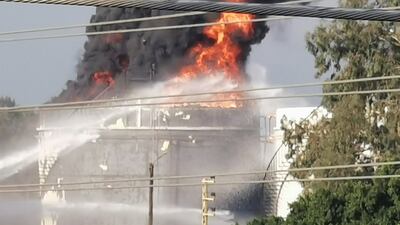
Fire crews spray water at the blaze. Reuters -
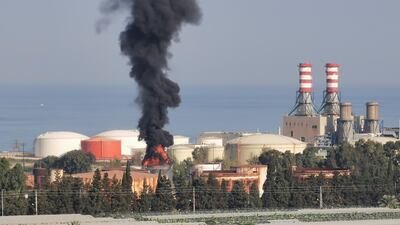
The tank that caught fire was reportedly holding petrol. Reuters -
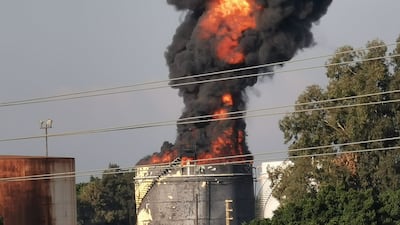
No workers were present when the fire started, state media said. Reuters -
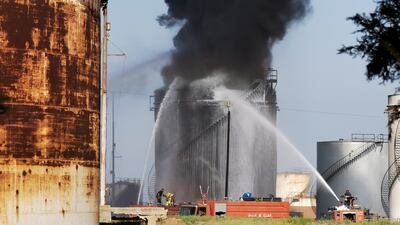
Security forces blocked the main road to the site while firefighters tried to put out the blaze. Reuters -
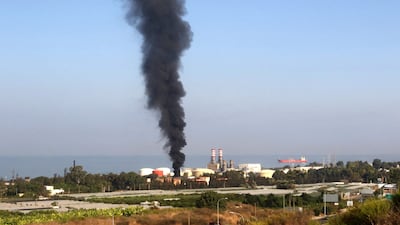
The blaze sent a plume of black smoke into the sky. AFP


Energy Minister Walid Fayad said the fuel tank belonged to the army.
“The fire has been contained and I requested a report on the incident and its causes,” Mr Fayad said in Beirut before visiting the site of the fire.
Speaking at the scene, he said the fire broke out “as a result of an error during the transportation process”, without offering details.
The results of an investigation into the cause will be released in due course, he said. “What matters for now is people’s safety.”
Security forces blocked the main road to the site shortly after fire was reported on Monday morning. The Civil Defence said it sent 15 vehicles to contain the fire and to prevent its spread to other tanks nearby.
No workers were present when the fire started, the NNA said.
Ziyad Al Zein, head of facilities at Zahrani, said the fire broke out as the tank was being emptied.
“We noticed an inclination in the reservoir's roof yesterday and took immediate measures … this morning to transfer its contents,” he said. He added that “it would have been a disaster if the fire had spread to nearby tanks".
Mr Fayad said the flames had consumed about 250,000 litres of petrol, roughly 1,500 barrels.
Interior Minister Bassam Mawlawi said he ordered security forces to help the Civil Defence fight the fire, while South Lebanon prosecutor Rahif Ramadan ordered them to investigate the cause.
The area is home to one of Lebanon's two main power plants.
The fire is the latest in a string of calamities to strike Lebanon since the onset of an economic crisis two years ago. On Saturday, the main power plants at Zahrani and Deir Ammar shut down after running out of fuel, causing a complete blackout in a country already hit by power cuts of 20 hours or more each day.
The state-run power company restarted its plants on Sunday using 6,000 kilolitres of gas oil given by the army after a day of total blackout. The Lebanese army later said that the fuel would be drawn from its own reserves normally used for generators on military bases.
-
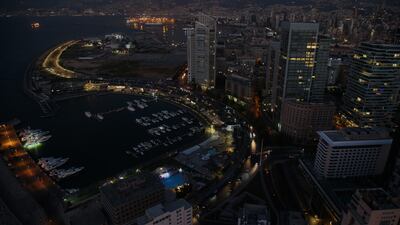
A view of Lebanon's capital, Beirut, with the lights on only in some buildings. Lebanese rely on highly polluting diesel generators run by private neighbourhood operators to make up for shortfalls in electricity supply from the state utility. EPA -
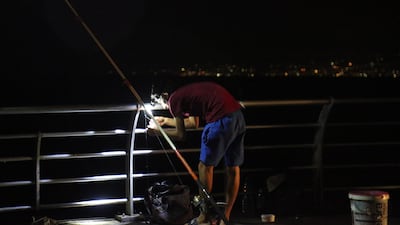
A fisherman uses a headlamp at the seaside corniche in Beirut, Lebanon. EPA -
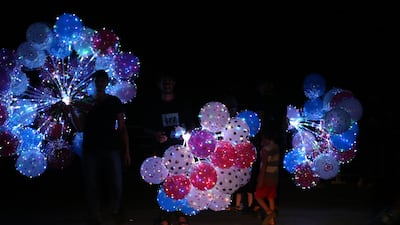
A vendor sells LED balloons in full darkness at the corniche in Beirut. EPA -
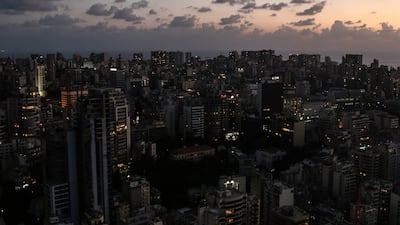
The near collapse of the national grid has increased the duration of power cuts across Lebanon. EPA -
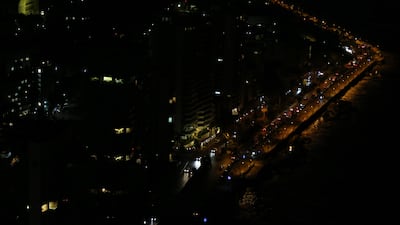
Residents of Beirut are experiencing power cuts of up to 20 hours a day. EPA


Mr Fayad said he discussed the power crisis on Monday with prime minister Najib Mikati, the head of the state electricity provider Electricite du Liban and Central Bank governor Riad Salameh.
The government last month asked the Central Bank, which has been rationing its subsidies of fuel imports for power plants, to provide EDL with a loan of US$100 million to boost its electricity supply.
The central bank has already stopped subsidising imports of petrol and diesel, which is used to run privately-operated generators that partially make up for state power rationing.
The World Bank says Lebanon is suffering one of the deepest depressions of modern history. Three quarters of its population have been plunged into poverty and the currency has lost 90 per cent of its value in the past two years.
The Lebanese have been increasingly forced to rely on private generators, with expensive fuel oil bills, as the state electricity company provides only a few hours of service a day to their districts.

