The United Nations Tourism World Forum – centred around “gastronomy tourism” was held in Bahrain this week, marking its first outing in the Middle East. Over the course of two days, a number of speakers shared their expertise, opinions and anecdotes as to how chefs, restaurants and countries at large can attract food-first travellers or gastro-tourists.
From the importance of creativity and tailoring culinary experiences, to the role of awards, such as the Michelin Guide and World’s 50 Best Restaurants, the experts waxed eloquent on ways to brand destinations as food hubs for international visitors. Some touched upon the appeal of seasonal produce, others shared circular solutions to reduce food waste and most agreed that local and home-grown operators are the way forward as gastro-tourists increasingly seek out a combination of culinary and cultural experiences.
But what can you – as a foodie and a traveller – do to enhance your journey as well as better serve the destination you visit? We chat to chefs, tourism experts and ministers alike for their top tips.
Be informed
“Did you know that the kingdom of Bahrain has been a trade hub since its Dilmun civilisation days, from 5,000 years ago? Or that it connected the Indus Valley to Mesopotamia? Both facts that plays a huge part in its gastronomy scene, with most ingredients and recipes influenced by different cultures that have now come into fruition as Bahraini cuisine,” says Fatima Al Sairafi, minister of tourism of the Kingdom of Bahrain.
Her point – and pro tip – is crystal clear: rather than focusing only on the dishes and restaurants a country can offer, tourists also have the opportunity and responsibility to learn about the history and culture of the places they visit.
“You can’t truly understand the present of a place if you don’t understand its past,” adds Al Sairafi. “You will find internationally renowned dishes and cuisines anywhere, but explore the traditional cuisine of the country you visit so you can get a taste, quite literally, of what it offers and why.”
It’s a point echoed by Sandra Carvao, UN Tourism’s director of market intelligence, policies and competitiveness. “Research is key when it comes to travel, and where you eat is part of this self-education. Inform yourself about the culture of a place such that you’re embedded in it before you go and learn from it once you’re there.”
Doing so, she suggests, will take you off the beaten path, which is also a sure-shot way of not contributing to overtourism. “There are so many interesting culinary experiences to discover, from cheese and olive oil factories to restaurants set in rural areas or on uncrowded mountains.”
Be open-minded
Indian chef Deepanker “DK” Khosla helms the kitchen at Haoma in Thailand. The restaurant achieved a rare feat when it won both a Michelin star and Michelin’s Green Star at the same ceremony in 2022. It is lauded for DK’s vision of creating an urban farm and zero-waste eatery in the heart of the concrete jungle that is Bangkok.
Over his 17-year-strong career, the chef says he has spent up to 12 hours a day working to provide his diners with a masterful meal that offers a glimpse into neo-Indian cuisine. Think crab pepper fry with crab foam; scallop bhelpuri tart; and lamb served on cumin and mustard mashed potatoes with fermented black eggplant, beetroot gel and nihari jus made from bone marrow and tallow.
This is what he hopes for from his diners in return. “If you walk into Haoma and you’re looking for food that has no spice in it, or if you’re not interested in the story behind a dish, or you want to wrap up in an hour and go home, you’re in the wrong place,” says the chef. “Come to the restaurant if you believe cuisine is more than consumption, food is more than satiation and dishes have the power to nourish the mind and soul as well as the body. Come here with an open mind, so the three and a half hours and $200 you spend allow you to appreciate the art of the man who has spent decades to curate this experience for you,” he adds.
For true-blue foodies, variety is the spice of life. Rather than taking this to only mean a different fancy restaurant each evening whilst on holiday, gastro-tourists should push the envelope further, suggests Basma Al Mayman, UN Tourism’s regional director for the Middle East.
“Gastronomy has come to mean more than just fine dining. Being open to sampling local cuisines is your contribution to the country you’re visiting. Go to a high-end restaurant for sure, but also visit the corner bakery. Refine your search for not only ‘restaurants near me’, and seek out street food bylanes, pop-ups in a seasonal festival and eateries that may not have more than four tables, too,” says Al Mayman, adding: “We are living in one big small world, and sitting around one big small table.”
Be conscientious
Tala Bashmi refuses to serve salmon, sea bass and tuna on her menu. While the Bahraini chef recently announced she was renouncing her role as head chef at her award-winning restaurant Fusions by Tala, her ethos remains unchanged.
Bashmi, who was appointed as a UN Tourism Special Ambassador for Gastronomy at the forum in Bahrain, says: “As an island nation, Bahrain has amazing seafood. But salmon, for example, is not a local fish. To catch one tuna fish, you get hundreds of by-catch that dies or goes to waste. Why should I serve these when we have other options?”
She says re-educating palates is always top of mind for her. “How diners perceive food, sustainability and waste is important. Little changes go a long way, and I hope gastro-tourists shift their mentality to enjoy every morsel of food that is in front of them rather than come with the attitude of ‘my table has to be full of food.’”
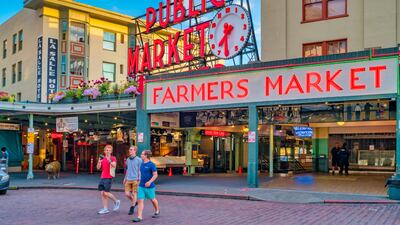
Fellow Bahraini Rashid Al Khalifa and founder of Peninsula vegetable and dairy farm in Bahrain, comes to the conscientious gastro-tourist discussion from another angle: Farmers’ markets.
“Go to as many farmers’ markets as you can during your holiday, figure out what produce is in season and eat what’s grown locally,” he says. “Supporting people with their heart on the line – be it a local producer or chef – will not only help them, but also make you feel good. If you can sample local and seasonal delicacies, great. But even if not, seek out chefs from the region you have travelled to and sample their interpretation of the country’s food.”
Finally, says Carvao: “Souvenirs aside, always buy local produce to take back home with you. It’s a win-win way to leave a positive impact behind.”

The End of Loneliness
Benedict Wells
Translated from the German by Charlotte Collins
Sceptre
French business
France has organised a delegation of leading businesses to travel to Syria. The group was led by French shipping giant CMA CGM, which struck a 30-year contract in May with the Syrian government to develop and run Latakia port. Also present were water and waste management company Suez, defence multinational Thales, and Ellipse Group, which is currently looking into rehabilitating Syrian hospitals.
Company%C2%A0profile
%3Cp%3E%3Cstrong%3ECompany%20name%3A%20%3C%2Fstrong%3Eamana%3Cbr%3E%3Cstrong%3EStarted%3A%20%3C%2Fstrong%3E2010%3Cbr%3E%3Cstrong%3EFounders%3A%3C%2Fstrong%3E%20Karim%20Farra%20and%20Ziad%20Aboujeb%3Cbr%3E%3Cstrong%3EBased%3A%20%3C%2Fstrong%3EUAE%3Cbr%3E%3Cstrong%3ERegulator%3A%20%3C%2Fstrong%3EDFSA%3Cbr%3E%3Cstrong%3ESector%3A%20%3C%2Fstrong%3EFinancial%20services%3Cbr%3E%3Cstrong%3ECurrent%20number%20of%20staff%3A%20%3C%2Fstrong%3E85%3Cbr%3E%3Cstrong%3EInvestment%20stage%3A%20%3C%2Fstrong%3ESelf-funded%3Cbr%3E%3C%2Fp%3E%0A
Mercer, the investment consulting arm of US services company Marsh & McLennan, expects its wealth division to at least double its assets under management (AUM) in the Middle East as wealth in the region continues to grow despite economic headwinds, a company official said.
Mercer Wealth, which globally has $160 billion in AUM, plans to boost its AUM in the region to $2-$3bn in the next 2-3 years from the present $1bn, said Yasir AbuShaban, a Dubai-based principal with Mercer Wealth.
“Within the next two to three years, we are looking at reaching $2 to $3 billion as a conservative estimate and we do see an opportunity to do so,” said Mr AbuShaban.
Mercer does not directly make investments, but allocates clients’ money they have discretion to, to professional asset managers. They also provide advice to clients.
“We have buying power. We can negotiate on their (client’s) behalf with asset managers to provide them lower fees than they otherwise would have to get on their own,” he added.
Mercer Wealth’s clients include sovereign wealth funds, family offices, and insurance companies among others.
From its office in Dubai, Mercer also looks after Africa, India and Turkey, where they also see opportunity for growth.
Wealth creation in Middle East and Africa (MEA) grew 8.5 per cent to $8.1 trillion last year from $7.5tn in 2015, higher than last year’s global average of 6 per cent and the second-highest growth in a region after Asia-Pacific which grew 9.9 per cent, according to consultancy Boston Consulting Group (BCG). In the region, where wealth grew just 1.9 per cent in 2015 compared with 2014, a pickup in oil prices has helped in wealth generation.
BCG is forecasting MEA wealth will rise to $12tn by 2021, growing at an annual average of 8 per cent.
Drivers of wealth generation in the region will be split evenly between new wealth creation and growth of performance of existing assets, according to BCG.
Another general trend in the region is clients’ looking for a comprehensive approach to investing, according to Mr AbuShaban.
“Institutional investors or some of the families are seeing a slowdown in the available capital they have to invest and in that sense they are looking at optimizing the way they manage their portfolios and making sure they are not investing haphazardly and different parts of their investment are working together,” said Mr AbuShaban.
Some clients also have a higher appetite for risk, given the low interest-rate environment that does not provide enough yield for some institutional investors. These clients are keen to invest in illiquid assets, such as private equity and infrastructure.
“What we have seen is a desire for higher returns in what has been a low-return environment specifically in various fixed income or bonds,” he said.
“In this environment, we have seen a de facto increase in the risk that clients are taking in things like illiquid investments, private equity investments, infrastructure and private debt, those kind of investments were higher illiquidity results in incrementally higher returns.”
The Abu Dhabi Investment Authority, one of the largest sovereign wealth funds, said in its 2016 report that has gradually increased its exposure in direct private equity and private credit transactions, mainly in Asian markets and especially in China and India. The authority’s private equity department focused on structured equities owing to “their defensive characteristics.”
Sukuk explained
Sukuk are Sharia-compliant financial certificates issued by governments, corporates and other entities. While as an asset class they resemble conventional bonds, there are some significant differences. As interest is prohibited under Sharia, sukuk must contain an underlying transaction, for example a leaseback agreement, and the income that is paid to investors is generated by the underlying asset. Investors must also be prepared to share in both the profits and losses of an enterprise. Nevertheless, sukuk are similar to conventional bonds in that they provide regular payments, and are considered less risky than equities. Most investors would not buy sukuk directly due to high minimum subscriptions, but invest via funds.
Tips on buying property during a pandemic
Islay Robinson, group chief executive of mortgage broker Enness Global, offers his advice on buying property in today's market.
While many have been quick to call a market collapse, this simply isn’t what we’re seeing on the ground. Many pockets of the global property market, including London and the UAE, continue to be compelling locations to invest in real estate.
While an air of uncertainty remains, the outlook is far better than anyone could have predicted. However, it is still important to consider the wider threat posed by Covid-19 when buying bricks and mortar.
Anything with outside space, gardens and private entrances is a must and these property features will see your investment keep its value should the pandemic drag on. In contrast, flats and particularly high-rise developments are falling in popularity and investors should avoid them at all costs.
Attractive investment property can be hard to find amid strong demand and heightened buyer activity. When you do find one, be prepared to move hard and fast to secure it. If you have your finances in order, this shouldn’t be an issue.
Lenders continue to lend and rates remain at an all-time low, so utilise this. There is no point in tying up cash when you can keep this liquidity to maximise other opportunities.
Keep your head and, as always when investing, take the long-term view. External factors such as coronavirus or Brexit will present challenges in the short-term, but the long-term outlook remains strong.
Finally, keep an eye on your currency. Whenever currency fluctuations favour foreign buyers, you can bet that demand will increase, as they act to secure what is essentially a discounted property.
More from Rashmee Roshan Lall
LILO & STITCH
Starring: Sydney Elizebeth Agudong, Maia Kealoha, Chris Sanders
Director: Dean Fleischer Camp
Rating: 4.5/5
COMPANY PROFILE
Name: Cofe
Year started: 2018
Based: UAE
Employees: 80-100
Amount raised: $13m
Investors: KISP ventures, Cedar Mundi, Towell Holding International, Takamul Capital, Dividend Gate Capital, Nizar AlNusif Sons Holding, Arab Investment Company and Al Imtiaz Investment Group
Engine: 5.6-litre V8
Transmission: seven-speed automatic
Power: 400hp
Torque: 560Nm
Price: Dh234,000 - Dh329,000
On sale: now
A State of Passion
Directors: Carol Mansour and Muna Khalidi
Stars: Dr Ghassan Abu-Sittah
Rating: 4/5
'Brazen'
Director: Monika Mitchell
Starring: Alyssa Milano, Sam Page, Colleen Wheeler
Rating: 3/5
Vidaamuyarchi
Director: Magizh Thirumeni
Stars: Ajith Kumar, Arjun Sarja, Trisha Krishnan, Regina Cassandra
Rating: 4/5
UAE currency: the story behind the money in your pockets
Our family matters legal consultant
Name: Hassan Mohsen Elhais
Position: legal consultant with Al Rowaad Advocates and Legal Consultants.
TOUR RESULTS AND FIXTURES
June 3: NZ Provincial Barbarians 7 Lions 13
June 7: Blues 22 Lions 16
June 10: Crusaders 3 Lions 12
June 13: Highlanders 23 Lions 22
June 17: Maori All Blacks 10 Lions 32
June 20: Chiefs 6 Lions 34
June 24: New Zealand 30 Lions 15 (First Test)
June 27: Hurricanes 31 Lions 31
July 1: New Zealand 21 Lions 24 (Second Test)
July 8: New Zealand v Lions (Third Test) - kick-off 11.30am (UAE)
Sholto Byrnes on Myanmar politics
Tamkeen's offering
- Option 1: 70% in year 1, 50% in year 2, 30% in year 3
- Option 2: 50% across three years
- Option 3: 30% across five years
LOVE%20AGAIN
%3Cp%3EDirector%3A%20Jim%20Strouse%3C%2Fp%3E%0A%3Cp%3EStars%3A%20Priyanka%20Chopra%20Jonas%2C%20Sam%20Heughan%2C%20Celine%20Dion%3C%2Fp%3E%0A%3Cp%3ERating%3A%202%2F5%3C%2Fp%3E%0A
F1 The Movie
Starring: Brad Pitt, Damson Idris, Kerry Condon, Javier Bardem
Director: Joseph Kosinski
Rating: 4/5
In Full Flight: A Story of Africa and Atonement
John Heminway, Knopff
More from Rashmee Roshan Lall
'The Woman in the House Across the Street from the Girl in the Window'
Director:Michael Lehmann
Stars:Kristen Bell
Rating: 1/5
The specs
Engine: four-litre V6 and 3.5-litre V6 twin-turbo
Transmission: six-speed and 10-speed
Power: 271 and 409 horsepower
Torque: 385 and 650Nm
Price: from Dh229,900 to Dh355,000
UK’s AI plan
- AI ambassadors such as MIT economist Simon Johnson, Monzo cofounder Tom Blomfield and Google DeepMind’s Raia Hadsell
- £10bn AI growth zone in South Wales to create 5,000 jobs
- £100m of government support for startups building AI hardware products
- £250m to train new AI models
Company Profile:
Name: The Protein Bakeshop
Date of start: 2013
Founders: Rashi Chowdhary and Saad Umerani
Based: Dubai
Size, number of employees: 12
Funding/investors: $400,000 (2018)
The five pillars of Islam
Quick facts on cancer
- Cancer is the second-leading cause of death worldwide, after cardiovascular diseases
- About one in five men and one in six women will develop cancer in their lifetime
- By 2040, global cancer cases are on track to reach 30 million
- 70 per cent of cancer deaths occur in low and middle-income countries
- This rate is expected to increase to 75 per cent by 2030
- At least one third of common cancers are preventable
- Genetic mutations play a role in 5 per cent to 10 per cent of cancers
- Up to 3.7 million lives could be saved annually by implementing the right health
strategies
- The total annual economic cost of cancer is $1.16 trillion
The%20specs
%3Cp%3E%3Cstrong%3EEngine%3A%20%3C%2Fstrong%3E3.6-litre%2C%20V6%0D%3Cbr%3E%3Cstrong%3ETransmission%3A%20%3C%2Fstrong%3Eeight-speed%20auto%0D%3Cbr%3E%3Cstrong%3EPower%3A%20%3C%2Fstrong%3E285hp%0D%3Cbr%3E%3Cstrong%3ETorque%3A%20%3C%2Fstrong%3E353Nm%0D%3Cbr%3E%3Cstrong%3EPrice%3A%20%3C%2Fstrong%3EDh159%2C900%0D%3Cbr%3E%3Cstrong%3EOn%20sale%3A%20%3C%2Fstrong%3Enow%3C%2Fp%3E%0A
