



Red carpet. Chefs dressed in customary scarlet scarves. An event deemed more of a “celebration than a competition”. Welcome to the first Mena's 50 Best Restaurants awards ceremony.
On Monday, culinary stars from around the world descended on Abu Dhabi for the gala event by the World's 50 Best Restaurants group, which unveiled the top contenders from across the Middle East and North Africa.
Scroll through the gallery above for the 50 restaurants that made it to the first Mena's 50 Best Restaurants list.
The evening, hosted by Samar Breitem, had world-famous chefs, restaurateurs, food critics and other culinary experts raising a glass to the best in the business at a glittering event in Conrad Abu Dhabi Etihad Towers.
After much speculation and anticipation, Dubai's 3 Fils was named the No 1 restaurant in the Mena region.
-
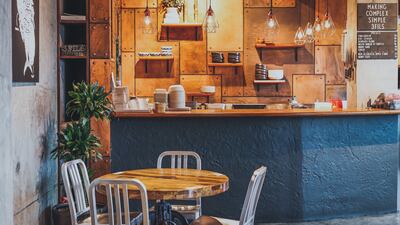
3 Fils has been named the No 1 restaurant in on the Mena's 50 Best Restaurants list. Photo: 3 Fils -

It is a home-grown 30-seater eatery in Dubai, which serves a Japanese-inspired menu. Photo: 3 Fils -
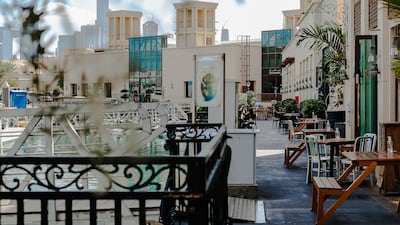
The restaurant is located in Jumeirah Fishing Harbour, which could almost be described as a hidden gem. Photo: 3 Fils -
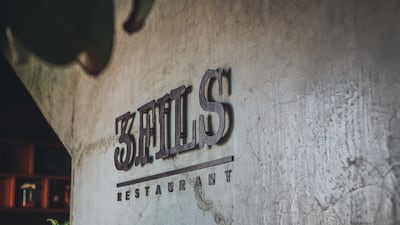
3 Fils is popular with Dubai royalty and VIPs. Photo: 3 Fils -
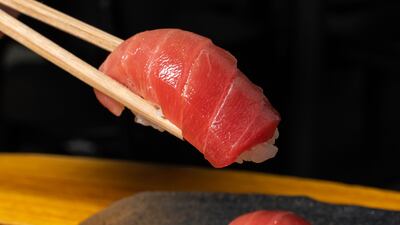
The bluefin tuna is among 3 Fils's standout dishes. Photo: 3 Fils -
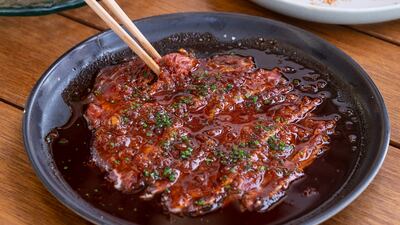
The beef carpaccio is another popular dish. Photo: 3 Fils -
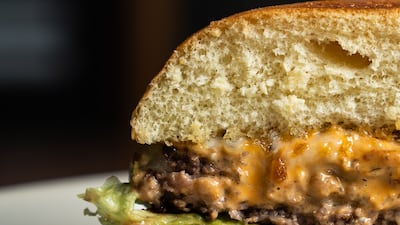
There are two burger options on the menu, a Waguy beef cheeseburger and a second with the addition of shaved truffle. Photo: 3 Fils -

The dragon sushi role is filled with shrimp tempura, gochujang (red chilli paste) and pickled onions . Photo: 3 Fils -
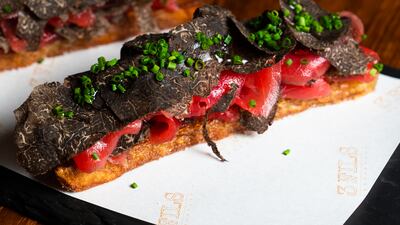
The emo fries are an off menu favourite among loyal 3 Fils fans, with blue fin tuna slices and topped with black truffle. Photo: 3 Fils -
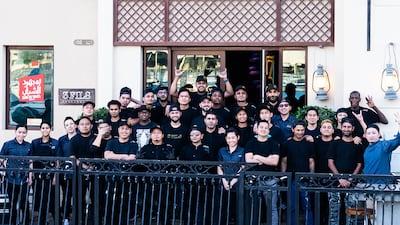
3 Fils has been named the No 1 restaurant in on the Mena's 50 Best Restaurants list. Photo: 3 Fils


Singaporean-born chef Akmal Anuar started the venture as a labour of love. He has since moved on to 11 Woodfire, but when the team accepted the award, co-founder Ahmed Abdulhakim gave him a shout-out. The name was meant to be a play on the three original owners each giving their "two cents' worth".
On the menu are Asian-inspired dishes such as seaweed salad, salmon carpaccio, beef chorizo indomie, crispy eel and Hokkaido scallops, plus various types of maki and tempura.
Zuma in Dubai, OCD Restaurant in Israel, Tresind Studio in Dubai and Sachi in Egypt took up the next four positions.
Scroll through the gallery for pictures from the Mena's 50 Best Restaurants awards ceremony in Abu Dhabi:
-
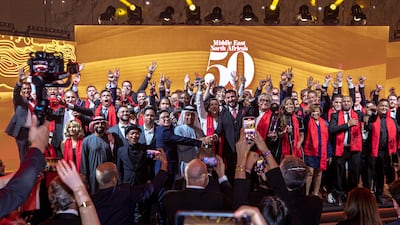
The first Middle East and North Africa’s 50 Best Restaurants Awards were held at Conrad Abu Dhabi Etihad Towers. All photos: Victor Besa / The National -

Dubai restaurant 3 Fils was named the top restaurant in the Mena region. -

The Best Restaurant in Egypt went to Sachi in Cairo. -

Reif Othman, of Dubai restaurant Reif Japanese Kushiyaki, won the Chef's Choice Award. -

The Art of Hospitality Award went to Tresind Studio in Dubai. -

Riyadh restaurant Myazu was named Best Restaurant in Saudi Arabia. -

The Foodics Icon Award went to Kamal Mouzawak from Beirut. -
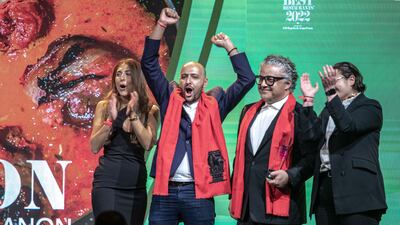
Beirut establishment Baron was named Best Restaurant in Lebanon. -
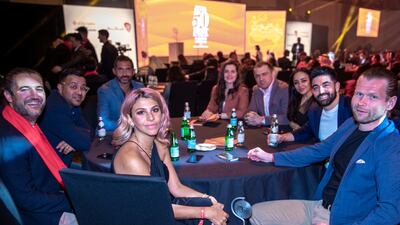
The team from Dubai's Zuma at the event. The izakaya-style Japanese restaurant came second on the Mena list. -
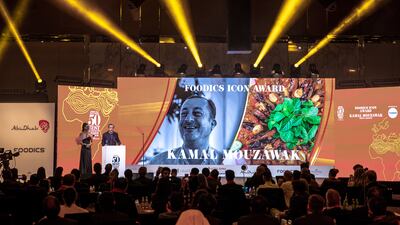
The event was the unveiling of the first Mena list by the World's 50 Best Restaurants group. -
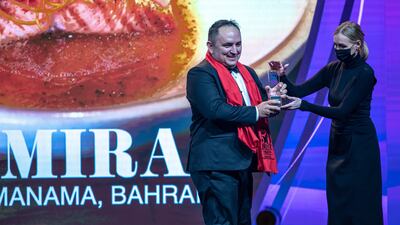
The Best Restaurant in Bahrain and 31st overall went to Mirai. -

Tala Bashmi of Bahrain's Fusions by Tala was named Best Female Chef. -

The team from 3 Fils, the Dubai restaurant that topped the list, accept their award.


Of the 50 restaurants, 19 are in the UAE, while six are in Israel, five each are in Saudi Arabia and Lebanon, four are in Egypt, three each are in Morocco and Jordan, two are in Bahrain, and there's one each in Kuwait, Tunisia and Qatar.
See the full list below.
Elsewhere, Emirati chef Sahar Al Awadhi was named Mena's Best Pastry Chef, and Reif Othman of Reif Japanese Kushiyaki fame won the Chef's Choice Award.

The regional list is one of the most anticipated releases of the year, since the event was announced in August 2021. After all, the World’s 50 Best Restaurants is an acclaimed ranking in the food and beverage industry.
An annual global list aside, the organisation puts together names for Latin America’s 50 Best Restaurants and 50 Best Asian Restaurants.
But as William Drew, director of content for the World’s 50 Best put it, the Middle East was not properly represented.
“For some time now, we’ve wanted to extend and shine a spotlight on this part of the world because it was under-represented," Drew says. "We think it has an amazing, diverse food scene, with global influence, but also local heritage and tradition.
"It has home-grown players as well as those from around the world. It’s an interesting mixture – but it hasn’t received the attention it deserves.
“We hope by creating an annual list, we can bring attention to the region and also encourage food-loving travellers from around the world to visit and understand the cuisines a bit better.”
Abu Dhabi was chosen as the location for the first event as it is “fast-changing and fast-rising, and also because the food scene is fast-developing”, Drew says.

“There has been an appetite within the government to develop food-based tourism with Abu Dhabi Culinary. The infrastructure and facilities are wonderful, and it has been very welcoming.”
Abu Dhabi will continue to be the city hosting the awards ceremony for the next few years, as Mena's 50 Best Restaurants “establishes itself”, Drew says.
Under the event’s format, the ceremony will then be held in other cities around the region.
How were the winners of Mena’s 50 Best Restaurants chosen?

The 50 restaurants that made the cut were chosen by a panel of 250 anonymous voters, with each sharing their seven top picks.
These, in turn, were recruited by six academy chairs, who were appointed for their knowledge and connections in the restaurant world.
“We check to ensure there is no conflict of interest and the voting system is confidential," Drew says.
"About 25 per cent of the voters change every year, so there’s a refresh. The list that we create is only as credible as the voting system and the voters. There’s no score sheet or what they need to look forward to. Voters simply have to name their seven best restaurant experiences in order of preference.
"A certain number of nominations should be from outside the country. In this year’s ceremony that has been reduced to only one out of seven due to the current global scenario.”
In addition to shining a light on local cuisine and guiding food-loving tourists to the best places to eat, the list also gives talented chefs and beloved restaurants the appreciation and attention they deserve.
“We’re looking forward to learning more about the region through this list,” Drew says.
Mena’s 50 Best Restaurants 2022
1. 3 Fils, Dubai, UAE
2. Zuma, Dubai, UAE
3. OCD Restaurant, Tel Aviv, Israel
4. Tresind Studio, Dubai, UAE (also won Art of Hospitality Award)
5. Sachi, Cairo, Egypt
6. Orfali Bros, Dubai, UAE
7. Fakhreldin, Amman, Jordan
8. LPM Restaurant & Bar, Dubai, UAE
9. George & John, Tel Aviv, Israel
10. Gaia, Dubai, UAE
11. Il Borro Tuscan Bistro, Dubai, UAE
12. Baron, Beirut, Lebanon
13. Coya, Dubai, UAE
14. HaBasta, Tel Aviv, Israel
15. Myazu, Riyadh, Saudi Arabia
16. Reif Kushiyaki, Dubai, UAE
17. Animar, Tel Aviv, Israel
18. Tresind, Dubai, UAE
19. Kazoku, Cairo, Egypt
20. Mimi Kakushi, Dubai, UAE
21. Liza, Beirut, Lebanon
22. Em Sherif, Beirut, Lebanon
23. Lowe, Dubai, UAE (also won the Sustainable Restaurant Award)
24. Pescado, Ashdod, Israel
25. Hakkasan, Abu Dhabi, UAE
26. La Grande Table Marocaine, Marrakesh, Morocco
27. 13C Bar in the Back, Amman, Jordan
28. Tawlet Mar Mikhael, Beirut, Lebanon
29. Amazonico, Dubai, UAE
30. Marble, Riyadh, Saudi Arabia
31. Mirai, Manama, Bahrain
32. Iloli, Casablanca, Morocco
33. BB Social Dining, Dubai, UAE
34. Coya, Abu Dhabi, UAE
35. Indochine, Dubai, UAE
36. Cut by Wolfgang Puck, Doha, Qatar
37. Porterhouse, Riyadh, Saudi Arabia
38. Zooba, Cairo, Egypt
39. Fusions by Tala, Manama, Bahrain
40. Milgo Milbar, Tel Aviv, Israel
41. Sufra, Amman, Jordan
42. LPM Restaurant & Cafe, Riyadh, Saudi Arabia
43. White Robata, Kuwait City, Kuwait
44. Hoseki, Dubai, UAE
45. Izakaya, Cairo, Egypt
46. La Closerie, La Marsa, Tunisia
47. Clap, Beirut, Lebanon
48. Butcher & Still, Abu Dhabi, UAE
49. Plus61, Marrakesh, Morocco
50. Tokyo, Riyadh, Saudi Arabia
– This article was first published on February 7, 2022

