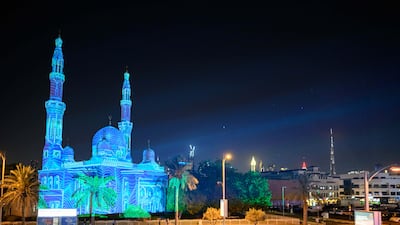
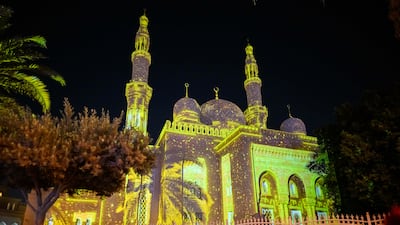
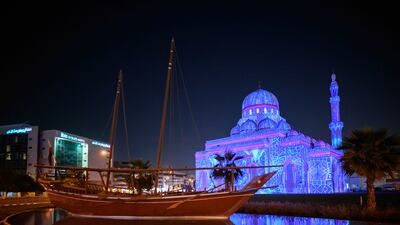
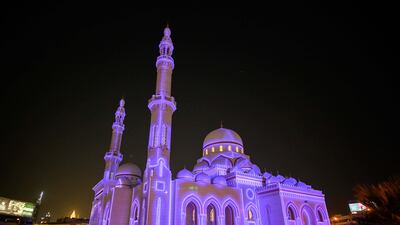
As the cannon fires at sunset near Qasr Al Hosn, a deep echo ripples across Abu Dhabi’s skyline. For a moment, the city stills. Then, with the maghrib call to prayer, thousands of fasts are broken in unison – for some with water and dates.
This is the first Ramadan I have spent in the UAE, and over the past few weeks I have found comfort and calm during these dusk hours. It is also the first time I have attended an iftar and suhoor.
“Oh Allah, we thank you for the blessings you have given us. May we always be grateful and generous in sharing with others” read the dua for gratitude printed beautifully on a sheet of crisp white card that the host of my first iftar had kindly printed for non-Arabic speaking guests. A small gesture with great impact that to me signalled inclusivity, kindness, compassion, and community – allowing an outsider to be welcomed into tradition.
Before moving to the UAE, I spent more than 15 years living and working as a journalist in Singapore. It is a multicultural society, where about 15 per cent of the population is Muslim, but it is not common for non-Muslims to be invited for iftar.
The Chinese Lunar New Year, from my experience, would be the equivalent. Networking lunches with corporate contacts, colleagues, friends and family are booked throughout the two-week period; oranges are exchanged and yusheng, a customary prosperity salad, is tossed to welcome abundance in the year ahead.
Attending my first iftar, I had no idea what to wear or do. A friend from Singapore now living in Abu Dhabi kindly lent me the most beautiful abaya and told me to “relax”. Later, I prepared to attend my first suhoor at 10pm. Hosted at Park Hyatt on Saadiyat island, the outdoor venue glowed, live music played and, despite it being a corporate invitation, conversation flowed and new connections were made. I wasn’t quite sure what to expect – the invitation had stated “until 11.30pm”, but at midnight I was one of the first to retire for the evening.
Over the past two weeks I’ve experienced corporate iftars, company events and more intimate iftars with friends. The venues have varied from outdoor buffets, to hotel restaurants, to more personal settings. From this experience, I understand that the act of breaking fast in the capital is not just about food – it is a powerful expression of national togetherness.
This year, Sheikh Zayed Grand Mosque has provided more than 35,000 iftar meals daily during Ramadan, distributing them free of charge. Through collaborations, a further 45,000 iftar meals are being distributed daily. That is 80,000 meals a day.
Beyond this, throughout Ramadan, my inbox has been inundated with press releases about similar enterprises being rolled out across the country.
For example, the International Charity Organisation launched a series of initiatives to support 60,000 orphans in the UAE and abroad during Ramadan. And, in Sharjah, the emirate is aiming to distribute 900,000 iftar meals throughout the holy month for its Iftar Saem-Fasting Meal initiative.
These aren’t just acts of benevolence. They’re rituals of belonging. The UAE, home to more than 200 nationalities, has become a tapestry of cultures, stitched together with mutual respect and shared tradition.
The iftar table reflects this beautifully – an experience I wanted to share with my young children. As we attended an iftar as a family, we enjoyed Emirati machboos, Indian samosas, Moroccan harira, Filipino lumpia and Levantine fattoush, served side by side.
When I planned this piece, I envisioned it would be a review of the different iftars and suhoors I had attended. And, while the setting changed from night to night, from majlis tents to high-rise apartments, a greater realisation manifested that, regardless of venue, the intention remains the same: to gather, to share, to give thanks.
In this fast-changing world, such values are a beacon. The UAE reminds us that community is not just something we inherit, it’s something we actively create, one iftar at a time.
What's%20in%20my%20pazhamkootan%3F
%3Cp%3E%3Cstrong%3EAdd%3A%3C%2Fstrong%3E%3Cbr%3EParippu%20%E2%80%93%20moong%20dal%20and%20coconut%20curry%3Cbr%3ESambar%20%E2%80%93%20vegetable-infused%20toor%20dal%20curry%3Cbr%3EAviyal%20%E2%80%93%20mixed%20vegetables%20in%20thick%20coconut%20paste%3Cbr%3EThoran%20%E2%80%93%20beans%20and%20other%20dry%20veggies%20with%20spiced%20coconut%3Cbr%3EKhichdi%20%E2%80%93%20lentil%20and%20rice%20porridge%3C%2Fp%3E%0A%3Cp%3E%3Cbr%3E%3Cstrong%3EOptional%3A%3C%2Fstrong%3E%3Cbr%3EKootukari%20%E2%80%93%20stew%20of%20black%20chickpeas%2C%20raw%20banana%2C%20yam%20and%20coconut%20paste%3Cbr%3EOlan%20%E2%80%93%20ash%20gourd%20curry%20with%20coconut%20milk%3Cbr%3EPulissery%20%E2%80%93%20spiced%20buttermilk%20curry%3Cbr%3ERasam%20%E2%80%93%20spice-infused%20soup%20with%20a%20tamarind%20base%3C%2Fp%3E%0A%3Cp%3E%3Cbr%3E%3Cstrong%3EAvoid%3A%3C%2Fstrong%3E%3Cbr%3EPayasam%20%E2%80%93%20sweet%20vermicelli%20kheer%3C%2Fp%3E%0A
UAE currency: the story behind the money in your pockets
Results:
Men's wheelchair 800m T34: 1. Walid Ktila (TUN) 1.44.79; 2. Mohammed Al Hammadi (UAE) 1.45.88; 3. Isaac Towers (GBR) 1.46.46.
if you go
The flights
Etihad and Emirates fly direct to Kolkata from Dh1,504 and Dh1,450 return including taxes, respectively. The flight takes four hours 30 minutes outbound and 5 hours 30 minute returning.
The trains
Numerous trains link Kolkata and Murshidabad but the daily early morning Hazarduari Express (3’ 52”) is the fastest and most convenient; this service also stops in Plassey. The return train departs Murshidabad late afternoon. Though just about feasible as a day trip, staying overnight is recommended.
The hotels
Mursidabad’s hotels are less than modest but Berhampore, 11km south, offers more accommodation and facilities (and the Hazarduari Express also pauses here). Try Hotel The Fame, with an array of rooms from doubles at Rs1,596/Dh90 to a ‘grand presidential suite’ at Rs7,854/Dh443.
Who's who in Yemen conflict
Houthis: Iran-backed rebels who occupy Sanaa and run unrecognised government
Yemeni government: Exiled government in Aden led by eight-member Presidential Leadership Council
Southern Transitional Council: Faction in Yemeni government that seeks autonomy for the south
Habrish 'rebels': Tribal-backed forces feuding with STC over control of oil in government territory
TOP%2010%20MOST%20POLLUTED%20CITIES
%3Cp%3E1.%20Bhiwadi%2C%20India%0D%3Cbr%3E2.%20Ghaziabad%2C%20India%0D%3Cbr%3E3.%20Hotan%2C%20China%0D%3Cbr%3E4.%20Delhi%2C%20India%0D%3Cbr%3E5.%20Jaunpur%2C%20India%0D%3Cbr%3E6.%20Faisalabad%2C%20Pakistan%0D%3Cbr%3E7.%20Noida%2C%20India%0D%3Cbr%3E8.%20Bahawalpur%2C%20Pakistan%0D%3Cbr%3E9.%20Peshawar%2C%20Pakistan%0D%3Cbr%3E10.%20Bagpat%2C%20India%3C%2Fp%3E%0A%3Cp%3E%3Cem%3ESource%3A%20IQAir%3C%2Fem%3E%3C%2Fp%3E%0A
65
%3Cp%3E%3Cstrong%3EDirectors%3A%20%3C%2Fstrong%3EScott%20Beck%2C%20Bryan%20Woods%3C%2Fp%3E%0A%3Cp%3E%3Cstrong%3EStars%3A%20%3C%2Fstrong%3EAdam%20Driver%2C%20Ariana%20Greenblatt%2C%20Chloe%20Coleman%3C%2Fp%3E%0A%3Cp%3E%3Cstrong%3ERating%3A%20%3C%2Fstrong%3E2%2F5%3C%2Fp%3E%0A
Timeline
2012-2015
The company offers payments/bribes to win key contracts in the Middle East
May 2017
The UK SFO officially opens investigation into Petrofac’s use of agents, corruption, and potential bribery to secure contracts
September 2021
Petrofac pleads guilty to seven counts of failing to prevent bribery under the UK Bribery Act
October 2021
Court fines Petrofac £77 million for bribery. Former executive receives a two-year suspended sentence
December 2024
Petrofac enters into comprehensive restructuring to strengthen the financial position of the group
May 2025
The High Court of England and Wales approves the company’s restructuring plan
July 2025
The Court of Appeal issues a judgment challenging parts of the restructuring plan
August 2025
Petrofac issues a business update to execute the restructuring and confirms it will appeal the Court of Appeal decision
October 2025
Petrofac loses a major TenneT offshore wind contract worth €13 billion. Holding company files for administration in the UK. Petrofac delisted from the London Stock Exchange
November 2025
180 Petrofac employees laid off in the UAE
No_One Ever Really Dies
N*E*R*D
(I Am Other/Columbia)
PROFILE OF HALAN
Started: November 2017
Founders: Mounir Nakhla, Ahmed Mohsen and Mohamed Aboulnaga
Based: Cairo, Egypt
Sector: transport and logistics
Size: 150 employees
Investment: approximately $8 million
Investors include: Singapore’s Battery Road Digital Holdings, Egypt’s Algebra Ventures, Uber co-founder and former CTO Oscar Salazar
Dengue%20fever%20symptoms
%3Cul%3E%0A%3Cli%3EHigh%20fever%3C%2Fli%3E%0A%3Cli%3EIntense%20pain%20behind%20your%20eyes%3C%2Fli%3E%0A%3Cli%3ESevere%20headache%3C%2Fli%3E%0A%3Cli%3EMuscle%20and%20joint%20pains%3C%2Fli%3E%0A%3Cli%3ENausea%3C%2Fli%3E%0A%3Cli%3EVomiting%3C%2Fli%3E%0A%3Cli%3ESwollen%20glands%3C%2Fli%3E%0A%3Cli%3ERash%3C%2Fli%3E%0A%3C%2Ful%3E%0A%3Cp%3EIf%20symptoms%20occur%2C%20they%20usually%20last%20for%20two-seven%20days%3C%2Fp%3E%0A
Armies of Sand
By Kenneth Pollack (Oxford University Press)
THE BIO
Favourite place to go to in the UAE: The desert sand dunes, just after some rain
Who inspires you: Anybody with new and smart ideas, challenging questions, an open mind and a positive attitude
Where would you like to retire: Most probably in my home country, Hungary, but with frequent returns to the UAE
Favorite book: A book by Transilvanian author, Albert Wass, entitled ‘Sword and Reap’ (Kard es Kasza) - not really known internationally
Favourite subjects in school: Mathematics and science