

With as many yoga mats on the market as there are yoga positions, it can be confusing to know which type to invest in.
To the untrained eye, most mats may look the same, but they differ in material, thickness, grip, size, weight and more, and choosing the right one is the best way to ensure you get the most out of your sessions. You also need to consider which variation of yoga you practise, the space you have available and any sensitivities or allergies to different materials.
“Buying a yoga mat is an important choice because it will support your practice, and help you enjoy it and get the best out of it,” says Angela Muller-Habig, yoga and Pilates instructor at Bodytree Studio in Abu Dhabi.
From rubber to cork, why materials matter
-
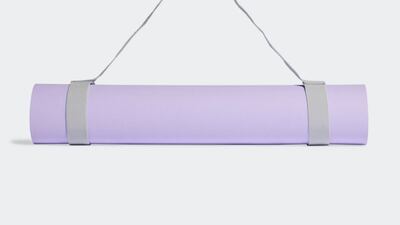
The lightweight foam mat from adidas by Stella McCartney has high-traction grip and comes with a carrying strap; Dh224.25 from www.adidas.ae. Photo: adidas -
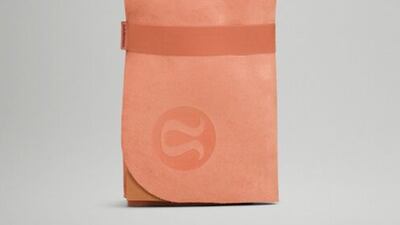
The Carry Onwards travel yoga mat by Lululemon is made from sustainably sourced natural rubber material; Dh195 from www.lululemon.ae. Photo: Lululemon -
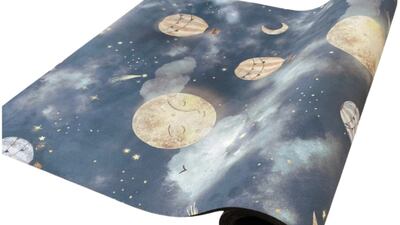
The Night Sky non-slip yoga mat by Harri and Eve is made from recycled tree rubber and is suitable for children between 18 months and 10 years; Dh289 from www.harriandeve.com. Photo: Harri and Eve -
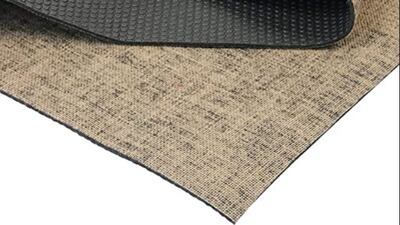
Made from organic jute fibres with no latex, the Giino Natural Jute yoga mat is breathable and non-slip; Dh108 from www.amazon.ae. Photo: Giino -
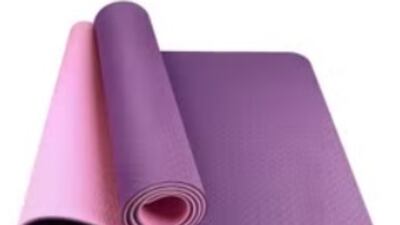
An option for beginners, the reasonably priced MahMir yoga mat features reversible colours and comes with a carrying bag; Dh96.95 from www.noon.com. Photo: MahMir -
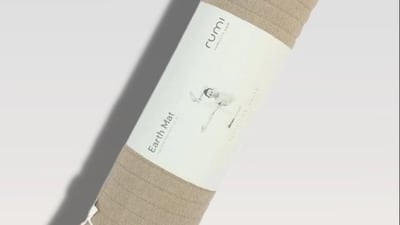
The Rumi Earth yoga mat is made from woven cotton and at 6.3mm thick is perfect for yoga that requires extra cushioning; Dh401 from www.rumi.ae. Photo: Rumi -
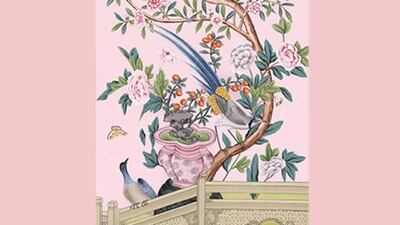
Sugarmat’s Pink Pampas yoga mat is made from non-slip natural rubber; Dh365 from www.fitnesspowerhouse.com. Photo: Sugarmat -
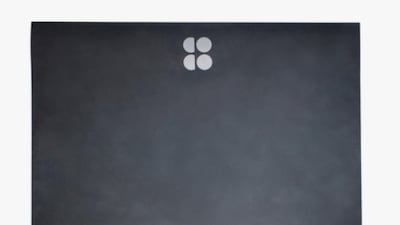
The Super Grip Yoga Mat by Sweaty Betty is made from 100 per cent natural latex; Dh385 from www.bloomingdales.ae. Photo: Sweaty Betty -
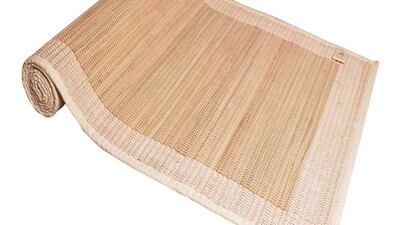
Go natural with Earthistic’s Vaastra Plain yoga mat made of Sambu Straw from India; Dh180 from shop.thegaggler.com. Photo: Earthistic -
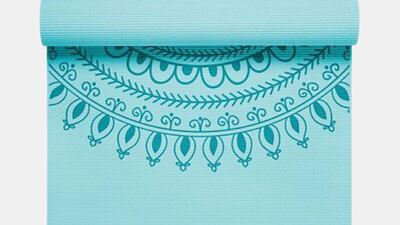
Gaiam’s Marrakesh yoga mat is a lightweight option with 6mm of cushioning; Dh115 from en-ae.sssports.com. Photo: Gaiam


“Yoga mats are made from a variety of materials such as fibre-recyclable plastic, natural rubber, jute and cork,” says Shadi Enbashi, co-founder of Seva Holistic Wellness Centre in the UAE. “Fibre-recyclable plastic mats are environmentally friendly, provide excellent grip and are durable. Jute and cork mats are also eco-friendly and provide a good grip, but they may not be as durable as other materials.”
While PVC mats are the cheapest, they are also the most eco-unfriendly, and latex natural rubber mats are heavier and more expensive. Yoga mats were traditionally made of jute, which many practitioners prefer, and there are also biodegradable options.
“I own four mats, and choose among them according to the place where I practise yoga,” says Insiya Tinwala, a yoga instructor at Studio Sanjeev Krishna Yoga, Dubai. “Different materials have their own advantages and disadvantages. I wouldn’t want to use an expensive yoga mat on the beach, but rather a PVC cushioned mat, so I can have more grip and padding while holding postures.
“Cheaper mats are mostly made of artificial fibres and may have chemicals that are not good to breathe in when one lies on the stomach, so that’s when the cork mat is more beneficial.”
Different mats for different styles of yoga

Yoga mats vary in thickness to accommodate different types of yoga. Thinner mats are better suited for stability during active yoga disciplines such as ashtanga and vinyasa. Thicker mats provide extra cushioning and are designed for restorative, yin and hatha practices.
“If you’re looking for a more active style, you want a mat that is not super-thick, perhaps between 10mm and 35mm which will give you a bit of cushioning and enough stability to hold the more active poses and transition without feeling wobbly,” says Muller-Habig.
“If you have sensitive joints or you prefer a more restorative practice like yin, where you’ll be seated for longer periods of time, you might choose something more cushioned that provides more softness. However, it won’t be as stable if you’re balancing on one foot.”
When looking for a thicker mat, it’s recommended to spend more, as cheap materials will soften and thin out faster.
“Look out for the quality of materials used, durability, texture, thickness and size,” says Enbashi. “Expensive mats are often made with high-quality, sustainable materials that are more durable, and provide better grip and cushioning than cheaper mats.”
Tinwala adds: “If you are a beginner, I would suggest using a thicker mat as you are still learning how to balance, for which you need a better grip. Buy a textured mat made of PVC for better support and balance as it is also pocket-friendly.”
Mat maintenance

As with most exercise equipment, yoga mats needed to be cleaned, cared for and maintained, especially by practitioners who perspire a lot during sessions.
“Latex rubber is a premium mat and will last several years as long as you care for it properly. You can buy special cleaners for your mat, or clean it in the bathtub using a very mild soap before rinsing it well,” says Muller-Habig. “Let it dry in the shade, so the rubber doesn’t deteriorate.”
Yogis who wish to practise while on holiday or work trips can invest in a travel mat that packs up smaller and thinner to fit in a suitcase or carry-on.
“Ideally, if you are an avid yoga practitioner, you should have two yoga mats, a thicker one for regular practice at home, and a thinner one for travelling around,” says Enbashi.
Muller-Habig adds: “Travel yoga mats are usually made of latex rubber. I love this style as you can fold it like a carpet and take it everywhere with you.”

