


A rare, inherited form of Alzheimer’s disease could be identified in blood markers a decade before symptoms begin to appear, scientists have said.
Glial fibrillary acidic protein, or GFAP, can appear in blood samples of people who are in the very early stages of the neurodegenerative disease, researchers at the Karolinska Institutet in Sweden found.
The findings, published in the journal Brain, could lead to the earlier detection of the disease and allow it to be slowed down with drugs.
“Our results suggest that GFAP, a presumed biomarker for activated immune cells in the brain, reflects changes in the brain due to Alzheimer’s disease that occur before the accumulation of tau protein and measurable neuronal damage,” said lead author Charlotte Johansson, a doctoral student at Karolinska's Department of Neurobiology, Care Sciences and Society.
Alzheimer’s disease is a progressive condition with symptoms developing gradually over many years, eventually becoming more severe.
Nerve cells in the brain degenerate as a result of the abnormal accumulation of two types of proteins known as beta-amyloid and tau.
The first sign of the disease is usually minor memory problems.
New drug appears to improve Alzheimer’s — in pictures
-

A clinical trial of the drug lecanemab shows it may slow down Alzheimer’s in the early stages. Experts have described it as a breakthrough in tackling the disease. PA -
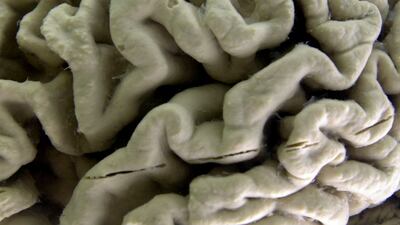
A close-up of a human brain affected by Alzheimer's. Japanese company Eisai and its US partner Biogen developed the drug. AP -
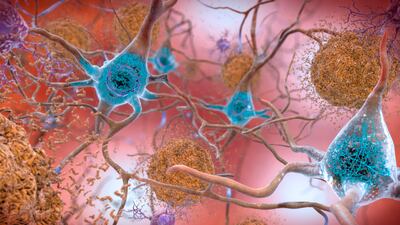
An illustration of how Alzheimer’s affects the brain, with abnormal levels of the beta-amyloid protein clumping together to form plaques – brown in this rendering – that collect between neurons and disrupt cell function. Photo: National Institute on Ageing -

Sajid Javid, who served as UK health secretary, said Britain's 10-year plan to tackle dementia has a focus on prevention. Photo: Alzheimer's Society -

A US advert aimed at loosening proposed restrictions on new Alzheimer's treatments. Photo: Reuters


As more nerve cells become damaged, speech becomes affected.
In the vast majority of cases — more than 99 in 100 — Alzheimer’s is not inherited, but in rarer types, there may be a strong genetic link.
In these cases, people with a parent with Alzheimer’s caused by a mutation have a 50 per cent risk of developing the disease themselves.
For their study, the researchers analysed 164 blood plasma samples from 33 mutation carriers and 42 relatives without it.
The researchers said their results showed “clear changes” in the samples of those who carried the mutations.
“The first change we observed was an increase in GFAP … approximately 10 years before the first disease symptoms,” said study author Caroline Graff, professor at Karolinska's Department of Neurobiology, Care Sciences and Society.
“This was followed by increased concentrations of P-tau181 and, later, NfL (neurofilament light protein), which we already know is directly associated with the extent of neuronal damage in the Alzheimer’s brain.
“This finding about GFAP improves the chances of early diagnosis.”

