


Thousands of patients with Parkinson’s disease will be given “smart watches” that remind them to take their medication and monitor their movements.
The Parkinson’s Kinetigraph, a gadget containing sensors, sends signals about the patient’s activity to doctors and buzzes when they need to take prescribed drugs, which they can confirm with a swipe.
NHS England said the watch will help practitioners detect excessive movement, immobility and sleep disturbance, allowing them to adjust physiotherapy and prescriptions.
Hundreds of patients have already been issued with the device during a pilot, and they are due to be rolled out to the 120,000 people who have Parkinson’s in England.
John Whipps, who was diagnosed with Parkinson’s in 2007 and took part in the pilot, said the watch gave him confidence to manage his illness.
“The problem is that Parkinson’s changes from day to day, and even throughout each day," he said.
“Under the traditional system, you have to remember all your concerns and symptoms between visits, ensure you can attend the appointment, have the stress of getting to hospital on time, and then remember to tell your consultant how you are.”
Speaking about his experience with the watch, Mr Whipps added: “It really gives you confidence as you know it gives accurate recordings, and you don’t need to rely so much on your own perception.
“As the non-motor symptoms begin to be recorded digitally they will also help doctors track those and inform the healthcare team.”
-

Health experts have long warned of the dangers of using the internet to find medical advice instead of seeing a GP - a trend referred to as "Doctor Google". -

Researchers researchers from Boston's Brigham and Women's Hospital suggest searching the web for a diagnosis.may be less harmful than medical professionals believe. Photo: Scott Eisen/Bloomberg via Getty Images -
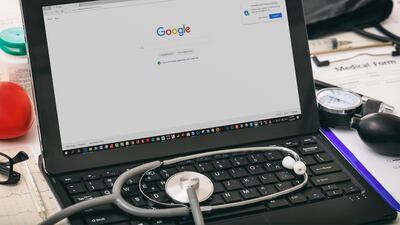
Participants in the study of 5,000 people demonstrated modest improvements in reaching an accurate diagnosis after looking up symptoms online. -
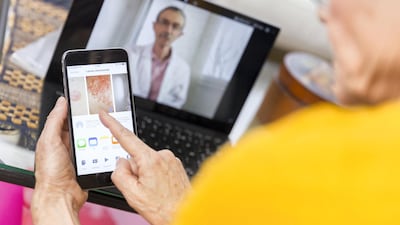
For the next phase, David Levine, managing director of general internal medicine and primary care at the Brigham, intends to investigate further the ability of AI to help people diagnose their own condition correctly. (Photo by: BSIP/Universal Images Group via Getty Images)


NHS chief executive Amanda Pritchard said the watch will improve the quality of patients’ lives while improving efficiency in the NHS.
“Parkinson’s is an incurable illness that has a significant impact on people’s lives and this small watch will dramatically improve their quality of life – providing a thorough review of their health and ensuring they get the care they need from the comfort of their own homes," she said.
“Not only is it better for these people living with Parkinson’s, but it is also more efficient for the NHS – freeing up space and time in hospitals for our hard-working staff.”
This digital approach to treating Parkinson’s patients from their homes was developed by the NHS in Plymouth and the University of Plymouth.
The watches were described by Dr Camille Carroll, a neurology expert who led the pilot, as “life changing” and by Health Secretary Sajid Javid as a “fantastic example of how technology is driving cutting-edge innovation in healthcare”.
Parkinson’s patients are still required to fill out questionnaires for their doctors, such as to explain possible causes of night-time disturbances that cannot be accounted for by the watch.

