

Follow the latest Sudan updates here
Sudan's army said on Saturday that the Saudi diplomatic mission in Khartoum has been evacuated from the country and that the US, Britain, France and China were sending military transport aircraft to take their citizens to safety.
Evacuating their nationals and diplomats in Sudan has been a major concern to foreign governments since fighting broke out between the army and the Rapid Support Forces paramilitary group on April 15, with heavy fighting engulfing the capital Khartoum and a string of major cities across the country.
-
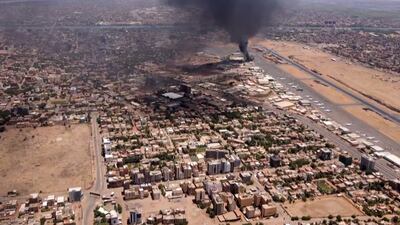
Smoke billows above Khartoum's international airport amid fighting between the forces of two rival generals in Sudan. AFP -
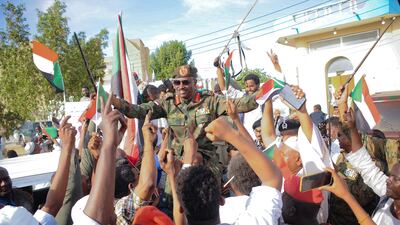
People carry Othman Mohamed, a senior military officer loyal to army chief Gen Abdel Fattah Al Burhan, in the Red Sea city of Port Sudan. AFP -
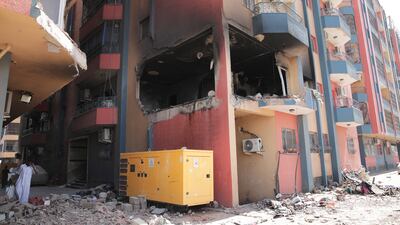
Residential buildings damaged in the fighting in Khartoum, Sudan. AP Photo -
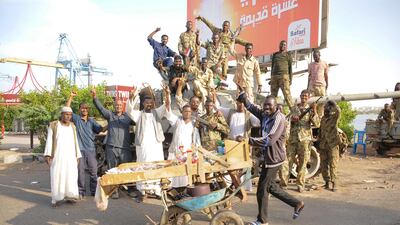
People cheer with Sudanese army soldiers manning a position in the Red Sea city of Port Sudan. AFP -
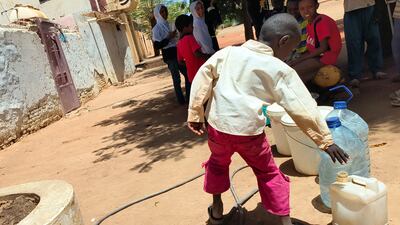
People queue for water in Khartoum. The fighting has resulted in food and water shortages. Reuters -
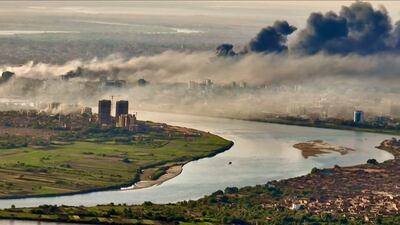
Black smoke covering the sky above the capital, Khartoum. AFP -

Vehicles destroyed during fighting in southern Khartoum. AFP -

People head for the station to flee Khartoum during clashes between the paramilitary Rapid Support Forces and the army. Reuters -
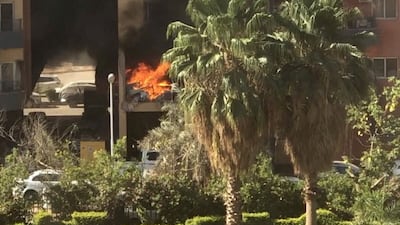
Smoke and fire rise from an apartment building, after a shell hit the complex in Khartoum. Reuters -
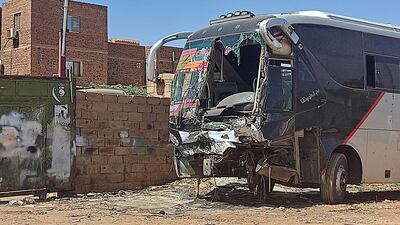
Heavy fighting has broken out across the country. AFP -
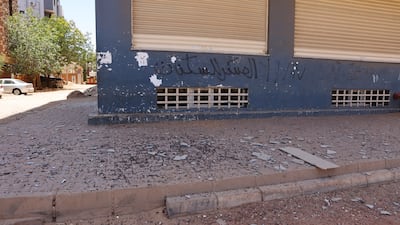
A building damaged by the fighting. EPA -
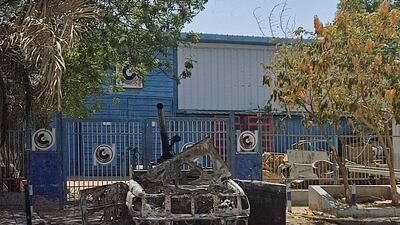
A destroyed vehicle of the paramilitary Rapid Support Forces in southern Khartoum. AFP -
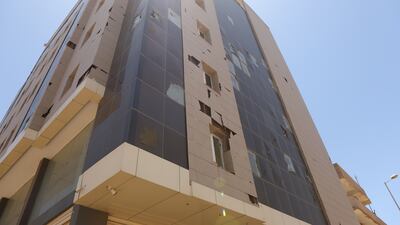
A building damaged by the fighting. EPA -
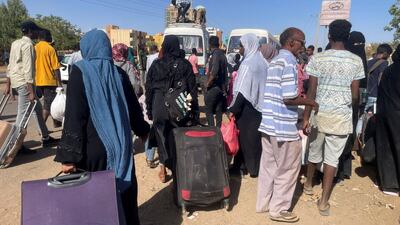
People gather at a bus station to escape Khartoum. Reuters -
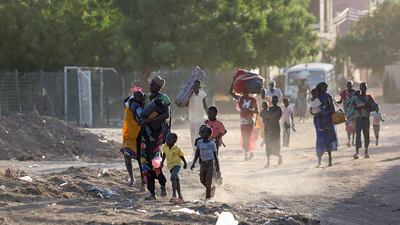
People leave their homes amid the fighting. AFP -

People look for drinking water in Khartoum, Sudan. Faiz Abubakr for The National -

A building burns at Merowe Airport in Sudan. AFP -

A man holds two bullets that hit his home. Faiz Abubakr for The National -
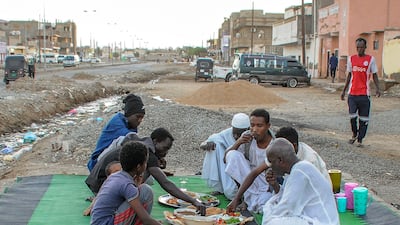
People gather for a meal to break their fast during Ramadan in Port Sudan. AFP -
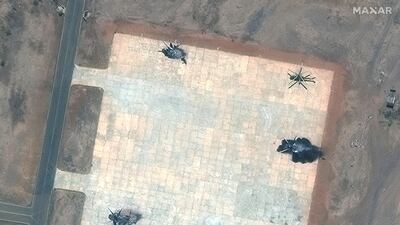
Satellite image shows a close-up view of destroyed helicopters in South Khartoum. Reuters -
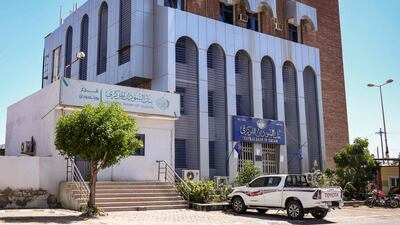
The Port Sudan branch of the Central Bank of Sudan. AFP -
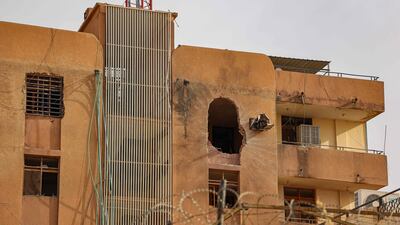
A hole from an explosion on the side of a building in Khartoum, after fighting between the Sudanese army and paramilitary forces led by rival generals. AFP -
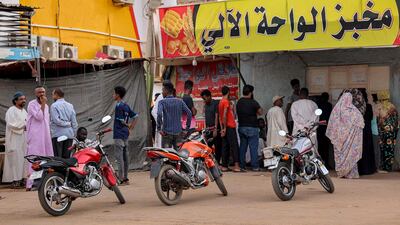
People queue for bread outside a bakery amid a food crisis in Khartoum. AFP -

Smoke rises above Khartoum. Faiz Abubakr / The National -

Fearful families try to shelter from the fighting in houses in Khartoum. Faiz Abubakr / The National -
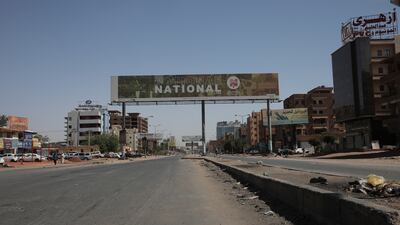
A deserted avenue in Khartoum as residents fear to go out due to intense fighting. AP -
A Sudanese army tank in a street in the Red Sea city of Port Sudan. AFP -
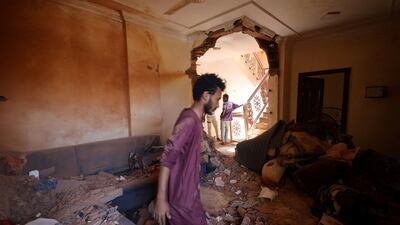
Houses have been severely damanged during clashes between the paramilitary Rapid Support Forces and the army. Reuters -
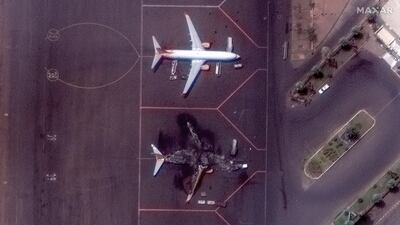
Satellite images show a destroyed Ukrainian plane at Khartoum International Airport. Reuters -
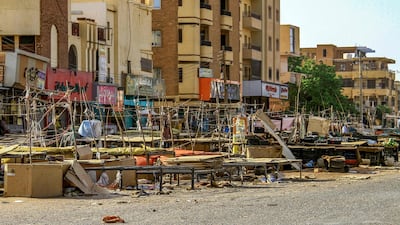
Market stalls abandoned in south Khartoum as fighting in the Sudanese capital rages for a third day. AFP -
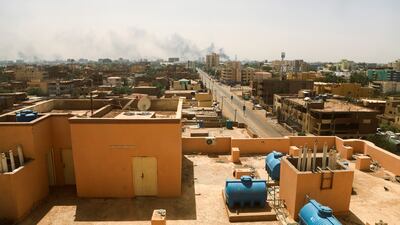
Smoke rises over buildings during clashes. Reuters -
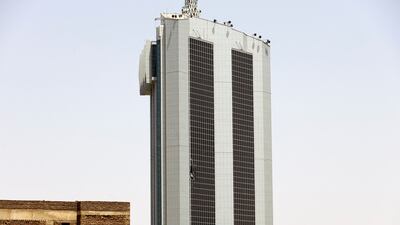
Damage at the Communications Authority Building. Reuters -
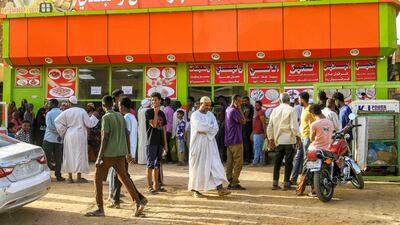
People queue for bread outside a bakery amid a food crisis. AFP -

Destroyed fuel trucks at a depot in Khartoum. Reuters -
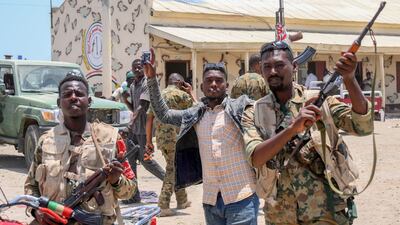
Sudanese army soldiers, loyal to Gen Abdel Fattah Al Burhan, at the Rapid Support Forces (RSF) base in the Red Sea city of Port Sudan. AFP -
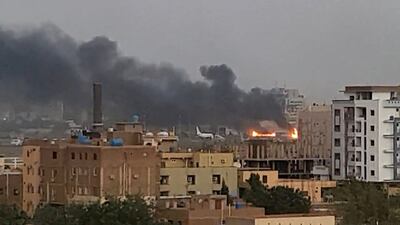
Smoke rises from a fire on the tarmac of Khartoum International Airport in Sudan as fighting between the government and the paramilitary Rapid Support Forces continues. Reuters -
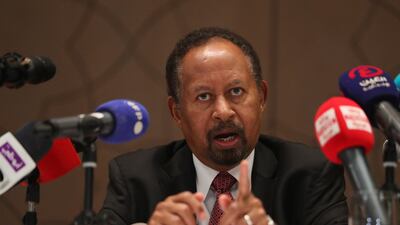
Abdalla Hamdok, former prime minister of Sudan, addresses the current crisis and violence on the streets of his homeland at a news conference in Abu Dhabi. Reuters -

Burning planes at Khartoum International Airport. EPA -
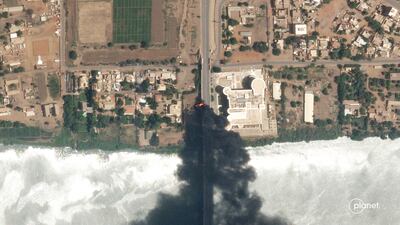
Damage and a fire on the Kobar Bridge in Khartoum. AFP -
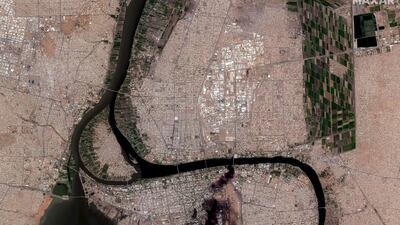
Heavy smoke billows above Khartoum International Airport. AFP -
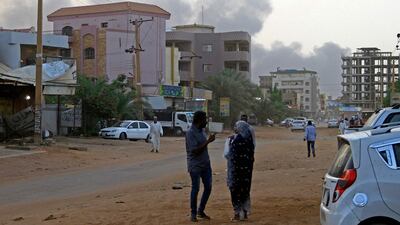
Smoke billows above residential buildings in Khartoum, as fighting in Sudan raged for a second day. AFP -
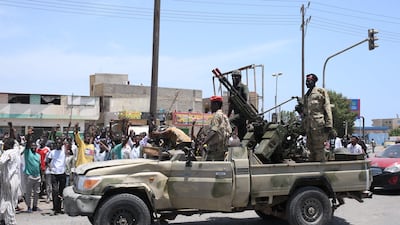
A military vehicle patrols the streets as the fighting continues. AFP -
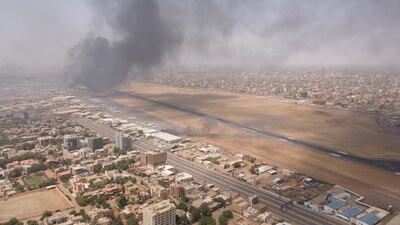
Smoke rises over the city. Reuters -
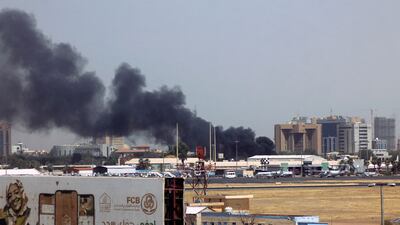
Thick smoke rises above buildings near the airport amid clashes between the army and the paramilitary Rapid Support Forces. AFP -

Explosions rock the Sudanese capital as paramilitary fighters and the regular army attack each other's bases. AFP -
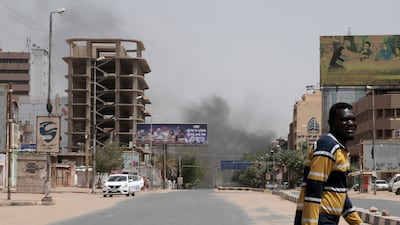
The fighting has raised fears of a wider conflict in the country. AP -
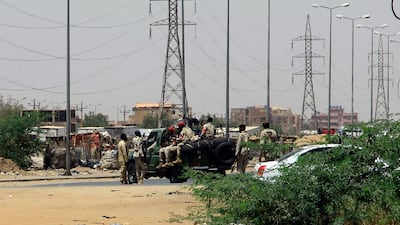
Government soldiers stationed on a key road in Khartoum. AFP -
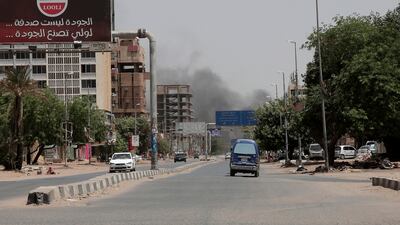
The fighting comes days after the army warned the country was at a 'dangerous' turning point. AP -
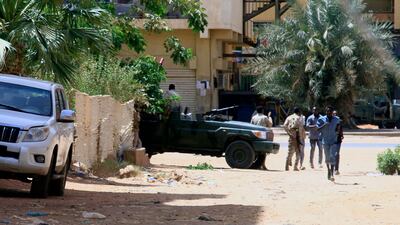
People walk past a military vehicle in Khartoum. AFP


In a statement on Saturday, the army said the Saudi embassy staff travelled overland to the Red Sea city of Port Sudan where they boarded planes that took them home.
In a statement, the Saudi Foreign Ministry said the evacuation involved 91 Saudi nationals and another 66 people including diplomats and international staff from Kuwait, the UAE, Qatar, Egypt, Tunisia, Pakistan, India, Bangladesh, Bulgaria, the Philippines, Canada and Burkina Faso.
It said the operation involved the Saudi navy and other branches of the kingdom's armed forces.
The Saudi-owned TV network Al Ikhbariyah earlier showed footage of the Saudi nationals arriving in the kingdom to a warm welcome by families, including women and children, and Deputy Foreign Minister Waleed Al Khoreijy.
"I hope all this will be a memory that does not happen again," Mr Al Khoreijy told the embassy staff.
Later on Saturday, Jordan confirmed that its diplomats were leaving Sudan through the same route used by the Saudis.
The Sudanese military said the departure of American, British, French and Chinese citizens was "expected to start immediately". Several hours later, however, there was no word on the progress of the operation.
Khartoum saw a significant reduction in hostilities on Saturday morning, but residents of the capital's adjoining sister cities of Omdurman and Bahri said fighting intensified later, with air strikes near the state broadcaster and gun battles in several areas. Neither Omdurman or Bahri are close to the airport.
In a separate statement on Saturday, Saudi Arabia's Foreign Ministry said the kingdom had begun procedures to evacuate its citizens and the nationals of "brotherly and friendly countries" from Sudan, but did not mention the Saudi embassy staff or name the other nations it was prepared to help.
The RSF, which took control of Khartoum airport when the fighting began, said late on Friday that it was prepared to reopen Sudan's airports to allow evacuations to proceed.
The military has at least one air strip on the outskirts of Khartoum.
It was not immediately clear whether the army or the RSF were facilitating the planned evacuations, but western powers and regional heavyweights such as Saudi Arabia enjoy considerable leverage in Sudan and hold the key to vital economic aid to the impoverished country.
Throughout the fighting, the army and the RSF have professed unwavering support for Sudan's transition to democracy after the 2021 military coup that they carried out jointly. Each side accuses the other of attempting a power grab to derail the internationally-supported political process.
The announcement of the evacuations coincided with a lull in fighting under a 72-hour truce that began on Friday for the Muslim holiday of Eid Al Fitr, which marks the end of the fasting month of Ramadan.
However, intermittent explosions rocked the city on Saturday, according to residents. They said the intensity of the fighting fluctuated on Friday, but invariably picked up after quiet spells, with the thud of artillery, heavy gunfire and screaming jet fighters shaking the city.
The city's streets remained largely deserted and shops stayed shut. Residents say they are running out of food as stocks run low and are also facing widespread cuts in power and water supply.
The World Health Organisation on Friday said 413 people had been killed and 3,551 injured since fighting broke out, but the death toll is believed to be much higher.
Also on Saturday, the military claimed that RSF forces were operating without control or leadership starting from the second day of the fighting.
"It's difficult to say how long it will be before the fighting ends but we are trying hard to vanquish the rebellion as soon as possible to end the suffering of our people,' it added.
The army and the RSF are led by one-time allies Gen Abdel Fattah Al Burhan and Gen Mohamed Hamdan Dagalo. The pair were allies, albeit for political expediency, since they jointly removed Omar Al Bashir from power in April 2019 amid a popular uprising against the dictator's 29-year regime.
They joined forces again to stage a coup in 2021 that upended Sudan's democratic transition and plunged the country into political and economic crises.
They were signatories to a preliminary deal reached in December that provided for the withdrawal of the military from politics, the appointment of a civilian prime minister to steer the country for 24 months until elections and the integration of the RSF into the armed forces.
The signing of a comprehensive deal was delayed twice this month because of differences over the RSF integration, which Gen Dagalo wanted to be done gradually over as many as 10 years. Gen Al Burhan wanted a much shorter timetable, fearing that the RSF would become an even more formidable force if given more time.

