



Bahrain has become the second Arab country to sign the US-led Artemis Accords, an international treaty that outlines peaceful and responsible space exploration.
The Accords set international standards of how the Moon should be explored and lists guidelines on activities such as mining on the Moon, releasing scientific data publicly, transparency with the public on policies and providing emergency assistance.
The UAE signed the agreement in 2020 as a founding country, shortly after announcing that it was sending a rover to the lunar surface.
Bahrain is also an emerging space nation, with plans to develop and launch nanosatellites and increase research capabilities.
It announced that it had joined the Accords during Crown Prince Salman bin Hamad's visit to the US last week.
Apart from Bahrain there are 16 other signatories ― the US, UK, UAE, Japan, Italy, Canada, Australia, Luxembourg, South Korea, New Zealand, Brazil, Ukraine, Israel, Poland, Mexico and Romania.
Bahrain’s National Space Science Agency hopes that by joining the Accords it would create new opportunities for co-operation and investment in the space field.
It could also increase training and research opportunities for the kingdom and allow exchange of space-related data.
Bahrain launched its first satellite into orbit in December, a joint project with the UAE that involved a CubeSat called Light-1, which will monitor and study terrestrial gamma-ray flashes from thunderstorms and cumulus clouds.
Nasa launched the Artemis Accords before its plans to establish a human base on the Moon and a lunar-orbiting space station through the Artemis programme.
“Artemis will be the broadest and most diverse international human space exploration programme in history, and the Artemis Accords are the vehicle that will establish this singular global coalition,” Jim Bridenstine, the former Nasa administrator, said in 2020 when the UAE had signed the treaty.
“With today’s signing, we are uniting with our partners to explore the Moon and are establishing vital principles that will create a safe, peaceful, and prosperous future in space for all of humanity to enjoy.”
While, the Accords are being welcomed by many countries, Russia refused to sign the agreement, with the Russian space chief saying the Accords are “too US-centric”.
Instead, it has decided to work with China to build a research station on the Moon.
UAE's Moon rover Rashid — in pictures
-
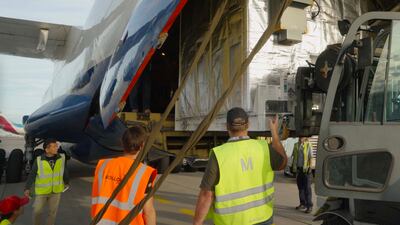
The Hakuto-R Mission 1 lunar lander is delivered to Florida's Cape Canaveral from where it will carry the UAE's Rashid rover to the Moon. Photo: ispace -
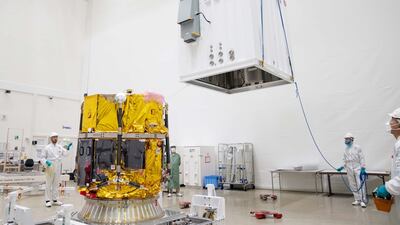
The Hakuto lander with the Rashid rover stored inside, ready to be shipped to Florida. Photo: ispace -
Rashid lunar rover's final prototype. Photo: Mohammed bin Rashid Space Centre -
An Emirati engineer tested the Moon rover in remote desert areas of Dubai. Photo: Mohammed bin Rashid Space Centre -
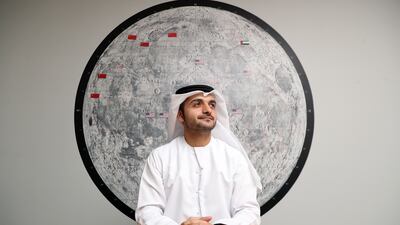
Dr Hamad Al Marzooqi, project manager of the Emirates lunar mission. Chris Whiteoak / The National -
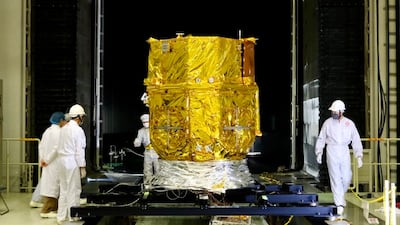
Development of the lander nears completion. Photo: ispace -
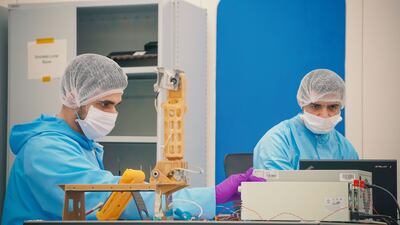
Emirati engineers test parts of the Rashid rover. Photo: Mohammed Bin Rashid Space Centre -
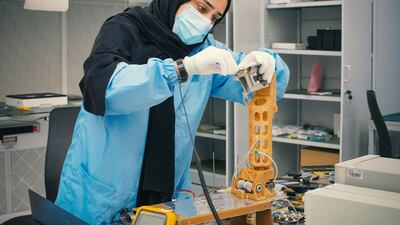
Emirati engineers test parts of the Rashid rover. Photo: Mohammed Bin Rashid Space Centre -
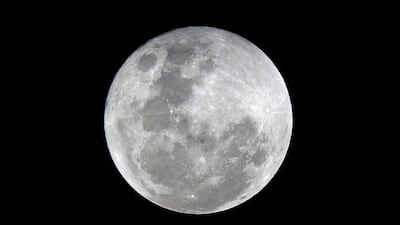
A full Moon gleams above Buenos Aires. AFP



