The two earliest and most distant galaxies yet confirmed, dating back to only 300 million years after the Big Bang, have been discovered using Nasa's James Webb Space Telescope. Photo: JWST / Nasa

Earliest galaxies ever seen reveal clues to universe’s first moments


Sarwat Nasir
  • English
  • Arabic

Astronomers have confirmed the discovery of the two most distant galaxies observed, giving them a glimpse of what the universe looked like only 300 million years after the Big Bang.

Named JADES-GS-z14-0 and JADES-GS-z14-1, the galaxies were identified by the James Webb Space Telescope (JWST) as part of the JWST Advanced Deep Extragalactic Survey (JADES).

The findings, published in the Nature science journal on Wednesday, challenges existing theories on how quickly galaxies could form in the early cosmos.

“These galaxies join a small but growing population of galaxies from the first half billion years of cosmic history where we can really probe the stellar populations and the distinctive patterns of chemical elements within them,” said Dr Francesco D’Eugenio of the Kavli Institute for Cosmology at the University of Cambridge, one of the teams behind the discovery.

The brighter of the two, JADES-GS-z14-0, measures an impressive 1,600 light-years in diameter and appears to be brimming with young stars.

The discovery offers scientists a rare opportunity to study conditions of when the universe was first forming.

The galaxies can be seen as they were when the universe was less than 2 per cent of its current age. This was possible because of instruments on the telescope that helped researchers study the phenomenon where light stretches into longer wavelengths as it travels through space.

“We could have detected this galaxy even if it were 10 times fainter, which means that we could see other examples yet earlier in the universe, probably into the first 200 million years,” says Brant Robertson, professor of astronomy and astrophysics at the University of California-Santa Cruz.

The findings could also lead researchers to rethink how fast stars and other matter came together in the first few hundred million years after the Big Bang.

JWST’s ability to observe infrared light helped the researchers carry out the discovery, a capability that was not possible by its predecessor the Hubble Space Telescope.

The telescope, which was launched on Christmas day in 2021, has already rewritten much of what scientists believed about the early universe.

Among its most talked-about findings is the detection of carbon dioxide in the atmosphere of a planet outside the Solar System, a major step in the search for potentially habitable worlds.

It has also provided never-before-seen details of star formation, including the stunning image of the Pillars of Creation, towering clouds of gas and dust located about 6,500 light-years from Earth, revealing intricate new structures invisible to previous telescopes.

But just as the JWST is reaching new milestones, its future and other major science missions, are at risk because of the White House’s proposed budget for 2026 that includes significant cuts to Nasa’s science division.

These cuts could affect future telescope missions, Earth science programmes and planetary exploration efforts.

While JWST is already built and operational, budget constraints could limit the resources needed to support its observations or delay follow-up missions that would expand on its findings.

Stunning images captured by the James Webb Space Telescope – in pictures

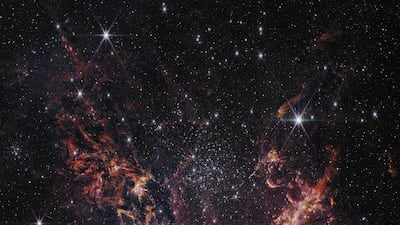
  • A cluster of stars in the Small Magellanic Cloud in an image taken by the James Webb Space Telescope. PA
    A cluster of stars in the Small Magellanic Cloud in an image taken by the James Webb Space Telescope. PA
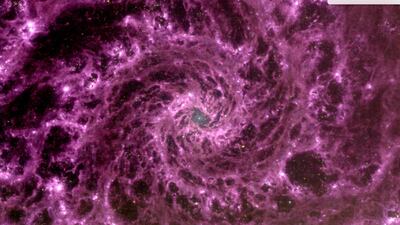
  • A colour composite image of the Messier 74 galaxy. Photo: Gabriel Brammer (Cosmic Dawn Center, Niels Bohr Institute, University of Copenhagen) / James Webb Space Telescope
    A colour composite image of the Messier 74 galaxy. Photo: Gabriel Brammer (Cosmic Dawn Center, Niels Bohr Institute, University of Copenhagen) / James Webb Space Telescope
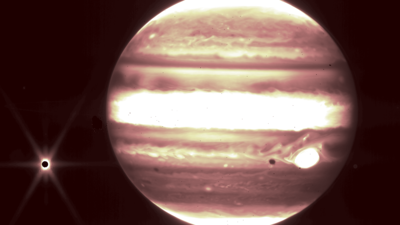
  • Jupiter and its moon Europa, left, are seen through the James Webb Space Telescope. Photo: Nasa
    Jupiter and its moon Europa, left, are seen through the James Webb Space Telescope. Photo: Nasa
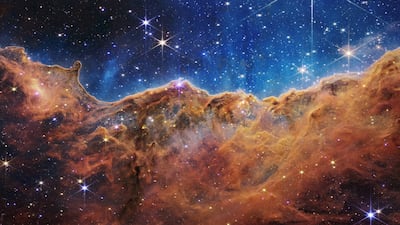
  • Captured in infrared light by Nasa's new James Webb Space Telescope, this image reveals areas of star birth in Carina Nebula. All photos: James Webb Space Telescope
    Captured in infrared light by Nasa's new James Webb Space Telescope, this image reveals areas of star birth in Carina Nebula. All photos: James Webb Space Telescope
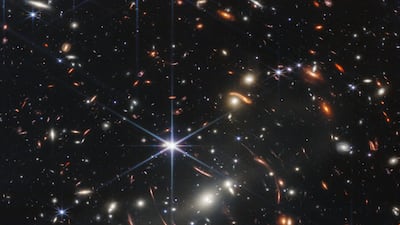
  • Known as Webb's First Deep Field, the picture showcases a galaxy cluster called SMACS 0723 as it appeared 4.6 billion years ago. The image was revealed by US President Joe Biden on July 11 during an event at the White House.
    Known as Webb's First Deep Field, the picture showcases a galaxy cluster called SMACS 0723 as it appeared 4.6 billion years ago. The image was revealed by US President Joe Biden on July 11 during an event at the White House.
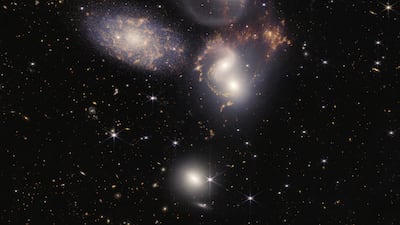
  • An image of Stephan's Quintet, an area in space with a group of five galaxies.
    An image of Stephan's Quintet, an area in space with a group of five galaxies.
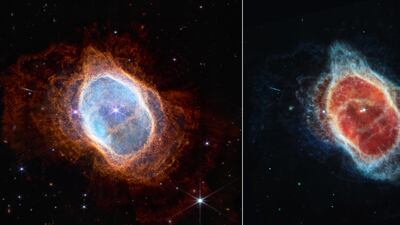
  • Side-by-side comparison shows observations of the Southern Ring Nebula in near-infrared light (left) and mid-infrared light.
    Side-by-side comparison shows observations of the Southern Ring Nebula in near-infrared light (left) and mid-infrared light.
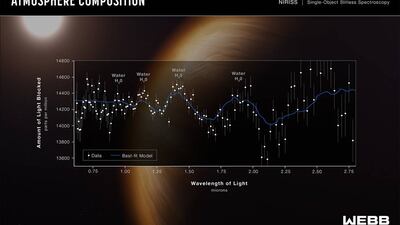
  • The telescope has captured the distinct signature of water, along with evidence for clouds and haze, in the atmosphere surrounding a hot, puffy gas giant planet orbiting a distant Sun-like star, called WASP-96 b. Photo: James Webb Space Telescope
    The telescope has captured the distinct signature of water, along with evidence for clouds and haze, in the atmosphere surrounding a hot, puffy gas giant planet orbiting a distant Sun-like star, called WASP-96 b. Photo: James Webb Space Telescope

MATCH INFO

What: 2006 World Cup quarter-final
When: July 1
Where: Gelsenkirchen Stadium, Gelsenkirchen, Germany

Result:
England 0 Portugal 0
(Portugal win 3-1 on penalties)

Three tips from La Perle's performers

1 The kind of water athletes drink is important. Gwilym Hooson, a 28-year-old British performer who is currently recovering from knee surgery, found that out when the company was still in Studio City, training for 12 hours a day. “The physio team was like: ‘Why is everyone getting cramps?’ And then they realised we had to add salt and sugar to the water,” he says.

2 A little chocolate is a good thing. “It’s emergency energy,” says Craig Paul Smith, La Perle’s head coach and former Cirque du Soleil performer, gesturing to an almost-empty open box of mini chocolate bars on his desk backstage.

3 Take chances, says Young, who has worked all over the world, including most recently at Dragone’s show in China. “Every time we go out of our comfort zone, we learn a lot about ourselves,” she says.

Results

5.30pm: Maiden Dh165,000 (Turf) 1,600m; Winner: Al Battar, Mickael Barzalona (jockey), Salem bin Ghadayer (trainer).

6.05pm: Maiden Dh165,000 (Dirt) 1,200m; Winner: Good Fighter, Richard Mullen, Satish Seemar.

6.40pm: Handicap Dh185,000 (T) 1,200m; Winner: Way Of Wisdom, Tadhg O’Shea, Satish Seemar.

7.15pm: Handicap Dh170,000 (D) 2,200m; Winner: Immortalised, Tadhg O’Shea, Satish Seemar.

7.50pm: Handicap Dh185,000 (T) 2,000m; Winner: Franz Kafka, James Doyle, Simon Crisford.

8.25pm: Handicap Dh185,000 (D) 1,200m; Winner: Mayadeen, Connor Beasley, Doug Watson.

9pm: Handicap Dh185,000 (T) 1,600m; Winner: Chiefdom, Mickael Barzalona, Salem bin Ghadayer

Team Angel Wolf Beach Blast takes place every Wednesday between 4:30pm and 5:30pm

COMPANY%20PROFILE
%3Cp%3E%3Cstrong%3ECompany%20name%3A%3C%2Fstrong%3E%20Switch%20Foods%3Cbr%3E%3Cstrong%3EStarted%3A%3C%2Fstrong%3E%202022%3Cbr%3E%3Cstrong%3EFounder%3A%3C%2Fstrong%3E%20Edward%20Hamod%3Cbr%3E%3Cstrong%3EBased%3A%3C%2Fstrong%3E%20Abu%20Dhabi%2C%20UAE%3Cbr%3E%3Cstrong%3EIndustry%3A%3C%2Fstrong%3E%20Plant-based%20meat%20production%3Cbr%3E%3Cstrong%3ENumber%20of%20employees%3A%3C%2Fstrong%3E%2034%3Cbr%3E%3Cstrong%3EFunding%3A%3C%2Fstrong%3E%20%246.5%20million%3Cbr%3E%3Cstrong%3EFunding%20round%3A%3C%2Fstrong%3E%20Seed%3Cbr%3E%3Cstrong%3EInvestors%3A%3C%2Fstrong%3E%20Based%20in%20US%20and%20across%20Middle%20East%3C%2Fp%3E%0A
Updated: May 31, 2025, 11:41 AM