• A man wearing a facemask in Dubai in April 2020, shortly after the first outbreak. Pawan Singh / The National
    A man wearing a facemask in Dubai in April 2020, shortly after the first outbreak. Pawan Singh / The National
  • Staff from the Wuhan Hygiene Emergency Response Team conduct searches on the closed Huanan Seafood Market in Wuhan, China, at the start of the outbreak on January 11, 2020. AFP
    Staff from the Wuhan Hygiene Emergency Response Team conduct searches on the closed Huanan Seafood Market in Wuhan, China, at the start of the outbreak on January 11, 2020. AFP
  • A security guard sits outside the closed Huanan market in Wuhan, Hubei province. Getty Images
    A security guard sits outside the closed Huanan market in Wuhan, Hubei province. Getty Images
  • A notice displayed near a quarantine control station at Narita Airport, Japan, in January 2020. EPA
    A notice displayed near a quarantine control station at Narita Airport, Japan, in January 2020. EPA
  • An empty Times Square after a coronavirus lockdown was ordered in New York City, March 18, 2020. Reuters
    An empty Times Square after a coronavirus lockdown was ordered in New York City, March 18, 2020. Reuters
  • A nurse wearing PPE comforts another as they change shifts on March 13, 2020 at Cremona Hospital, north-eastern Italy. AFP
    A nurse wearing PPE comforts another as they change shifts on March 13, 2020 at Cremona Hospital, north-eastern Italy. AFP
  • Sanitation workers from Tadweer on the first day of the UAE cleaning campaign in March 2020. Victor Besa / The National
    Sanitation workers from Tadweer on the first day of the UAE cleaning campaign in March 2020. Victor Besa / The National
  • The pedestrian crossing on Hamdan and Fatima Bint Mubarak Street is sprayed on March 27, 2020. Victor Besa / The National
    The pedestrian crossing on Hamdan and Fatima Bint Mubarak Street is sprayed on March 27, 2020. Victor Besa / The National
  • A commuter enters the sterilisation area at the entrance of the Abu Dhabi Central Bus Terminal in March 2020. Victor Besa / The National
    A commuter enters the sterilisation area at the entrance of the Abu Dhabi Central Bus Terminal in March 2020. Victor Besa / The National
  • Travellers returning to Kuwait from Egypt, Syria and Lebanon arrive to be re-tested at a containment and screening zone in Kuwait City on March 16, 2020. AFP
    Travellers returning to Kuwait from Egypt, Syria and Lebanon arrive to be re-tested at a containment and screening zone in Kuwait City on March 16, 2020. AFP
  • Al Wadha Mall in Abu Dhabi reopens in May 2020 with measures in place to protect shoppers. Victor Besa / The National
    Al Wadha Mall in Abu Dhabi reopens in May 2020 with measures in place to protect shoppers. Victor Besa / The National
  • Safety reminders at Dubai International Airport after the resumption of scheduled operations by Emirates on May 22, 2020. AFP
    Safety reminders at Dubai International Airport after the resumption of scheduled operations by Emirates on May 22, 2020. AFP
  • A delivery driver wearing a face mask in downtown Abu Dhabi. Victor Besa / The National
    A delivery driver wearing a face mask in downtown Abu Dhabi. Victor Besa / The National
  • Passengers of an Emirates flight prepare to board a plan to Sydney at Dubai International Airport. AFP
    Passengers of an Emirates flight prepare to board a plan to Sydney at Dubai International Airport. AFP
  • Systems put in place at a supermarket in Dubai to slow the spread of the coronavirus. AFP
    Systems put in place at a supermarket in Dubai to slow the spread of the coronavirus. AFP

Three years on, what is the legacy of the Covid-19 pandemic?


Daniel Bardsley
  • English
  • Arabic

January 9 will mark three years since the first death in China from Covid-19 — and since then millions more have died.

The coronavirus spread quickly across the globe after emerging in Wuhan and within a few months was causing tens of thousands of deaths each week.

The official toll stands at more than 6.6 million and the virus continues to kill thousands of people each week.

But current circumstances are much improved.

There are things we can take from the pandemic that will help us understand infectious diseases and reduce the risk of severe diseases in the future
Prof Paul Hunter,
University of East Anglia

Most societies that imposed lockdowns have opened up and, from around the second quarter of last year onwards, the global death rate has been stable and much lower than during most of the previous two years, even if Covid hospital admissions continue to put healthcare systems under strain.

China is a notable exception, with the country’s recent opening up after three years of tight restrictions causing cases, and possibly deaths, to surge.

Outside China, many populations are now less at risk than at the start of the pandemic.

Increased immunity

About 69.1 per cent of the world's population has received at least one dose of a Covid-19 vaccine, according to OurWorldinData, and 13.18 billion doses have been administered in total.

On top of that, the 657 million cases of Covid-19 to date — according to official figures, which are likely to heavily underestimate the real number — mean that much of the world’s population has immunity from prior infection.

  • New research shows that a patient's Covid-19 symptoms can depend on what vaccinations they have received. Getty
    New research shows that a patient's Covid-19 symptoms can depend on what vaccinations they have received. Getty
  • Fully vaccinated people most commonly reported a sore throat, persistent cough, runny or blocked nose and headaches. Getty
    Fully vaccinated people most commonly reported a sore throat, persistent cough, runny or blocked nose and headaches. Getty
  • The study also indicated a decline in reports of shortness of breath and loss of taste and smell. Those were two key symptoms in the early stage of the pandemic. Photo: Getty
    The study also indicated a decline in reports of shortness of breath and loss of taste and smell. Those were two key symptoms in the early stage of the pandemic. Photo: Getty
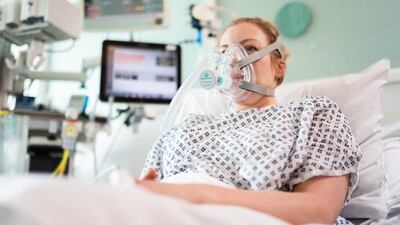
  • In the early stage of the pandemic, breathing difficulty was a common Covid symptom. Photo: UCL
    In the early stage of the pandemic, breathing difficulty was a common Covid symptom. Photo: UCL

In Europe, for example, people "still have some background immunity" that provides protection, according to Prof Eskild Petersen, of Aarhus University Hospital in Denmark and chairman of the European Society of Clinical Microbiology and Infectious Diseases.

"If you envisage an entirely different virus with higher pathogenicity, it would have to be very different not to be covered by the immunity now," he said.

"If you have high vaccine coverage — three or four doses — you are very, very well protected and you will have a certain number of people with further immunity from natural infection. That’s the difference from spring 2020, when nobody had any immunity."

Coupled with that, Covid-19 is widely seen to have become less virulent thanks to the easily transmitted but milder Omicron strain and related variants, which are responsible for most infections now.

"Gradually, since the appearance of Omicron, the severity has got a lot less than even a year ago," said Paul Hunter, professor in medicine at the University of East Anglia in the UK.

"We’re not seeing nearly as many admissions to hospitals or people in intensive care beds. Now it’s less severe than flu. If you catch Covid, you’re less likely to die than with flu."

Better prepared

With the world emerging from what is often seen as the worst pandemic for a century, many researchers hope there will be better preparations for the next emergence of a new disease.

The last major pandemic of a scale comparable to Covid-19 involved Spanish flu and began in 1918, but it is unlikely, said John Oxford, emeritus professor of virology at the University of London, that it will be another century before the world faces something similar.

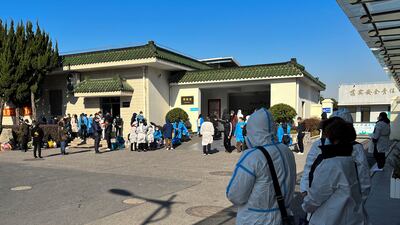
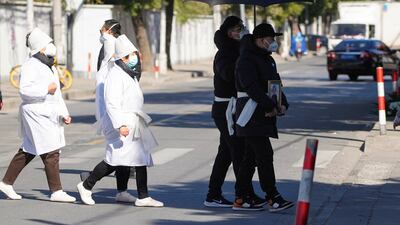
  • People stand outside a funeral home in Shanghai, as cases of Covid-19 surge in China. Reuters
    People stand outside a funeral home in Shanghai, as cases of Covid-19 surge in China. Reuters
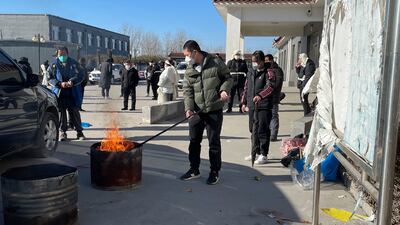
  • Relatives burn paper offerings for a relative who died, at the Gaobeidian Funeral Home in northern China's Hebei province. AP
    Relatives burn paper offerings for a relative who died, at the Gaobeidian Funeral Home in northern China's Hebei province. AP
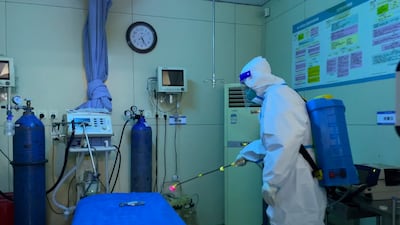
  • A worker disinfects a bed in the emergency department of a hospital in Baigou, Hebei province. AP
    A worker disinfects a bed in the emergency department of a hospital in Baigou, Hebei province. AP
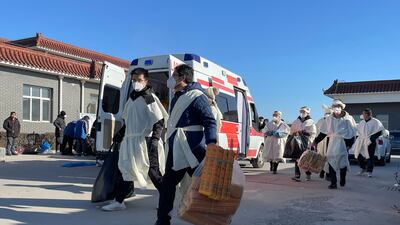
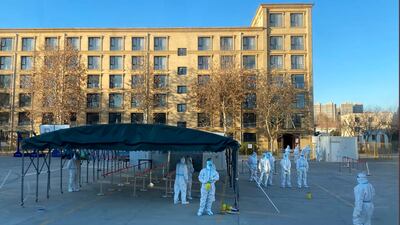
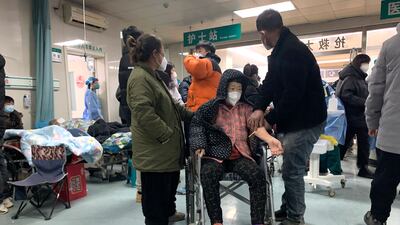
  • Cities across the country have struggled to cope as the surge in cases has emptied pharmacy shelves, filled hospital wards and appeared to cause backlogs at crematoriums and funeral homes. AP
    Cities across the country have struggled to cope as the surge in cases has emptied pharmacy shelves, filled hospital wards and appeared to cause backlogs at crematoriums and funeral homes. AP
  • It comes after China dismantled key pillars of its zero-Covid strategy. AP
    It comes after China dismantled key pillars of its zero-Covid strategy. AP
  • Authorities have lifted snap lockdowns, lengthy quarantines and travel curbs in a reversal of the country's hallmark containment strategy. Reuters
    Authorities have lifted snap lockdowns, lengthy quarantines and travel curbs in a reversal of the country's hallmark containment strategy. Reuters
  • Relatives attend to a patient. AP
    Relatives attend to a patient. AP
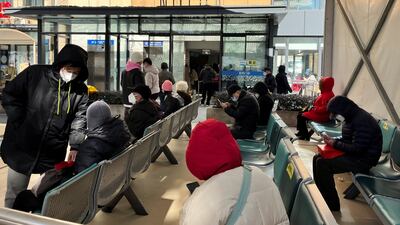
  • People wait outside a fever clinic at a hospital in Shanghai. Reuters
    People wait outside a fever clinic at a hospital in Shanghai. Reuters

"It doesn’t have to be China, France or the US — it can happen anywhere," he said. "The key thing is to know it will happen again and to stockpile PPE [personal protective equipment].

"You have to have a plan and have someone guarding the plan. The plan must be updated and have a proper guardian to keep the finance coming in for it. It’s essential. It needs more than science to keep it marching along.

"All countries were begged by the World Health Organisation to get a plan. Some had three pages, some 150 pages."

The world is now, however, "biologically more sophisticated", with improved vaccination and monitoring capability, so is better able to react to pandemics, suggested David Taylor, emeritus professor of pharmaceutical and public health policy at University College London.

"We need to invest, but we don’t want to invest in old-style public health," he said. "We need intelligent biological surveillance … based on better understanding.

"We need leaner, sensible investment in high-level planning for pandemic possibilities, but remembering there are so many other things that could go wrong.

"We have global warming — unless we get energy and climate change sorted, that will almost certainly kill us in the next century … we have a real problem to sort."

Scientific advances

While the pandemic has left a legacy of suffering, death, societal upheaval and economic damage, it has helped accelerate scientific advancement.

There had been decades of work to develop messenger RNA (mRNA) vaccines, but it was not until Covid-19 that these were actually introduced to protect people from disease.

Writing in the journal Viruses last year, researchers said the pandemic had "opened the floodgates to mRNA vaccines’ potential in infectious disease prevention", with many animal as well as human diseases the focus of emerging vaccines.

Therapeutic mRNA vaccines for diseases such as cancer are also becoming a reality, with more clinical trials beginning.

The pandemic also led to the successful use of vaccines, such as the Oxford-AstraZeneca dose, that use a weakened chimpanzee adenovirus as a vector. This causes the cells of recipients to produce coronavirus spike proteins, leading to a protective immune response.

The pandemic has improved scientists’ wider understanding of viral illnesses, according to Prof Hunter, who said it has helped his own work on noroviruses which cause gastroenteritis.

"There are actually a lot of positive things that have come out of this pandemic in science," he said. "The downside is a lot of people have had to die for it. I would rather we had not had the pandemic and remained ignorant."

"But there are things we can take from the pandemic that will help us understand infectious diseases and help us reduce the risk of severe diseases in the future. And new vaccinations put together more quickly could have very wide implications.

"Because so much money and research has gone into it, we know things about Covid that we sort of knew about other infections, such as the duration of mucosal immunity [immunity in the moist inner lining of, for example, the nose and lungs] following infection and vaccination."

As to how the pandemic will continue to play out, Prof Hunter said he expected the coronavirus would continue to become less severe in its effects until it became another cause of the common cold. Other coronaviruses already cause about 10 to 15 per cent of colds.

That does not mean, however, that it will not carry on killing people, because, Prof Hunter noted, even the common cold can trigger chest infections, albeit less often than influenza does.

"I think over the next few years hospitalisations will become a lot less common and deaths a lot less common as well," he said.


Avatar: Fire and Ash

Director: James Cameron

Starring: Sam Worthington, Sigourney Weaver, Zoe Saldana

Rating: 4.5/5

Six tips to secure your smart home

Most smart home devices are controlled via the owner's smartphone. Therefore, if you are using public wi-fi on your phone, always use a VPN (virtual private network) that offers strong security features and anonymises your internet connection.

Keep your smart home devices’ software up-to-date. Device makers often send regular updates - follow them without fail as they could provide protection from a new security risk.

Use two-factor authentication so that in addition to a password, your identity is authenticated by a second sign-in step like a code sent to your mobile number.

Set up a separate guest network for acquaintances and visitors to ensure the privacy of your IoT devices’ network.

Change the default privacy and security settings of your IoT devices to take extra steps to secure yourself and your home.

Always give your router a unique name, replacing the one generated by the manufacturer, to ensure a hacker cannot ascertain its make or model number.

Moral education needed in a 'rapidly changing world'

Moral education lessons for young people is needed in a rapidly changing world, the head of the programme said.

Alanood Al Kaabi, head of programmes at the Education Affairs Office of the Crown Price Court - Abu Dhabi, said: "The Crown Price Court is fully behind this initiative and have already seen the curriculum succeed in empowering young people and providing them with the necessary tools to succeed in building the future of the nation at all levels.

"Moral education touches on every aspect and subject that children engage in.

"It is not just limited to science or maths but it is involved in all subjects and it is helping children to adapt to integral moral practises.

"The moral education programme has been designed to develop children holistically in a world being rapidly transformed by technology and globalisation."

The%20specs
%3Cp%3E%3Cstrong%3EPowertrain%3A%20%3C%2Fstrong%3ESingle%20electric%20motor%0D%3Cbr%3E%3Cstrong%3EPower%3A%20%3C%2Fstrong%3E201hp%0D%3Cbr%3E%3Cstrong%3ETorque%3A%20%3C%2Fstrong%3E310Nm%0D%3Cbr%3E%3Cstrong%3ETransmission%3A%20%3C%2Fstrong%3ESingle-speed%20auto%0D%3Cbr%3E%3Cstrong%3EBattery%3A%20%3C%2Fstrong%3E53kWh%20lithium-ion%20battery%20pack%20(GS%20base%20model)%3B%2070kWh%20battery%20pack%20(GF)%0D%3Cbr%3E%3Cstrong%3ETouring%20range%3A%20%3C%2Fstrong%3E350km%20(GS)%3B%20480km%20(GF)%0D%3Cbr%3E%3Cstrong%3EPrice%3A%20%3C%2Fstrong%3EFrom%20Dh129%2C900%20(GS)%3B%20Dh149%2C000%20(GF)%0D%3Cbr%3E%3Cstrong%3EOn%20sale%3A%3C%2Fstrong%3E%20Now%3C%2Fp%3E%0A
The Farewell

Director: Lulu Wang

Stars: Awkwafina, Zhao Shuzhen, Diana Lin, Tzi Ma

Four stars

SPECS
%3Cp%3E%3Cstrong%3EEngine%3A%20%3C%2Fstrong%3E2-litre%204-cylinder%20petrol%20(V%20Class)%3B%20electric%20motor%20with%2060kW%20or%2090kW%20powerpack%20(EQV)%0D%3Cbr%3E%3Cstrong%3EPower%3A%3C%2Fstrong%3E%20233hp%20(V%20Class%2C%20best%20option)%3B%20204hp%20(EQV%2C%20best%20option)%0D%3Cbr%3E%3Cstrong%3ETorque%3A%3C%2Fstrong%3E%20350Nm%20(V%20Class%2C%20best%20option)%3B%20TBA%20(EQV)%0D%3Cbr%3E%3Cstrong%3EOn%20sale%3A%20%3C%2Fstrong%3EMid-2024%0D%3Cbr%3E%3Cstrong%3EPrice%3A%20%3C%2Fstrong%3ETBA%0D%3C%2Fp%3E%0A
RoboCop%3A%20Rogue%20City
%3Cp%3E%3Cstrong%3EDeveloper%3A%20%3C%2Fstrong%3ETeyon%3Cbr%3E%3Cstrong%3EPublisher%3A%20%3C%2Fstrong%3ENacon%3Cbr%3E%3Cstrong%3EConsole%3A%3C%2Fstrong%3E%20PlayStation%205%2C%20Xbox%20Series%20X%2FS%20and%20PC%3Cbr%3E%3Cstrong%3ERating%3A%20%3C%2Fstrong%3E3%2F5%3C%2Fp%3E%0A
Where to buy art books in the UAE

There are a number of speciality art bookshops in the UAE.

In Dubai, The Lighthouse at Dubai Design District has a wonderfully curated selection of art and design books. Alserkal Avenue runs a pop-up shop at their A4 space, and host the art-book fair Fully Booked during Art Week in March. The Third Line, also in Alserkal Avenue, has a strong book-publishing arm and sells copies at its gallery. Kinokuniya, at Dubai Mall, has some good offerings within its broad selection, and you never know what you will find at the House of Prose in Jumeirah. Finally, all of Gulf Photo Plus’s photo books are available for sale at their show. 

In Abu Dhabi, Louvre Abu Dhabi has a beautiful selection of catalogues and art books, and Magrudy’s – across the Emirates, but particularly at their NYU Abu Dhabi site – has a great selection in art, fiction and cultural theory.

In Sharjah, the Sharjah Art Museum sells catalogues and art books at its museum shop, and the Sharjah Art Foundation has a bookshop that offers reads on art, theory and cultural history.

Like a Fading Shadow

Antonio Muñoz Molina

Translated from the Spanish by Camilo A. Ramirez

Tuskar Rock Press (pp. 310)

RESULT

Liverpool 4 Southampton 0
Jota (2', 32')
Thiago (37')
Van Dijk (52')

Man of the match: Diogo Jota (Liverpool)

Tips%20for%20holiday%20homeowners
%3Cp%3EThere%20are%20several%20factors%20for%20landlords%20to%20consider%20when%20preparing%20to%20establish%20a%20holiday%20home%3A%3C%2Fp%3E%0A%3Cul%3E%0A%3Cli%3E%3Cstrong%3ERevenue%20potential%20of%20the%20unit%3A%3C%2Fstrong%3E%20location%2C%20view%20and%20size%3C%2Fli%3E%0A%3Cli%3E%3Cstrong%3EDesign%3A%20furnished%20or%20unfurnished.%3C%2Fstrong%3E%20Is%20the%20design%20up%20to%20standard%2C%20while%20being%20catchy%20at%20the%20same%20time%3F%3C%2Fli%3E%0A%3Cli%3E%3Cstrong%3EBusiness%20model%3A%3C%2Fstrong%3E%20will%20it%20be%20managed%20by%20a%20professional%20operator%20or%20directly%20by%20the%20owner%2C%20how%20often%20does%20the%20owner%20wants%20to%20use%20it%20for%20personal%20reasons%3F%3C%2Fli%3E%0A%3Cli%3E%3Cstrong%3EQuality%20of%20the%20operator%3A%3C%2Fstrong%3E%20guest%20reviews%2C%20customer%20experience%20management%2C%20application%20of%20technology%2C%20average%20utilisation%2C%20scope%20of%20services%20rendered%3C%2Fli%3E%0A%3C%2Ful%3E%0A%3Cp%3E%3Cem%3ESource%3A%20Adam%20Nowak%2C%20managing%20director%20of%20Ultimate%20Stay%20Vacation%20Homes%20Rental%3C%2Fem%3E%3C%2Fp%3E%0A
WORLD CUP FINAL

England v South Africa

Yokohama International Stadium, Tokyo

Saturday, kick-off 1pm (UAE)

Our legal consultants

Name: Hassan Mohsen Elhais

Position: legal consultant with Al Rowaad Advocates and Legal Consultants.

Updated: January 09, 2023, 3:00 AM