


A three-week-old baby with no known medical conditions has died of a severe Covid-19 infection in Qatar.
Health authorities in the country said the death was a “stark reminder” that people of all ages are at risk of complications from the virus. Although child fatalities are rare, “most countries around the world have sadly recorded deaths among young children”.
Record numbers of children have been admitted to hospital in countries including South Africa, the US and the UK since the emergence of the highly-contagious Omicron variant.
“The Ministry of Public Health confirms that a three-week-old baby has sadly died as a result of a severe infection from Covid-19,” said the Qatari Health Ministry in a statement on Sunday.
“The baby had no known medical or hereditary conditions.”
“This is only the second child to have died from Covid-19 in Qatar since the start of the pandemic.”
Studies have repeatedly shown Omicron is more mild than previous variants.
However, a study released by UK researchers on Friday found young children are “proportionally more likely” to be admitted to hospital with Omicron, compared to earlier strains.
But most cases are mild, they stressed.
Of the children admitted to hospital with Covid-19, 42 per cent were under the age of one, compared to around 30 per cent in previous waves. The data was released by the Scientific Advisory Group for Emergencies.
“These are not particularly sick infants. In fact, they're coming in for short periods of time,” said study author Calum Semple, professor of child health and outbreak medicine at the University of Liverpool.
Studies have pointed to the reason why Omicron may cause less severe disease in adults, in particular.
Coronavirus across the globe — in pictures
-
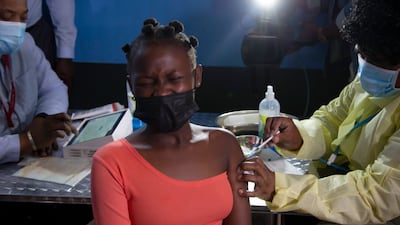
A young woman receives a Pfizer jab in Diepsloot Township near Johannesburg, South Africa. AP Photo -

A girl wearing a face mask rides on a merry-go-round at the Christmas market in Frankfurt, Germany. AP Photo -

People travel on a London underground tube train on the Jubilee Line, in London, during the pandemic. AP Photo -

People wait for the tram in Vienna, Austria, amid the crisis. AP Photo -

A woman passes by an empty terrace in the Marrolles quarter in Brussels, Belgium. AP Photo -
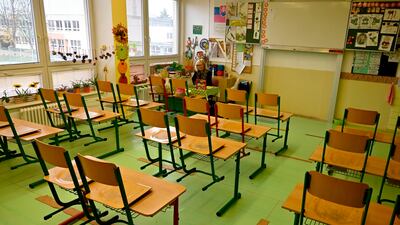
A teacher gives online lessons via webcam at the temporarily closed elementary school in the town of Trebisov, eastern Slovakia. TASR via AP -

Hairdressers and clients wear masks in Amsterdam, Netherlands. AFP -

A man disinfects seats for tourists at a beach in Kuta, Bali, Indonesia. EPA -
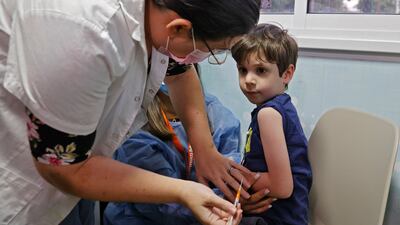
Israeli boy Itamar, 5, receives a dose of the Pfizer/BioNTech Covid-19 vaccine at the Meuhedet Healthcare Services Organisation in Tel Aviv. AFP -

A patient suffering from Covid-19 is admitted in the intensive care unit of the Basaksehir Cam and Sakura City Hospital in Istanbul, Turkey. Reuters -
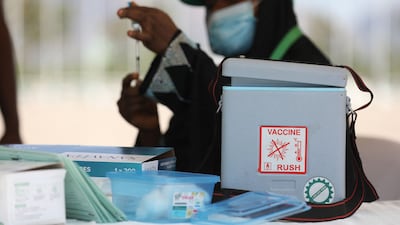
A health worker prepares to administer the AstraZeneca jab in Abuja, Nigeria. AFP


The variant multiplies about 70 times quicker than original versions of the coronavirus in the bronchial tubes leading to the lungs and 10 times slower in the lung tissue itself.
That means it is less likely to damage the lungs.
But this process may explain why young children are being treated in record numbers.
Children under the age of 5 are more prone to bronchiolitis because their bronchial tubes are so small.
And when Omicron affects the upper respiratory tract, it can cause swelling of those tubes, leading to bronchiolitis and croup-like symptoms with a harsh barking cough.
Doctors in the US have said they are seeing more croup-like symptoms in children with the variant.
Most cases of croup are mild and can be treated at home. But it can become serious, particularly in very young children.
Some countries have been forced to reopen their specialist Covid wards for children because of increased demand in recent weeks.
The number of Covid-19 patients requiring treatment at a newly-reopened centre in Israel rose from 10 to 59 in one week.
Of those, 20 were reported to be in a serious condition.

