

Live updates: follow the latest news on Covid-19 variant Omicron
Children aged 2 and under make up the highest percentage of Covid-19 patients admitted to hospital in Gauteng, the South African epicentre of the outbreak.
Pubic health spokeswoman Dr Waasila Jassat said the country was starting to see a “slight increase” nationally in the number of admissions.
However, there had been “significant increases” over the past two weeks in the province of Gauteng, from 18 admissions a day to 49.
The new Omicron variant has rapidly overtaken Delta to become the dominant variant in Gauteng, a province that accounts for the vast majority of the country's cases.
There were about 455 admissions from November 11 to 28 in the Gauteng city of Tshwane, where eight people have died, Dr Jassat said during a televised government media briefing on Monday.
In Tshwane, which has recorded the highest increases in admissions, there has been “a very sharp increase”, particularly in the past 10 days, she said.
“When you look at the numbers of admissions by age, what we normally see is a large number of admissions in older people,” she added.
“But in this early resurgence in Tshwane, we are seeing most admissions in the 0-2 age group.
“And we are seeing a large number of admissions in the middle ages, sort of around 28 to 38.”
She said “very high proportions” of young children were being admitted — more than 70 per cent of cases in the 4-and-under age group.
The percentage was much lower in other child age groups, at about 10 per cent in children aged 5 to 9 and slightly less for the age 10-19 group.
However, the percentage of young children admitted with comorbidities, or underlying conditions, was “quite low,” at about 1 per cent.
More than 5 per cent of children aged 5 to 9 who were admitted had underlying conditions, she said. The percentage was slightly less for the 10-to-19 group.
Almost 30 per cent of children aged 4 or under had “severe disease”. The percentage of those admitted with severe disease was slightly higher for the five-to-nine age group, at more than 30 per cent. It was slightly less for the age 10-19 group at about 27 per cent.
-
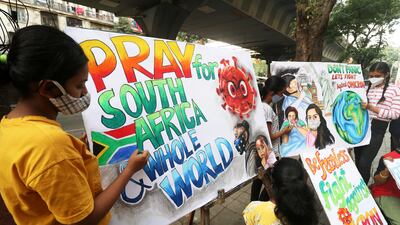
Indian students apply the finishing touches to paintings created to raise awareness of the variant in Mumbai. Reuters -

International travellers wearing personal protective equipment arrive at Melbourne's Tullamarine Airport as Australia records its first cases of the Omicron variant. AFP -
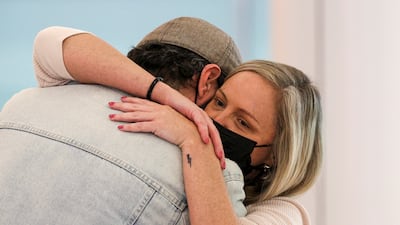
A greeting at the international terminal of Sydney Airport, as countries respond to the new variant. Reuters -
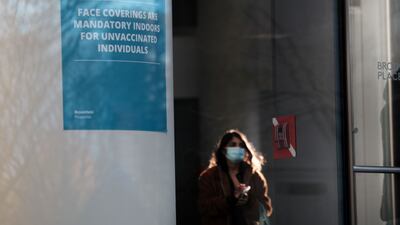
A sign asking people to wear face coverings in a building in Manhattan as the newly discovered Omicron variant appears in countries around the world. AFP -
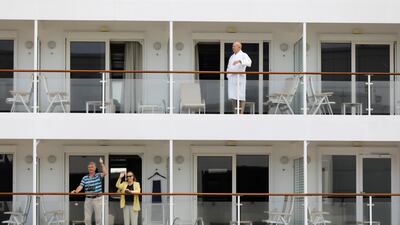
Tourists wave as the ‘Europa’ passenger liner arrives in South African waters off Cape Town as the new coronavirus variant Omicron spreads in other countries. Reuters -
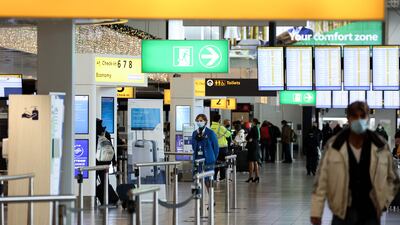
Schiphol airport in Amsterdam. Dutch health authorities said they have found another case of the Omicron Covid-19 variant among passengers arriving from South Africa, bringing the country’s total to 14. AFP -
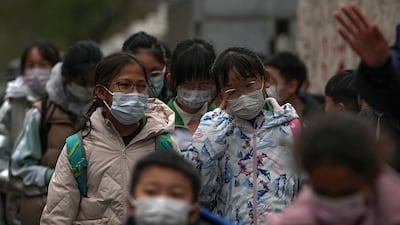
Pupils wear face masks in Beijing. Despite the global worry, scientists say it remains unclear whether the Omicron variant is more dangerous than other strains of the virus. AP -
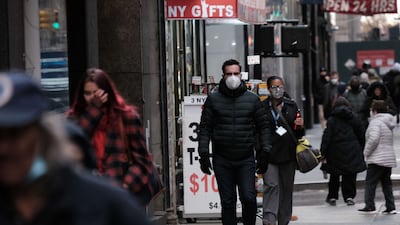
People wearing face masks in Manhattan. New York's governor has declared a state of emergency due to the risk of a surge of Covid-19 cases as winter sets in. AFP -

British Health Secretary Sajid Javid meets a member of staff at a vaccine centre in Guy's and St Thomas' Hospital, London. Getty Images -
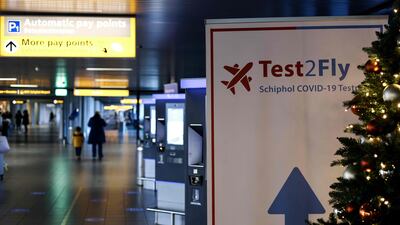
A sign points the way to a Covid-19 test centre at Schiphol Airport in the Netherlands. AFP -
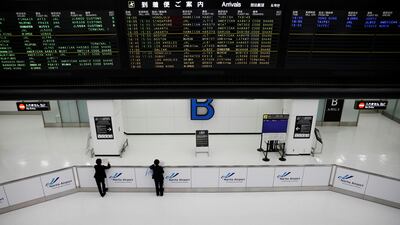
Narita International Airport in Japan is quiet after travel was restricted to prevent the spread of Omicron. Reuters -
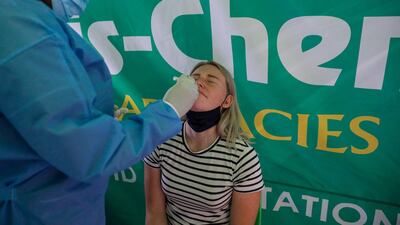
A PCR test at O.R. Tambo International Airport in Johannesburg. AFP -
Soekarno Hatta International airport. Indonesia has banned the arrival of travellers who have recently been in eight southern African countries. Reuters -
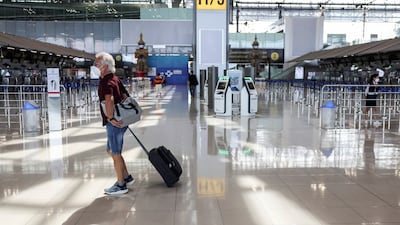
Suvarnabhumi Airport in Bangkok after Thailand banned entry from eight southern African countries due to the Omicron variant. Reuters -
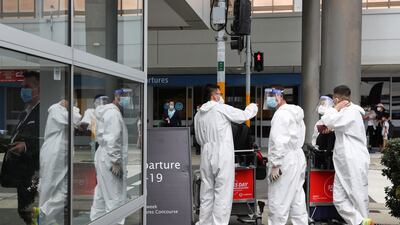
Travellers wear personal protective equipment outside the international terminal at Sydney Airport, Australia. Reuters -

Passengers wearing protective gear at Incheon International Airport in South Korea, where health authorities have imposed an entry ban on foreign arrivals from eight African countries, including South Africa. EPA -
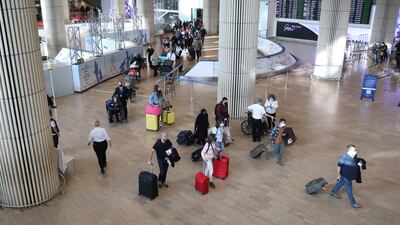
Ben Gurion International Airport near Tel Aviv. The Israeli government approved a 14-day ban on foreign arrivals over concerns about Omicron. EPA -
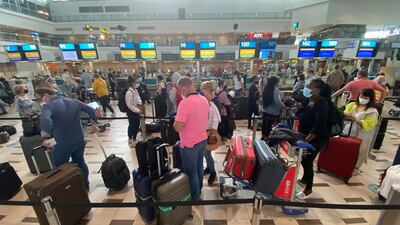
Travellers queuing in the hope of boarding an overbooked Lufthansa flight at Cape Town International Airport. Antonie Robertson / The National -

Covid-stricken Czech President Milos Zeman sits in a plastic cage as he appoints Petr Fiala as Prime Minister, near Prague. AFP -
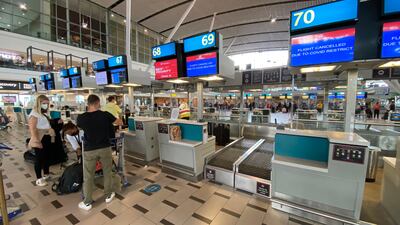
Tourists checking in at Cape Town International Airport in South Africa. Antonie Robertson / The National -
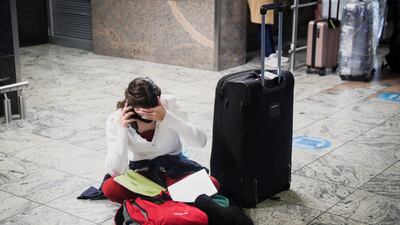
Several airlines have stopped flying out of South Africa amid the spread of the new variant, causing disruption at O.R. Tambo International Airport in Johannesburg. Reuters -
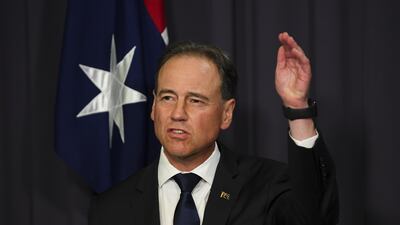
Australian Health Minister Greg Hunt at a press conference at Parliament House in Canberra. Two cases of the recently discovered Omicron variant were detected in New South Wales. EPA -
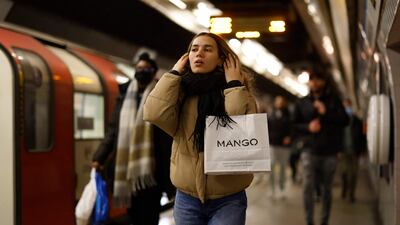
Passengers, many not wearing face coverings, on the London Underground. Health Secretary Sajid Javid said mandatory mask-wearing would return to shops and public transport in England but there are concerns over how the rule will be enforced. AFP -
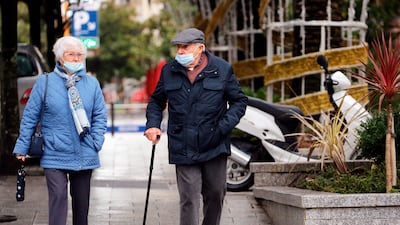
A stroll, with face masks, in Biarritz, south-western France. French Health Minister Olivier Veran said France had no confirmed cases of the Omicron variant and was not changing its strategy of increasing vaccinations and booster shots. AP -
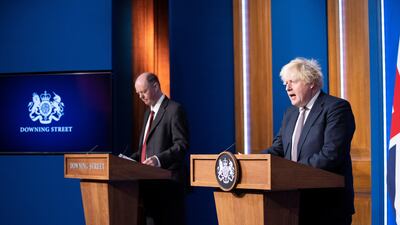
British Prime Minister Boris Johnson and Chief Medical Officer Chris Whitty during a press conference on the variant in London. Reuters


“The increase in admissions in young children under 2 could just be precautionary. We don’t have enough information yet,” said Dr Jassat.
“But the indications are not that they are more severe than they have been in the past.
“I think what’s important for us to note is that while we do hospital surge preparedness, this time we may need to look at paediatric preparedness, especially.”
There were eight deaths in the two weeks from November 14 to 28.
Most occurred in older groups, aged 60 to 69. About 1.5 per cent of children aged 4 and under admitted to hospital died. There were no deaths among children aged 5 to 19 in the two-week period.
“It doesn’t look at the moment like there is any increase in severity, but it is early. Admissions do lag about two weeks after cases and it takes some time for patients to have an outcome, so this is something we will watch and give more information in the coming weeks,” said Dr Jassat.
The “vast majority” of those admitted to hospital were unvaccinated.

