

The UAE and Egypt have entered into an agreement to build one of the world's largest wind farms in Egypt.
President Sheikh Mohamed and Egyptian leader Abdel Fattah El Sisi witnessed the signing of an agreement between Masdar, Egypt's Infinity Power and Hassan Allam Utilities to develop a 10-gigawatt onshore wind project.
The memorandum of understanding was signed in Sharm El Sheikh by Dr Sultan Al Jaber, Minister of Industry and Advanced Technology, Special Envoy for Climate, and chairman of Masdar.
Sheikh Mohamed said the deal was "consistent with our commitment to advance renewable energy solutions that support sustainable development".

Dr Al Jaber said the scale of the project — "one of the largest winds farms in the world" — was a "testament to the renewable energy ambitions of the United Arab Emirates and the Republic of Egypt, and demonstrates Masdar’s status as a global leader in clean energy".
When completed, the 10-gigawatt wind farm will produce 47,790 gigawatt hours of clean energy annually and offset 23.8 million tonnes of carbon dioxide emissions — equivalent to about 9 per cent of Egypt’s current carbon dioxide output.
The project will be part of Egypt’s Green Corridor initiative — a grid dedicated to renewable energy projects — and will contribute to Cairo's goal of ensuring renewable energy makes up 42 per cent of the country's energy mix by 2035.
The wind farm will also save Egypt an estimated $5 billion in annual natural gas costs, and help create as many as 100,000 jobs, state news agency Wam said.
Direct employment in the construction phase is estimated at about 30,000 jobs, with as many as 70,000 people being employed indirectly. After construction, about 3,200 jobs will be added for operation and maintenance.
The world's largest wind farm is in Gansu, China. It can generate 20 gigawatts.
In April, Masdar and Hassan Allam Utilities signed two deals with Egyptian state-backed organisations to co-operate on the development of 4-gigawatt green hydrogen production plants in the Suez Canal Economic Zone and on the Mediterranean coast.
In the first phase of the project, a green hydrogen manufacturing facility will be developed and operational by 2026, able to produce 100,000 tonnes of e-methanol annually for bunkering in the Suez Canal.
-

President Sheikh Mohamed attends the Cop27 climate conference at the Sharm El Sheikh International Convention Centre in Egypt. Hamad Al Kaabi / UAE Presidential Court -
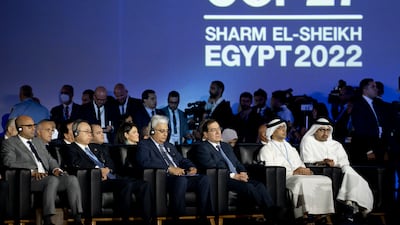
Sheikh Abdullah bin Zayed, UAE Minister of Foreign Affairs and International Co-operation, right, and Sheikh Mansour bin Zayed, UAE Deputy Prime Minister and Minister of the Presidential Court, second right. Hamad Al Kaabi / UAE Presidential Court -
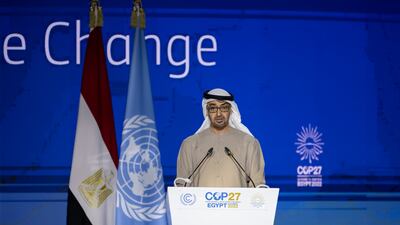
Sheikh Mohamed addresses Cop27. Hamad Al Kaabi / UAE Presidential Court -
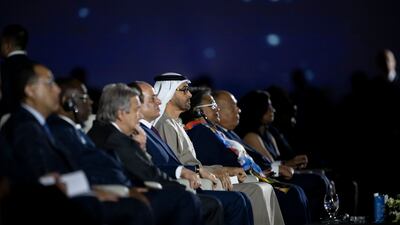
Sheikh Mohamed with Egypt's President Abdel Fattah El Sisi, fourth left. Hamad Al Kaabi / UAE Presidential Court -
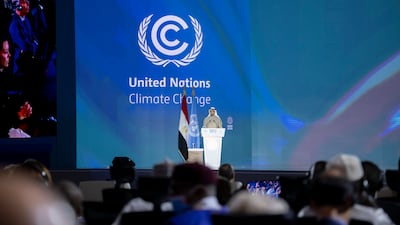
Sheikh Mohamed delivers a speech during the conference. Hamad Al Kaabi / UAE Presidential Court -
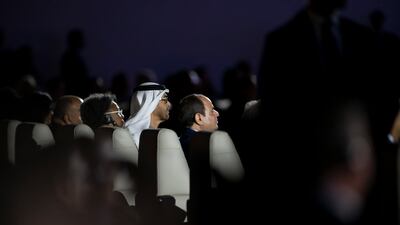
Sheikh Mohamed and Mr El Sisi, right. Hamad Al Kaabi / UAE Presidential Court -
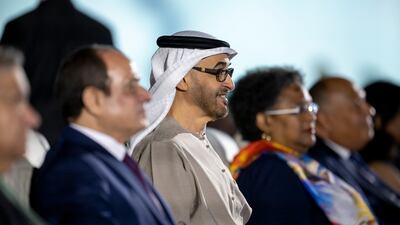
Sheikh Mohamed, with Mr El Sisi to his right. Hamad Al Kaabi / UAE Presidential Court -
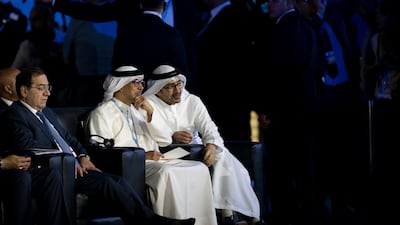
Sheikh Abdullah and Sheikh Mansour. Hamad Al Kaabi / UAE Presidential Court -
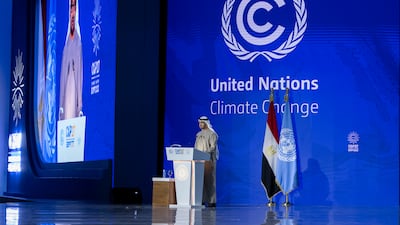
Sheikh Mohamed. Hamad Al Kaabi / UAE Presidential Court -
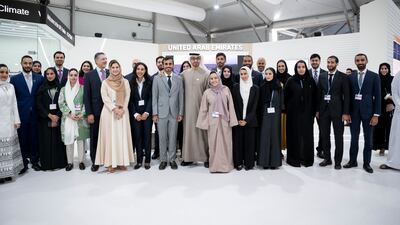
Sheikh Mohamed, centre, and other dignitaries. Rashed Al Mansoori / UAE Presidential Court -

Sheikh Mohamed with Prince Salman bin Hamad, Crown Prince and First Deputy Supreme Commander of Bahrain, and other dignitaries. Rashed Al Mansoori / UAE Presidential Court -
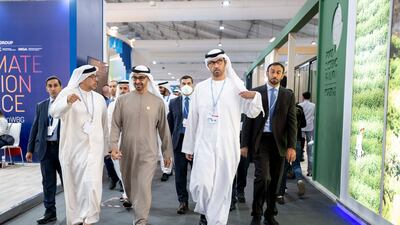
Sheikh Mohamed, second left, tours the conference. Rashed Al Mansoori / UAE Presidential Court -
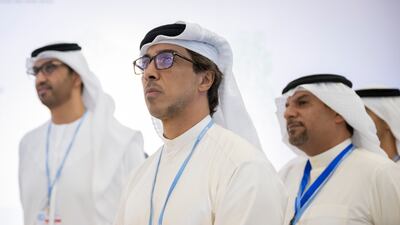
Sheikh Mansour, centre, visits the Bahrain Pavilion. With him is Dr Sultan Al Jaber, Minister of Industry and Advanced Technology, UAE Special Envoy for Climate Change and chairman of Masdar. Rashed Al Mansoori / UAE Presidential Court -
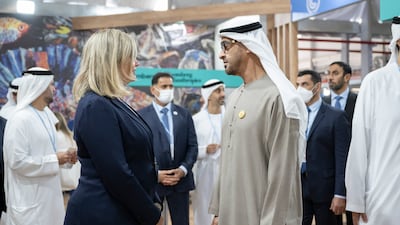
Sheikh Mohamed, right. Rashed Al Mansoori / UAE Presidential Court -
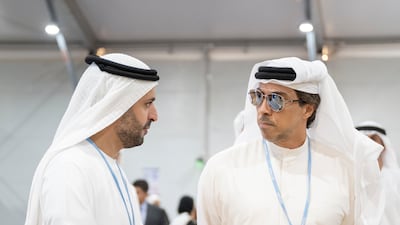
Sheikh Mansour, right, and Sheikh Mohamed bin Hamad, private affairs adviser for the Presidential Court. Rashed Al Mansoori / UAE Presidential Court -
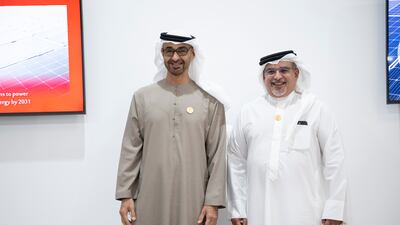
Sheikh Mohamed with Prince Salman of Bahrain. Rashed Al Mansoori / UAE Presidential Court -
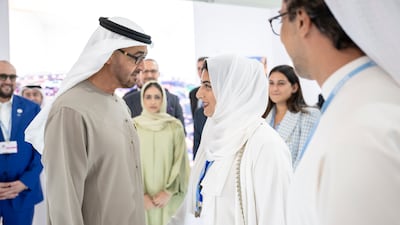
Sheikh Mohamed speaks with Sheikha Shamma bint Sultan. Rashed Al Mansoori / UAE Presidential Court -
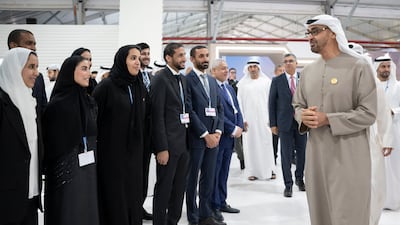
Sheikh Mohamed visits the UAE Pavilion. Rashed Al Mansoori / UAE Presidential Court -
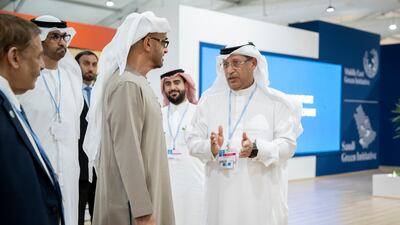
Sheikh Mohamed visits the Saudi Arabia Pavilion. Seen with Dr Al Jaber. Rashed Al Mansoori / UAE Presidential Court -

Sheikh Mohamed with UK Prime Minister Rishi Sunak. Hamad Al Kaabi / UAE Presidential Court -
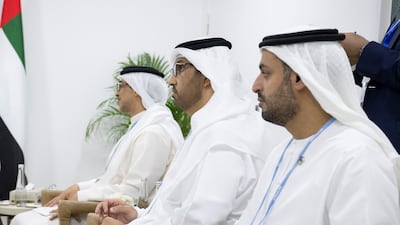
Sheikh Mansour, Dr Al Jaber and Sheikh Mohamed bin Hamad. Hamad Al Kaabi / UAE Presidential Court -
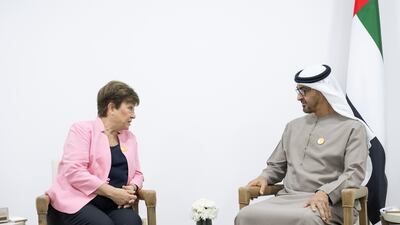
Sheikh Mohamed meets with Kristalina Georgieva, managing director of the International Monetary Fund. Hamad Al Kaabi / UAE Presidential Court -
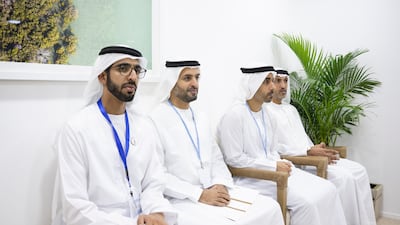
Sheikh Shakhbut bin Nahyan, UAE Minister of State, Sheikh Mohamed bin Hamad, Sheikh Hamdan bin Mohamed and Mohamed Al Mazrouei, undersecretary of the Presidential Court. Hamad Al Kaabi / UAE Presidential Court -
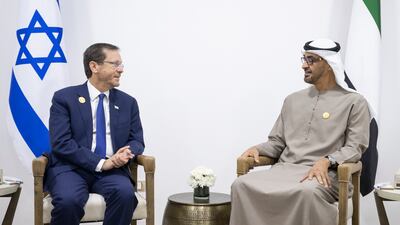
Sheikh Mohamed meets with President of Israel Isaac Herzog. Hamad Al Kaabi / UAE Presidential Court -
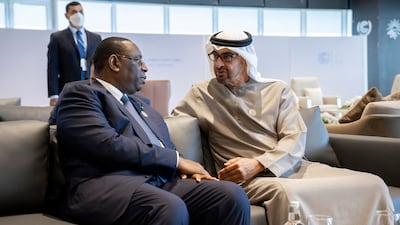
Sheikh Mohamed and Macky Sall, president of Senegal. Hamad Al Kaabi / UAE Presidential Court -
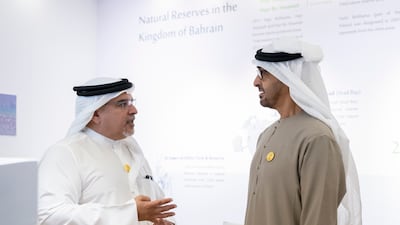
Sheikh Mohamed visits the Bahrain pavilion with Prince Salman. Rashed Al Mansoori / UAE Presidential Court -
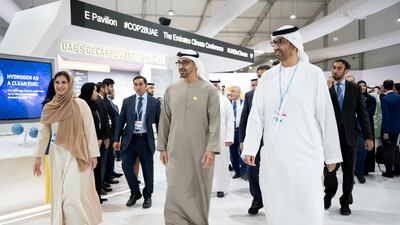
Sheikh Mohamed tours the conference with Dr Al Jaber. Rashed Al Mansoori / UAE Presidential Court



