
Tucked away on the outskirts of Al Ain, scientists at the UAE's Plant Genetic Resource Centre – part seed vault, part futuristic lab – are working to safeguard the botanical future of a nation better known for its desert sands than its native flora.
The centre, run by the Environment Agency Abu Dhabi, is not just a storehouse of seeds, but a living archive of the UAE's natural resilience.
"We have more than 600 native species of plants in the UAE," said Salama Al Mansoori, a specialist in plant preservation at the facility. "What makes our work unique is the integration of traditional conservation methods with cutting-edge technologies preserving DNA, tissue, live plants and seeds under one roof."
-
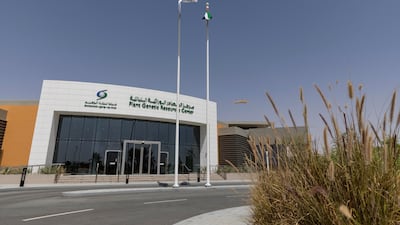
Abu Dhabi’s Plant Genetic Resource Centre, the first-of-its-kind in the region. All photos: Antonie Robertson / The National -

The centre was established for the conservation of the UAE’s native flora -
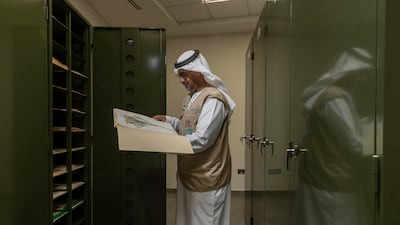
Specialist Faisal Alkhazraji in the centre's herbarium -

Mohammed Khalaf Obaid Hayez, specialist in terrestrial protected areas management, inside the freezer where seeds are stored at a temperature of -20°C. Antonie Robertson/The National -
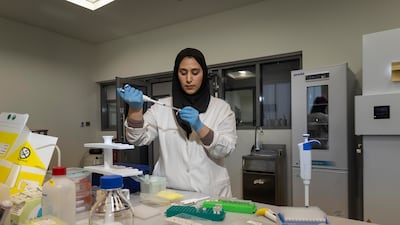
Salama Rashed Almansoori, specialist in plant conservation, Antonie Robertson/The National -
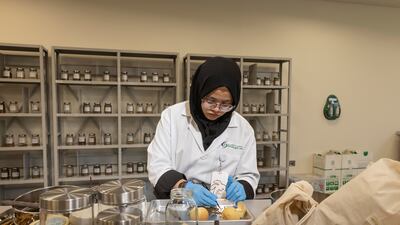
Nuri Asmita works in the seed collection area -
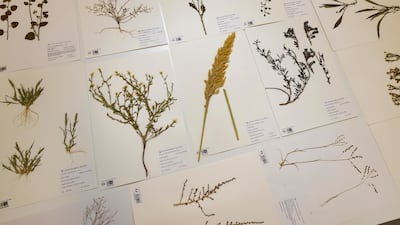
Dried and catalogued flora at the centre -
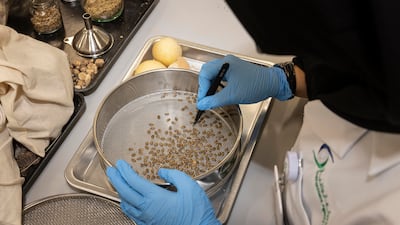
Ms Asmita studies seeds -
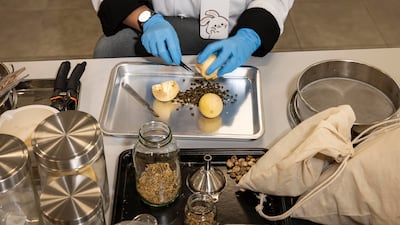
The centre works to preserve the UAE's genetic diversity -

Catalogued seeds at the centre -

The centre's glass house, where native plants are grown in a controlled environment


From the outside, the building is striking in its circular-design, inspired by the national Ghaf tree – with curved outer walls patterned to mimic the veins of a leaf. The structure is made using natural terracotta to maintain coolness, with solar panels integrated into infrastructure to generate a quarter of the centre's electricity. But it's inside that the UAE's most ambitious efforts to conserve plant life are quietly blooming.
The centre, which opened in March 2024, is the first of its kind in the country, designed to biobank plant species from across the Emirates using a mix of traditional and state-of-the-art techniques.
Freezing the future
This facility plays a vital role in conserving the seeds and genetic material of native and cultivated plants, ensuring the UAE’s agricultural resilience in the face of climate change, as researchers gather samples of local plants from different locations to understand how they are adapting to environmental factors.
To archive and preserve findings – plant seeds and tissue samples are stored in optimal conditions.

"Welcome to the Arctic," said Mohammed Khalaf Obaid Hayez, whose title is specialist in terrestrial protected areas management, as he opened the doors to the freezer section, where the temperature of -20°C can keep the specimens viable for up to 100 years.
"Some plants don't produce seeds, or only reproduce through rhizomes (underground stems)," Ms Al Mansoori said. "So we also use tissue culturing, cryopreservation, and even 3D imaging to document and protect them."
The centre's approach is holistic, bringing together scientific research, public education and global environmental commitments. It operates in line with the international conservation treaties and provides critical plant materials for researchers across the UAE and beyond.
"It's not just about storage," Ms Al Mansoori said. "It's about understanding our local plant biodiversity."

Decoding the blueprint of local plants
The team at the centre have been working to map the genome sequencing of local plants. So far, 12 species have been mapped. This initiative aims to decode the genetic blueprints of the UAE's more ecologically significant plant species.
The first phase of the project focused on six native species renowned for their adaptability to harsh environments, such as local mangroves vital for coastal protection, and the dwarf palm, which is heat resistant and water efficient.
The project's second phase has just been completed, targeting species with high ecological value and potential for climate resilience and land restoration such as "Orchradenus arabicus" – a salt tolerant plant ideal for degraded land restoration and pollinator support and "Halophila stipulacea" a species of seagrass that stat stabilises sediment and supports marine life.
"By decoding their genetic traits, we can identify the most resilient populations for future propagation, support reforestation and rehabilitation programmes, and enhance biodiversity monitoring," she said.

A first for Fungi in the UAE
Earlier this month the centre launched the UAE's first fungarium. Creating a repository to archive and assess local mushrooms and fungi.
So far 10 mushroom species have been documented at the lab, with a new species being noted in the UAE for the first time. The new species of note is the Ganoderma colossus, usually found in Central and South America, and equatorial Africa.
Ms Al Mansoori said understanding local mycelium networks could hold the key to understanding potential impacts on local crops, or even hold the key to new medical advancements.
International reach, local roots
The centre is looking to expand its academic footprint – with a one week "hands on" academic programme set to launch for students from the age of 15.
"They will do two functions, mainly going to sort the seeds and the herbarium, and some work in the glass house," said Ms Al Mansoori. This, she hopes will help the next generation to form a connection with local plants and the environment.

