


More than 47,000 species around the world are threatened with extinction, according to the latest update of a global Red List of endangered animals, plants and other organisms.
The figures from the International Union for Conservation of Nature highlight how factors such as deforestation and the expansion of agricultural and urban areas are causing an irreversible loss of species.
Plants and animals from the Middle East are among those threatened, with species of frankincense trees on Socotra, Yemen, now more at risk of extinction than in previous assessments. In total, 169,420 species of all kinds and from around the world have been assessed for the Red List, with 47,187 threatened.
Dr Alexander Lees, a reader in biodiversity at Manchester Metropolitan University, told The National that the loss of biodiversity, including species extinctions, had been characterised “as a planetary tipping point that we have collectively breached”.
“Extinctions are ongoing, despite lots of effort expended to try and save some of the most threatened species,” he said. “Historically, many of these took place on islands which were particularly vulnerable to impacts from invasive species, but now we are seeing the global extinction of continentally distributed species.”

What are the causes and consequences?
Additional factors threatening species include hunting and trapping, wildfires, pollution, invasive species and climate change. Dr Lees also indicated that species losses could have knock-on effects for people. For example, hornbills in South-East Asia can be vital for dispersing the seeds of trees, which is needed to extract carbon.
Conservation and sustainable development efforts had for too long performed interventions to address symptoms of the climate crisis, instead of addressing underlying causes, he added. “We need to mitigate the direct and indirect drivers at the root cause of the problems – our unsustainable patterns of production and consumption, our prevailing laws and policies, and even our norms, values and world views,” he said.
Biologists often say the world is experiencing its sixth mass extinction and, because only a fraction of species have been assessed for the Red List, the real number at risk of disappearing is likely to be much higher than is indicated by official figures.
What is the Red List?
The Red List classifies species as extinct, extinct in the wild, critically endangered, endangered, vulnerable, near threatened and of least concern.
Critically endangered, endangered and vulnerable organisms are considered to be threatened. There are two additional categories – data deficient, if insufficient information is available, and not evaluated.
Last year marked 60 years since the Red List was launched, with the IUCN World Conservation Congress to be held in Abu Dhabi in October.
Fungi protection takes centre stage
Fungi, which belong in their own kingdom and are neither animals nor plants, are a particular focus of the latest update. At least 411 of the 1,300 species assessed are at risk of extinction but, with there being about 155,000 known fungal species, less than one per cent have been analysed.
Dr Gregory Mueller, co-chairman an IUCN group that looks at certain types of fungi, told The National that until recently “there was no awareness that there were fungi that were threatened”.
It has become increasingly clear, however, that they are dependent on specific habitats, so they can be put at risk by the destruction of natural environments. “We now have enough information that we can say, yes, there are important groups of fungi that are threatened with extinction,” he added.
Fungi are essential for ecosystems because between 80 to 90 per cent of plants have a symbiotic or mutually beneficial relationship with fungi. The fungi contribute nutrients and the plants provide sugars from photosynthesis.
“Without these suites of fungi, our above-ground [environments], our trees and grassland and whatever else, would not be doing well,” Dr Mueller said. “On top of that, these are the fungi that are greatly involved with carbon sequestration. The trees capture carbon through photosynthesis and then that carbon is moved into the soil, into the fungi, and it’s the fungi that provide this long-term sequestration and put it deep into the soil.”
He added that fungi were “super important for the natural vegetation” of the Middle East. “The fact that [it has] a drier habitat, a desert climate, doesn’t mean that the vegetation is not dependent upon these fungi for their growth and survival,” he explained.
To protect fungi required better forest management, he said. That includes leaving enough mature trees when clearing areas, so habitats remain in place for fungi as forests are regenerated. Ensuring that clear cutting or mining does not take place in areas with threatened fungal species is also important.
Frankincense threatened
Six species of frankincense tree on Socotra have been moved from the vulnerable to the endangered category, indicating heightened concern. Three other species, assessed for the first time, have been classified as critically endangered.
One reason why the trees are threatened is a growth in the size of goat herds, which graze on the saplings. More frequent cyclones, flash floods and landslides have also damaged and uprooted trees.
Mohammed Amer, who manages a project to conserve the frankincense trees on Socotra, and who contributed to the IUCN assessment, said in a statement that the trees were “very important to our culture”. He added that local action was “essential to secure the future of Socotra’s frankincense trees”.
“Through building fences around young trees, local communities can protect them from goats, and produce frankincense honey for additional income,” he said.
The resin and bark of frankincense trees is used by indigenous people on Socotra, in traditional medicine and for religious practices. Although this use is currently well managed, the organisation said it must remain “local and proportionate to the rarity of the trees”.
Species in danger of extinction - in pictures
-
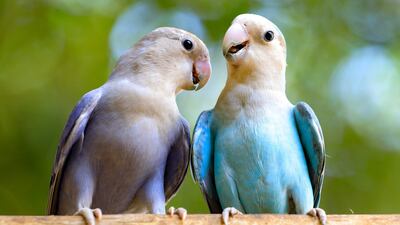
Some of the planet’s most stunning creatures, including giraffes and parrots, are at risk from global warming and other human-induced environmental change, the UN has warned. Photo: AFP -
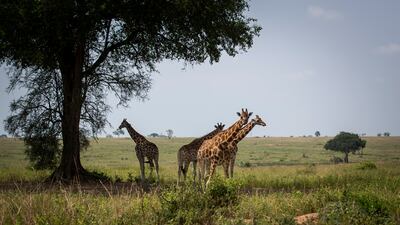
Giraffes stand by the shade of a tree in Murchison Falls National Park, Uganda. Photo: AP -
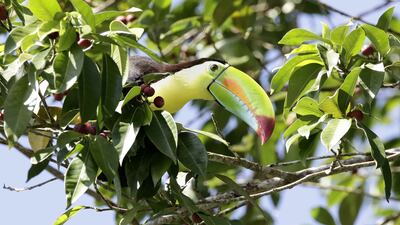
Some analysts have concluded that the likes of toucans, puffins and hummingbirds may face particularly uncertain futures. Photo: EPA -
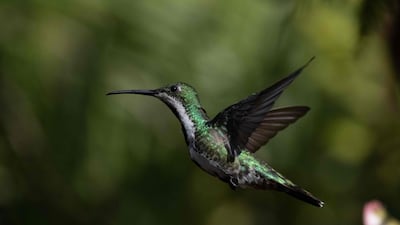
A hummingbird flies at a garden in Caracas, the capital of Venezuela. Photo: AFP -
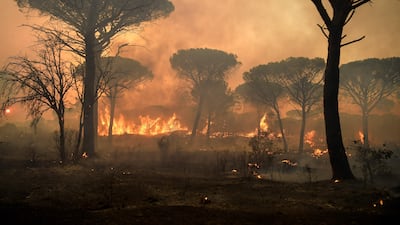
Wildfires in southern France. Tree species are facing several threats including an increase in the frequency of wildfires due to climate change and deforestation because of industry, agriculture and firewood. Photo: AFP



