


Apple is preparing to unveil the next iteration of its flagship iPhone on September 7, and we have heard all about the rumoured features and new designs.
The series, which is expected to be called iPhone 14, will feature four devices and some design updates.
As we wait for the official launch to find out what exactly the new devices offer, here are seven things we would like to see in future iPhones.
Solar charging
Apple has been heavily promoting its sustainability agenda, and part of that strategy is removing charging blocks and EarPod headsets from iPhone boxes in recent years. Why not step it up a notch with solar charging?
Admittedly, there could be limited use for this, depending on which part of the world you live in and also whether you are able to sit somewhere under the sun and let your iPhone be exposed to it.
Unless, of course, Apple is able to build some technology around it that would detect the sun's rays even while one is walking — that would be particularly beneficial in a place such as the UAE.
However, there is also the issue of whether or not the device could overheat, and how the feature would work if the phone has a protective casing, so a lot of safety nets and other considerations will need to be in place for solar charging to work.
Unbreakable glass
The current generation of iPhones uses scratch-resistant ceramic with oleophobic coating (oil repellent, in simple terms), and the devices are quite durable.
However, they are still prone to damage, especially if scratched from a bad angle and, worse, dropped from a significant height.
An iPhone with unbreakable glass can address these issues, but that would definitely mean a bump-up in costs. Although those with slippery hands might not mind paying an additional amount to keep their devices scratch-free and safe.
-

The iPhone through the ages: Former Apple CEO Steve Jobs introduces the iPhone to the world in San Francisco, California, on January 9, 2007. It had a 3.5-inch screen and 2MP camera. Reuters -

The iPhone 3G was launched in 2008 with a faster 3G connection. It also added location services. Reuters -
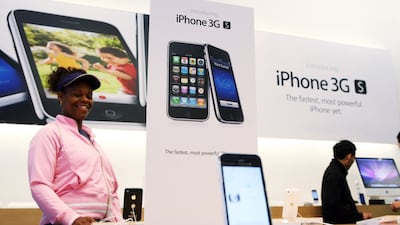
The iPhone 3GS was released on June 19, 2009. It was twice as fast as its previous version. AFP -

The iPhone 4 was released on June 24, 2010. It featured FaceTime for the first occasion as well as a retina screen. Reuters -

A later release, this time on October 14, 2011, the iPhone 4S had a new dual-core processor. Reuters -

Apple CEO Tim Cook takes to the stage following the reveal of the iPhone 5 in San Francisco, California, on September 12, 2012. This was the first 4-inch screen and the phone was faster and slimmer. Reuters -
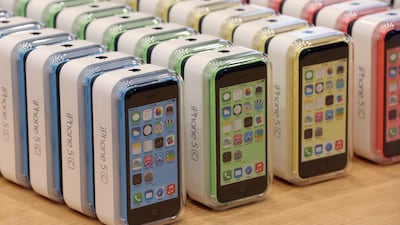
The iPhone 5C arrived on September 20, 2013 and was less expensive and very similar to the iPhone 5 except it came with colourful casing. Getty Images -
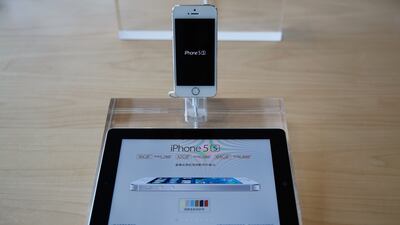
The iPhone 5s came at the same time as the 5C and introduced touch ID and a motion data processor as health and fitness apps started to come to the fore. Getty Images -
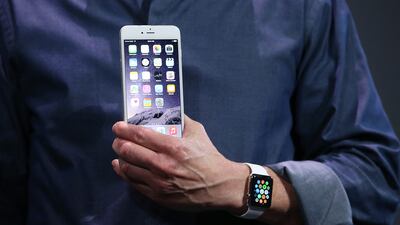
The iPhone 6 marked another double launch when unveiled on September 9, 2014. The 6 had a 4.7-inch screen, faster processor and improved camera. AFP -

The iPhone 6 Plus had a 5.5-inch screen and was $100 more expensive. Reuters -
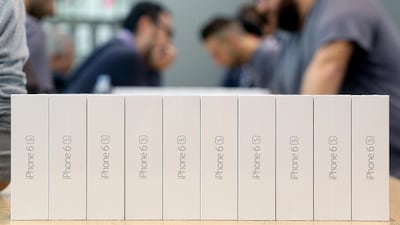
The iPhone 6s came on September 25, 2015 with 3D touch and a camera that could shoot 4K video. EPA -

The iPhone 6s Plus is displayed at Tokyo's flagship store on September 25, 2015. Both new phones came in a new colour - rose gold. AFP -
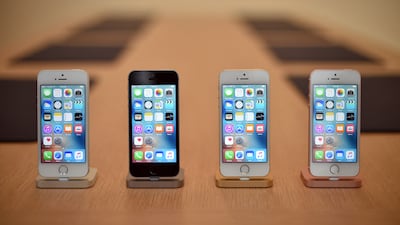
Unveiled on March 21, 2016, the iPhone SE had the same design as the iPhone 5 and saw a return to the 4-inch screen which was preferred by some users. It was more affordable and hence lacked features such as Touch ID. AFP -

The iPhone 7 announced on September 7, 2016, said somewhat controversially goodbye to the audio jack. Reuters -
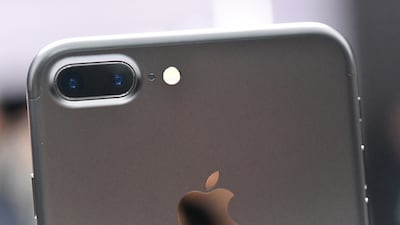
The iPhone 7 Plus had a dual camera added. AFP -

The iPhone 8 was released on September 22, 2017 and had a new glass and aluminium design, retina HD screen. Reuters -
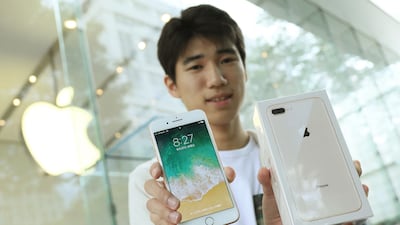
A customer gets his hands on an iPhone 8 Plus on launch day in Tokyo on September 22, 2017. The launches also saw speakers that were 25% louder and the most powerful and smartest chip in a smartphone (according to Apple). AFP -

The iPhone X marked a decade of iPhones on September 12, 2017. It's main changes were an edge-to-edge super retina screen. Touch ID was removed with Face ID introduced. Reuters -

The iPhone XS was released on September 21, 2018 and had a Super Retina OLED screen with improved scratch and water resistance. Face ID was faster. Reuters -

The iPhone XS Max had the largest iPhone screen to date at 6.5 inches. It could handle 3 million pixels. Reuters -
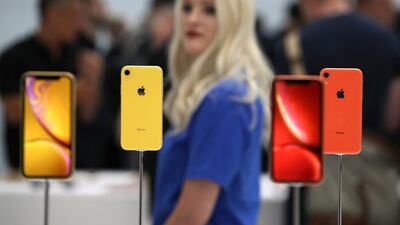
The iPhone XR was slightly cheaper than the XS and came with a 6.1-inch screen. AFP -
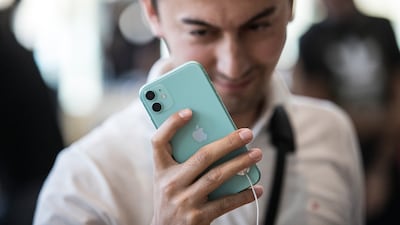
A customer looks at the iPhone 11 at an Apple store in Dubai Mall on September 20, 2019. EPA -
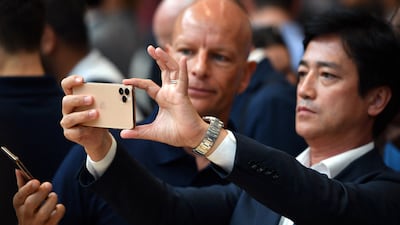
A man tries out the iPhone 11 Pro in Cupertino, California, on September 10, 2019. AFP -

Midnight Green was introduced for the iPhone 11 Pro Max, while there was also a new three-camera system. Reuters -
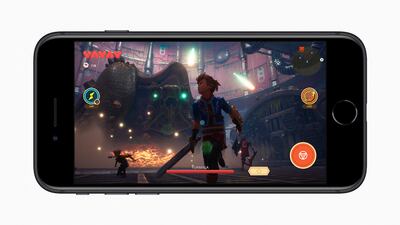
Arriving on April 15, 2020, the iPhone SE was for budget-minded customers and was pretty much a replica of the iPhone 8. Its 4.7-inch screen felt rather on the small side compared to the big screens of its big brothers. Apple Inc. / AFP -
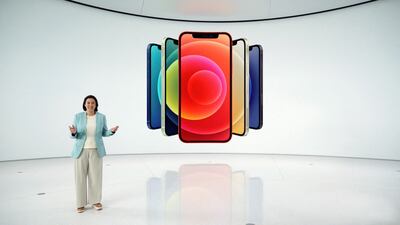
The iPhone 12 on October 13, 2020 introduced a new processor and a screen that offered four times better protection if dropped. Apple / AFP -

The iPhone 12 mini offered a 5.4-inch screen. Getty Images -
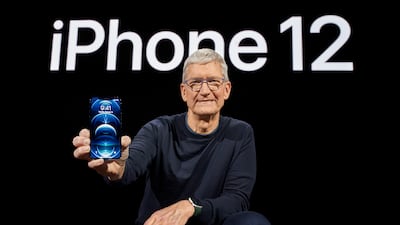
Mr Cook showcases the iPhone 12 Pro during an event at Apple Park in Cupertino, California, on October 13, 2020. This upgrade saw a faster chip, 5G speed, a "camera system that’s killer in low light. A LiDAR Scanner for more realistic AR. And two great sizes to choose from — including our largest display ever". Apple / EPA -

The iPhone 12 Pro Max was categorised as a 'legacy phone'. Reuters -
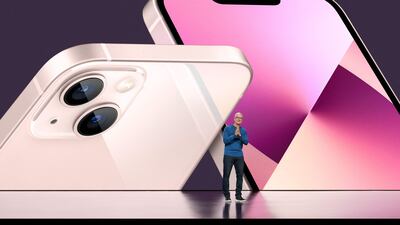
The new iPhone 13 was unveiled on September 14, 2021. It has a smart data mode which helps battery life, more 5G bands and antenna lines that use material made from recycled plastic water bottles. AFP -
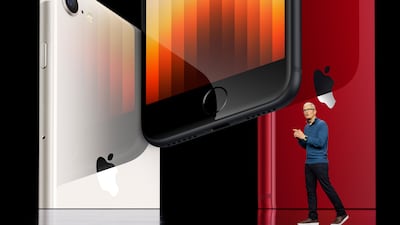
Apple CEO Tim Cook showcasing the third generation iPhone SE featuring 5G and the A15 Bionic chip on March 8, 2022. EPA -
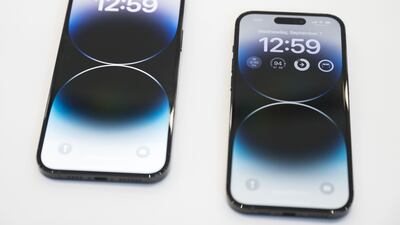
The Apple iPhone 14, 14 Plus, Pro Max and the Apple iPhone 14 Pro were unveiled during an event on September 7, 2022. It didn’t raise its US prices during one of the worst years for inflation in decades. The biggest addition was emergency calling after a car crash. Bloomberg


Foldable version
This one has been in the rumour mill for several years now, and when Samsung and Huawei first released their foldables, the original Fold and Mate X, in 2019, the focus naturally went to Apple as speculation mounted on its plans for its own foldable device.
Apple has filed patents for devices with foldable displays, as reported by data tracking website Patently Apple. Bloomberg's Mark Gurman, a reliable source when it comes to insider news at Apple, has also suggested that the company may be working on a foldable iPad.
There are concepts of foldable iPhones doing the rounds, but nothing official has been said on the matter so far. It won't be surprising to see Apple take its time for this feature while the company addresses the perceived flaws of foldable smartphones currently on the market.
Additional storage
So far, the largest internal storage on an iPhone is one terabyte, which was first used in last year's iPhone 13, and meant to address the needs of users who find a 512 gigabyte version inadequate for their needs.
However, 1TB may not be enough for a certain set of users, given how heavily they rely on their iPhones for activities such as filmmaking, which requires extensive storage.
Samsung was able to put in 1.5TB of storage in 2020's Galaxy S20 Ultra but that was a combination of 512GB of internal and 1TB of expandable memory. If Apple were to upgrade its storage further, it certainly is not expected to use a memory card.
Under-display camera
We are expecting the iPhone 14 to come with a pill-and-hole camera system on its display (goodbye, notch), which seems to be a signal that Apple will inevitably have an iPhone with an under-display camera soon.
The reason that Apple went for a notch, starting with the iPhone X, was to house the complicated hardware it used for its Face ID technology.
Now that it seems apparent that Apple has been able to cram it down to the pill and hole, it may be a signal that the company is closer to releasing a device with an under-display option.
The return of the fingerprint scanner
When the iPhone X was unveiled, fans of Touch ID were disappointed as it removed the convenience of having to unlock the device and approve transactions with a touch of their finger.
Some even argued that a fingerprint ID should be an option, much is the case with the rest of the competition.
Apple did keep Touch ID alive in its iPhone SE series but that is an entry-level device. Users would still want Touch ID back on high-end iPhones, and given its present build, probably the only way is to incorporate it under the display.
It is highly unlikely Apple would mess up the iPhone's famous rear design with a fingerprint sensor — unless it is buried underneath and coated so that it is unrecognisable.
Port-less iPhone
Truly wireless smartphones? This may be the ultimate culmination of these devices — for this era, at least, as we really don't know what the future holds, given how fast technology can advance.
Traditionally, four functions — audio, charging, SIM and data transfer — require ports or slots on a smartphone.
The first two have already been addressed by Bluetooth and wireless technology, and electronic SIMs are already a thing; we can do away with expandable memory with larger internal storage.
The last, however, could be the trickiest. While it is true that data transfer is achievable thought bluetooth, near-field communication and Wi-Fi — Microsoft, for example, has the faster Wi-Fi Direct on Windows 10 — there are still issues of speed, which holds back wireless charging too, and connection reliability.
These are both crucial factors when backing up huge amounts of data from an old iPhone and copying it on to a new device.
Another advantage of a port-less smartphone, at least in theory, is that it could make a device completely water and dust-proof, since there would be no more openings. Maybe Apple is developing something along these lines behind closed doors at its Park headquarters.

