

Samsung Electronics' Lee Jae-yong, professionally known as Jay Y Lee in the West, had his right to work at the company restored by South Korea, opening the way for him to formally take the helm of the country’s largest conglomerate that is battling global demand and supply shocks.
South Korean President Yoon Suk-yeol cleared the heir to the country’s biggest company of bribery charges, for which Mr Lee spent 18 months in prison before his release on parole a year ago.
Samsung’s shares rose 1.3 per cent in Seoul on the news.
The move comes as the global economy faces successive shocks from rising inflation, market disruption from the war in Ukraine and logistics challenges triggered by China’s “zero Covid” lockdowns, raising the threat of uncertainty for export-orientated South Korea.
Rising geopolitical tension between the US and China over chip technology also complicates long-term operation plans for Samsung, which runs big microchip manufacturing plants in the two largest economies.
“In a bid to overcome the economic crisis by vitalising the economy, Samsung Electronics vice chairman Lee Jae-yong, whose suspended prison term was ended recently, will be reinstated,” the Korean government said.
Mr Lee apologised to the Korean public on Friday and promised to “start anew”.
“I will try harder to give back to society and grow together,” he said.
Mr Lee, 54, has been granted a special pardon effective as of August 15, the country’s independence anniversary.
He had initially been sentenced to 30 months for alleged attempts to bribe a sitting president and win government support for his succession.
The reinstatement will allow him to rejoin the board at the technology company, as well as travel overseas for deals.
“Samsung is in a crisis as it has lost its two strengths: technology leadership and strict management,” said Park Ju-gun, head of corporate research at Leaders Index.
“There is an absence of a control tower making the right decisions at the right time to keep its leadership in the semiconductor industry.”
The pardon enables Mr Lee to officially regain his leadership role. Under the conditions of his parole, he was prevented from taking up employment for a period of five years and has only been receiving reports from company executives without having a proper board title.
Mr Lee is widely expected to expedite major strategic decisions ranging from chip-making deals to governance reforms.
Samsung, the world’s largest producer of memory chips, smartphones and mobile displays, warned during its earnings call last month that the Ukraine war, inflation and waning consumer demand made it immensely challenging to issue a forecast for the coming year.
_______________________
Samsung Galaxy phones through the years
-
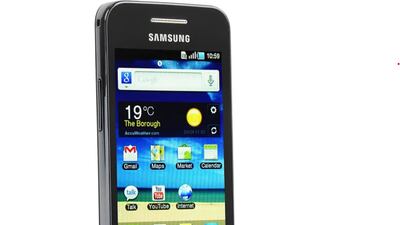
Samsung released its first Galaxy S phone in 2010, three years after the launch of the first Apple iPhone. It had a 4-inch (10.16 centimetre) Super AMOLED display and a five-megapixel rear camera. Photo: Samsung -
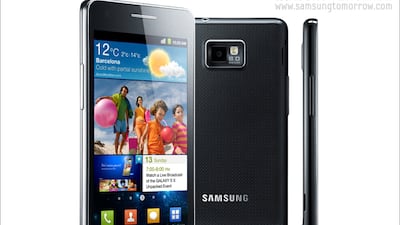
Samsung's Galaxy S2, released in 2011, looked, as you would expect, like a jump forward in terms of technology. The screen was slightly bigger, at 4.3 inches, while the rear camera was now 8MP. The device came with a dual-core processor. Photo: Samsung -
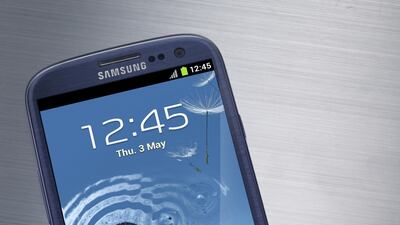
The Samsung Galaxy S3, which was released in 2012, was the first in the series to have an HD screen. The new design had a more rounded shape. It ran on the Android 4.0 Ice Cream Sandwich operating system. Photo: Samsung -
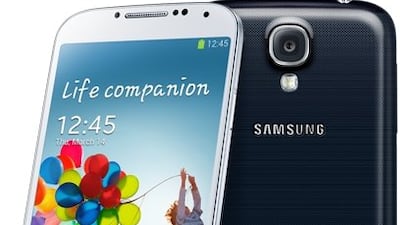
Samsung's Galaxy S4 was released in April 2013 and felt like a real competitor to the iPhone. Its processing power was increased, the screen was enlarged to five inches and the rear camera to 13MP. Photo: Samsung -
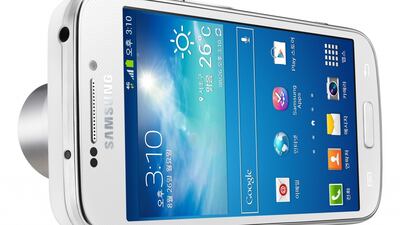
Ah, some innovation ... the Samsung Galaxy S4 Zoom came with an optical zoom lens on the back. Quirky, and not necessarily practical. Photo: Samsung -
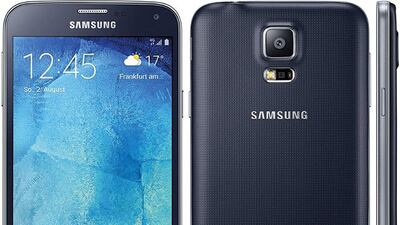
Samsung's Galaxy S5 arrived in 2014 and came with a plastic back which didn't feel particularly advanced. However, the phone itself had a 5.1-inch screen which produced beautiful colours (for the time). The S5 had a heart-rate monitor, was water-proof and had a 16MP rear camera. Photo: Samsung -
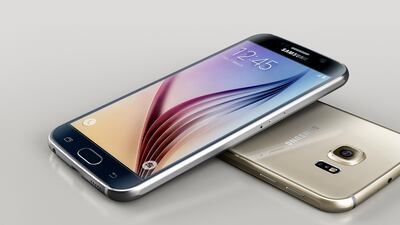
There was a big change in store for the Samsung Galaxy series in 2015. It launched the Galaxy S6 and S6 edge at the same time. Photo: Samsung -
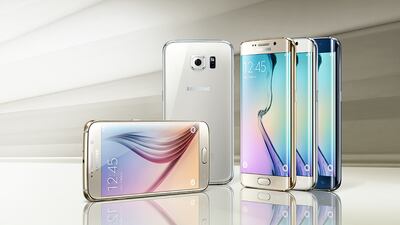
The Samsung Galaxy S6 edge was full metal and had two curved sides extending the screen. This was a big jump and a step ahead of Apple. Photo: Samsung -
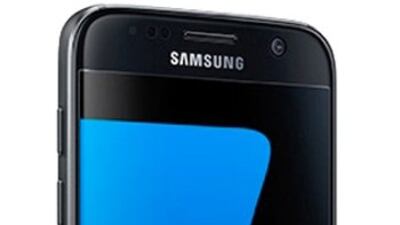
Samsung's Galaxy S7 came in 2016 and incorporated Samsung Pay. The 2K screen resolution was impressive. The edge version offered a wraparound display. Photo: Samsung -
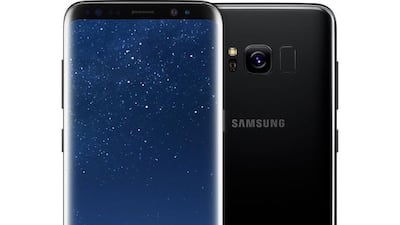
Both Samsung Galaxy S8 models had curved sides. A fingerprint button was moved to the back while a button on the side was introduced for voice assistant Bixby. Photo: Samsung -
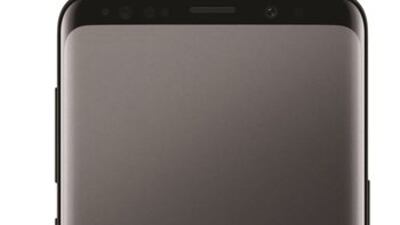
The Samsung Galaxy S9 arrived in 2018 and had a much stronger battery than the S8. Otherwise, it was a very similar product. Photo: Samsung -

Samsung's Galaxy S10 was released in 2019 and came with a triple-camera system. It had a punch-hole camera on the front and an UltraSonic fingerprint sensor. Photo: Samsung -
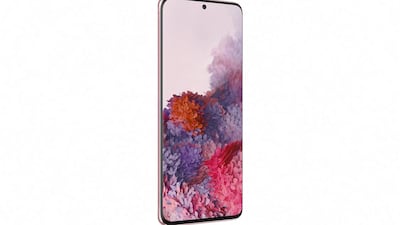
Samsung's 6.2-inch Galaxy S20 was 2020's offering and there were two other versions — the 6.7-inch S20+ and the 6.9-inch S20 Ultra. The phones were 5G-enabled. The S20 and S20+ came with 64MP cameras while the S20 Ultra came with a 108MP camera. Photo: Samsung -

The Samsung Galaxy S21 series came with bigger batteries, advanced computing, greater energy efficiency, improved cameras and enhanced privacy features. Samsung added a stylus to the S21 Ultra — a first in the series. Photo: Samsung -
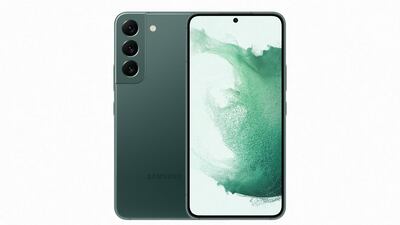
Samsung's Galaxy S22 was unveiled in February 2022, with the S22, S22+ and S22 Ultra, the last of which featured a slot to hold the S Pen, the signature accessory of the Note series. Photo: Samsung -

The Samsung Galaxy Note 3 was first launched in 2011 with its big screen and stylus functionality. The series continued until the Note 20 in 2020, when the stylus was moved to the S series. Photo: Samsung -
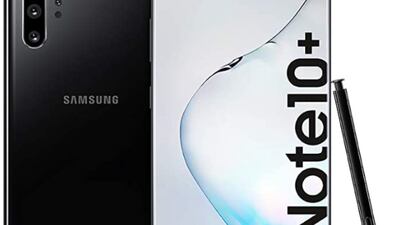
The release of the Note 10 in 2019 marked the first time Samsung offered a Plus model of its Note. It had a 6.8-inch display. Photo: Samsung -
The Galaxy Z Flip came in March 2020 and was like turning back time, with phone makers having tried flip phones many years before. It uses a hybrid glass coating called an Infinity Flex Display. Pawan Singh / The National -
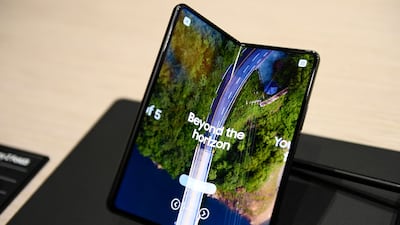
The Samsung Galaxy Z Fold was first unveiled in March 2019. It opened out horizontally to create a 7.3-inch tablet-style screen. AFP


_______________________
One of the key outstanding questions around Mr Lee is whether he will seek to take over as chairman of the technology company.
Ever since his father, Lee Kun-hee, passed away in October 2020, the post to oversee the $280 billion company has remained vacant.
Still, Mr Lee’s legal woes will not be cleared for the next few years as he is being separately prosecuted in relation to a merger of some Samsung subsidiaries and will be attending weekly hearings related to that case.

